


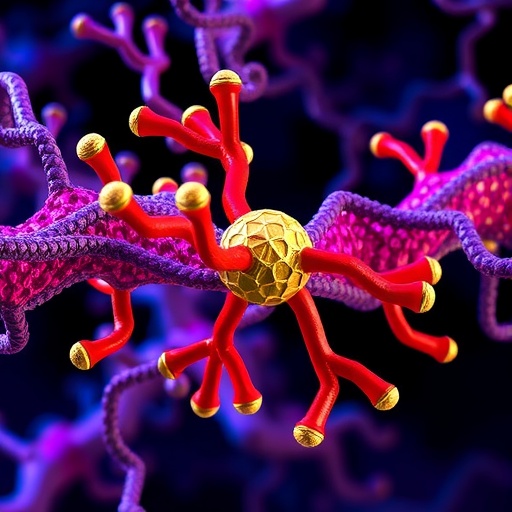
In a groundbreaking advancement for neuroscience, researchers have unveiled an unprecedented analysis of native N-methyl-D-aspartate receptors (NMDARs) derived from whole-brain tissue of female C57BL/6 mice, revealing remarkable insights into their structural diversity and gating mechanisms. These glutamate-gated ion channels play an essential role in excitatory neurotransmission, acting as molecular conduits that translate chemical signals into electrical activity throughout the brain. The multimeric nature of NMDARs, requiring simultaneous binding of both glycine and glutamate for activation, has posed substantial challenges for decoding their native configurations and functions within the intricate brain circuitry.
Prior structural studies have predominantly utilized recombinant receptors and engineered constructs, which, while valuable, offer a limited window into the true conformational heterogeneity and physiological nuances of native NMDAR assemblies. This novel study, by contrast, employed cutting-edge immunoaffinity purification combined with single-molecule total internal reflection fluorescence microscopy and state-of-the-art cryo-electron microscopy (cryo-EM) to delineate ten distinct NMDAR assemblies extracted directly from whole-brain samples. This feat underscores an extraordinary leap forward in bridging the gap between molecular structure and neuronal function in a physiologically relevant context.
Central to these findings is the revelation that the GluN2A subunit predominates across the identified receptor complexes. The GluN2A subunit’s amino-terminal domain exhibits a noteworthy conformational plasticity, which the researchers propose as a molecular basis for the fast kinetics and predominant gating functions characteristic of this subunit. This flexibility provides new mechanistic insights into how rapid synaptic responses might be finely tuned in vivo, influencing synaptic plasticity, learning, and memory processes.
Among the ten native assemblies resolved, variations involving homomeric and heteromeric subunit compositions, including GluN1–GluN2A, GluN1–GluN2B, and mixed triheteromeric forms with an unidentified GluNX subtype, showcase the vast heterogeneity underlying excitatory signaling. This heterogeneity not only reflects diversity in receptor localization and function across brain regions but also implies complex regulatory mechanisms governing synaptic transmission and plasticity.
Remarkably, the researchers were able to capture dynamic movements of the anesthetic and dissociative agent S-ketamine within the channel vestibule, providing real-time structural snapshots of drug-receptor interactions. This observation opens new avenues to better understand the molecular pharmacology of ketamine and its derivatives, which are critical in clinical contexts ranging from anesthesia to treatment of depression. Such dynamic binding insights are instrumental for rational drug design targeting NMDARs with improved efficacy and reduced side effects.
Equally transformative is the identification of a fully open state of the native GluN1–GluN2B receptor that has hitherto eluded structural characterization. This pore dilation, encompassing changes in both GluN1 and GluN2B subunits, offers a direct glimpse into the gating mechanism that underlies ion flow through the receptor channel, a process central to synaptic signal propagation. This newly recognized open conformation challenges existing models and demands a re-evaluation of how receptor activation and desensitization are orchestrated at the molecular level.
The structural heterogeneity documented in native receptors highlights the complex interplay between subunit composition, conformational dynamics, and channel function. By integrating single-molecule techniques with high-resolution cryo-EM, the study charts a path forward for exploring the functional implications of NMDAR diversity in vivo. This approach may illuminate how differential receptor assemblies contribute to region-specific brain functions and pathological states, such as neurodegeneration, epilepsy, and psychiatric disorders.
Furthermore, this large-scale characterization furnishes the field with an expanded structural repertoire that can serve as a template for future computational and experimental studies. The conformational diversity evidenced here not only deepens our fundamental understanding of synaptic transmission but also enhances the framework for developing targeted therapeutic interventions aimed at modulating NMDAR activity in disease conditions.
In light of these insights, the study underscores the critical importance of native protein complexes for accurately elucidating receptor function within the physiological environment. Recombinant systems, though invaluable, lack the full complement of native molecular partners and post-translational modifications, which are essential determinants of receptor behavior and pharmacology. This paradigm shift toward native receptor analysis signals a new era of structural neuroscience.
Moreover, the implications extend beyond basic neurobiology, touching upon translational research and clinical neuroscience. The detailed mapping of ketamine binding trajectories and receptor conformational states lays the groundwork for fine-tuning therapeutic agents, potentially improving treatment outcomes for neuropsychiatric disorders where NMDAR function is dysregulated.
Ultimately, this comprehensive structural survey of native NMDARs offers a vivid molecular portrait of one of the brain’s most vital signal transducers. It elucidates how receptor diversity is harnessed to generate nuanced synaptic responses, adapting brain circuits to ever-changing physiological demands. By resolving elusive open states and pharmacologically relevant dynamics, the study pioneers new frontiers in our quest to decipher the molecular logic of excitatory neurotransmission.
As the field progresses, these foundational discoveries will undoubtedly inform both mechanistic explorations and therapeutic strategies, charting a course toward more precise manipulation of synaptic signaling pathways. The convergence of advanced purification, imaging, and structural analysis promises to continue unraveling the complexities of native receptors, enabling deeper insights into brain function, plasticity, and dysfunction.
Cite Scienmag News
Drew Townsend. (February 19, 2026). NMDA Receptor’s Diverse Shapes Unlock Function. Scienmag. https://scienmag.com/nmda-receptors-diverse-shapes-unlock-function/
Drew Townsend. "NMDA Receptor’s Diverse Shapes Unlock Function." Scienmag, 19 February 2026, https://scienmag.com/nmda-receptors-diverse-shapes-unlock-function/. Accessed 4 September 2026.
Drew Townsend. "NMDA Receptor’s Diverse Shapes Unlock Function." Scienmag. February 19, 2026. https://scienmag.com/nmda-receptors-diverse-shapes-unlock-function/


