


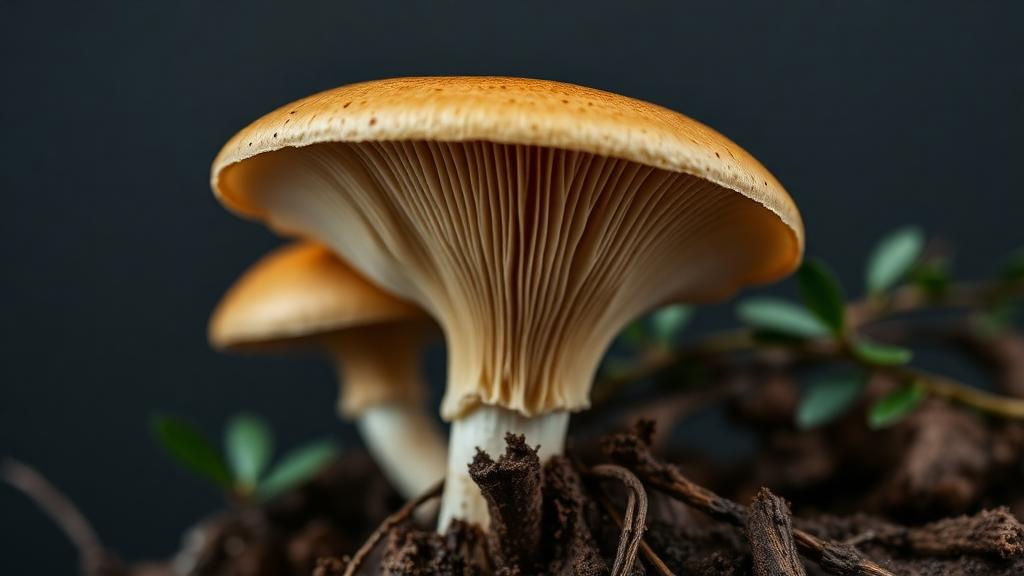
Deep in the forests of northern and northeastern Thailand, a strange little fungus pushes up through the leaf litter each wet season. Astraeus odoratus, known locally as Hed Phor and sometimes called the barometer earthstar, is one of the most sought-after wild edible mushrooms in the region, prized for its distinctive texture and flavor and commanding a higher market price than most cultivated species. Yet the mushroom has a frustrating flaw: once picked, it begins to brown, shrivel, and collapse within a day or two. A new study published in Food Chemistry: X suggests that a remarkably simple intervention, a nine-hour bath in nitrogen gas that strips away nearly all oxygen, can dramatically slow that decline, offering a chemical-free way to get this perishable delicacy to distant markets intact.
The research team, led by Chairat Techavuthiporn and Hataitip Nimitkeatkai and their colleagues at universities in Thailand, focused on immature fruiting bodies of A. odoratus purchased from a local market in Phayao Province. These young specimens, measuring just two to two and a half centimeters across and weighing around seven grams, are spherical, firm, and white inside, with a smooth whitish mycelial covering on the outside. Like many wild ectomycorrhizal fungi, the species cannot be reliably cultivated; its fruiting depends on rainfall and soil moisture, so supply is seasonal and unpredictable. That scarcity, combined with a shelf life of only one to two days at ambient conditions, has long confined sales to local markets near where the mushrooms are foraged.
The vulnerability of A. odoratus is shared by mushrooms generally. Their tissues are packed with moisture, they lack the waxy cuticle that protects fruits and leaves from water loss, and their high respiration rates burn through energy reserves rapidly. Postharvest deterioration is driven largely by oxidative processes: reactive oxygen species such as hydrogen peroxide attack cell membranes, triggering lipid peroxidation, electrolyte leakage, and the enzymatic browning reactions that turn once-pristine flesh an unappetizing brown. Because senescence is fundamentally an oxidative phenomenon, the researchers reasoned that briefly starving the mushroom of oxygen might reset its metabolic clock, a strategy that has already shown promise in asparagus, pineapple, broccoli, litchi, banana, and another mushroom species, Stropharia rugosoannulata.
In the experiment, mushrooms were divided into two groups. One group was placed in sealed five-liter containers and flushed continuously with humidified pure nitrogen at 100 milliliters per minute for nine hours, until the residual oxygen concentration inside dropped below 0.05 percent. The control group received the same treatment with ambient air. Preliminary trials had shown that nine hours was the sweet spot, long enough to suppress deterioration but short enough to avoid the pitfalls of prolonged anaerobic metabolism, which can cause off-odors and tissue damage from accumulating fermentative byproducts such as ethanol and acetaldehyde. After treatment, all mushrooms were stored at 10 degrees Celsius and 80 to 85 percent relative humidity for nine days, with samples taken every three days for physical, chemical, and biochemical analysis.
The results were striking on several fronts. Weight loss, a key driver of mushroom quality decline, reached 12.72 percent in the control group by the end of storage but only 10.93 percent in the anoxia-treated mushrooms, a statistically significant difference. The interior flesh of treated mushrooms also stayed significantly lighter on days six and nine, and browning pigment measurements trended lower, consistent with the visual impression that treated specimens retained their fresh appearance longer. The authors attribute the reduced weight loss to suppressed respiratory activity and to better preservation of cellular structure, since intact plasma membranes and organelles limit the diffusion of water out of the tissue.
Beneath the surface, the treatment appeared to protect the mushroom’s cellular machinery from oxidative assault. Electrolyte leakage, a proxy for membrane damage, climbed from roughly 19 to 60 percent in control mushrooms over the storage period, while anoxia-treated samples rose more slowly, from about 12 to 49 percent. Malondialdehyde, the classic chemical fingerprint of lipid peroxidation, soared to 15.60 micromoles per liter in controls but reached only 10.20 in treated samples. Hydrogen peroxide accumulation was consistently lower under anoxia as well. Together, these indicators point to delayed membrane deterioration, which matters because membrane breakdown and enzymatic browning are tightly intertwined: once membranes fail, phenolic substrates and oxidizing enzymes mix freely, accelerating discoloration.
The enzymes themselves told a clear story. Polyphenol oxidase, or PPO, the principal culprit in mushroom browning, rose steadily in both groups but remained significantly lower in the anoxia-treated mushrooms throughout storage, with the gap widening in the later days. Peroxidase, or POD, another browning-associated enzyme that oxidizes phenolics into colored compounds in hydrogen peroxide-dependent reactions, followed the same pattern. The authors suggest two mechanisms: PPO requires molecular oxygen to function, so lingering oxygen scarcity after treatment constrains it, and the reduced hydrogen peroxide burden in treated tissue may have starved POD of one of its key substrates. Lower activity of both enzymes aligns neatly with the reduced browning observed visually and chemically.
Not every measured parameter responded dramatically. Total phenolic content dipped in treated mushrooms immediately after the nitrogen flush but showed no consistent differences from controls during subsequent storage, leading the authors to conclude that the treatment did not reliably preserve phenolic compounds over time. Antioxidant capacity, however, told a more encouraging story: DPPH radical scavenging activity was consistently higher in anoxia-treated samples, and ferric reducing antioxidant power trended higher as well, though the latter difference was not statistically significant. The researchers interpret this as evidence that low-oxygen exposure modulates oxidative metabolism and bolsters the mushroom’s internal antioxidant defenses rather than simply locking phenolics in place.
To tie the threads together, the team applied Pearson correlation analysis and principal component analysis to the full dataset. The correlations revealed a tight cluster linking PPO activity, brown pigment, malondialdehyde, and electrolyte leakage, confirming that enzymatic browning, lipid peroxidation, and membrane disruption proceed hand in hand. Respiration rate, measured as carbon dioxide production, was negatively associated with that cluster, indicating that lower metabolic intensity accompanied delayed browning and better membrane stability. The first principal component, explaining 65.5 percent of the variance, captured this quality deterioration axis, while the second, at 12.9 percent, was dominated by total phenolic content, suggesting phenolics contribute mainly to antioxidant buffering rather than directly controlling browning. In the score plot, anoxia-treated samples separated cleanly from controls in later storage, sitting closer to the low-metabolism, high-antioxidant end of the spectrum.
The practical implications are considerable. The treatment requires nothing more than nitrogen gas, a sealed container, and modest refrigeration, making it a low-cost, non-chemical pre-treatment that could be deployed at collection points or regional packing facilities before distribution. Because A. odoratus already fetches premium prices, even modest extensions of marketable life could meaningfully expand the economic reach of foragers and traders in rural Thailand. The authors caution that anoxic conditions must be tailored to each commodity, since excessive anaerobic exposure risks fermentative spoilage, and they note that fermentative metabolites were not directly measured in this study, leaving some biochemical questions open. Still, the findings extend a growing body of evidence that brief, controlled oxygen deprivation is a versatile and environmentally friendly tool for postharvest preservation, and they offer, for the first time, a scientifically grounded way to keep one of Southeast Asia’s most beloved wild mushrooms looking as good as the day it emerged from the forest floor.
Subject of Research: Short-term anoxic treatment to extend the postharvest shelf life of the wild edible mushroom Astraeus odoratus
Article Title: Short-term anoxia improves postharvest quality and reduces browning-related enzyme activity in edible Astraeus odoratus mushroom
Article References: Techavuthiporn, C., Jarerat, A., Julian, H., & Nimitkeatkai, H. (2026). Short-term anoxia improves postharvest quality and reduces browning-related enzyme activity in edible Astraeus odoratus mushroom. Food Chemistry: X, 39, Article 104519. https://doi.org/10.1016/j.fochx.2026.104519
Image Credits: AI Generated
DOI: 10.1016/j.fochx.2026.104519
Keywords: Astraeus odoratus, postharvest quality, short-term anoxia, browning, polyphenol oxidase, peroxidase, antioxidant activity, malondialdehyde, electrolyte leakage, wild edible mushrooms, nitrogen treatment, shelf life
Cite Scienmag News
Bethany Barker. (September 30, 2026). Nine Hours Without Oxygen Keeps a Prized Thai Wild Mushroom Fresh and Unblemished. Scienmag. https://scienmag.com/nine-hours-without-oxygen-keeps-a-prized-thai-wild-mushroom-fresh-and-unblemished/
Bethany Barker. "Nine Hours Without Oxygen Keeps a Prized Thai Wild Mushroom Fresh and Unblemished." Scienmag, 30 September 2026, https://scienmag.com/nine-hours-without-oxygen-keeps-a-prized-thai-wild-mushroom-fresh-and-unblemished/. Accessed 17 October 2026.
Bethany Barker. "Nine Hours Without Oxygen Keeps a Prized Thai Wild Mushroom Fresh and Unblemished." Scienmag. September 30, 2026. https://scienmag.com/nine-hours-without-oxygen-keeps-a-prized-thai-wild-mushroom-fresh-and-unblemished/


