

Thursday, September 3, 2026
Science
No Result
View All Result
  • Login
  • HOME
  • SCIENCE NEWS
  • CONTACT US
  • HOME
  • SCIENCE NEWS
  • CONTACT US
No Result
View All Result
Scienmag
No Result
View All Result
Home Science News Biology

NIH releases H5N1 influenza research agenda

June 5, 2024
in Biology
Drew Townsend
By Drew Townsend Scienmag Editorial Profile - Cell Biology
Reading Time: 3 mins read
0
NIH releases H5N1 influenza research agenda
66
SHARES
600
VIEWS
Share on FacebookShare on Twitter
ADVERTISEMENT

The National Institute of Allergy and Infectious Diseases (NIAID), part of the National Institutes of Health, has released its plan for advancing H5N1 influenza basic research and translating those findings into strategies and interventions that can benefit people. The research agenda focuses on four key objectives: increasing understanding of the biology of H5N1 viruses and the factors that influence their ability to transmit and cause disease; developing and evaluating prevention strategies, such as vaccines; advancing existing and novel treatments, including antivirals and monoclonal antibodies; and supporting strategies for detecting H5N1 virus. The NIAID Research Agenda for 2024 H5N1 Influenza – May 2024 aligns with the NIAID role in the federal public health response to the U.S. outbreak of H5N1 influenza in people, dairy cows and other animals.

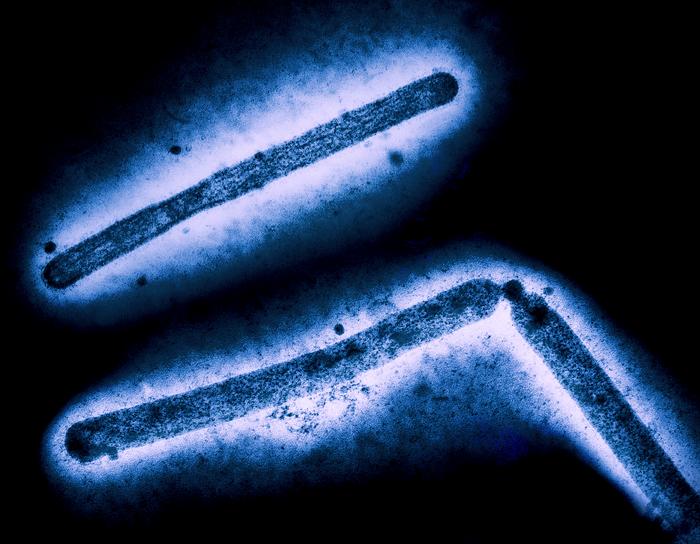
Influenza A (H5N1/bird flu) virus particles

Credit: CDC and NIAID

The National Institute of Allergy and Infectious Diseases (NIAID), part of the National Institutes of Health, has released its plan for advancing H5N1 influenza basic research and translating those findings into strategies and interventions that can benefit people. The research agenda focuses on four key objectives: increasing understanding of the biology of H5N1 viruses and the factors that influence their ability to transmit and cause disease; developing and evaluating prevention strategies, such as vaccines; advancing existing and novel treatments, including antivirals and monoclonal antibodies; and supporting strategies for detecting H5N1 virus. The NIAID Research Agenda for 2024 H5N1 Influenza – May 2024 aligns with the NIAID role in the federal public health response to the U.S. outbreak of H5N1 influenza in people, dairy cows and other animals.

Since 2003, H5N1 influenza viruses have circulated in 23 countries, primarily affecting wild birds and poultry resulting in nearly 900 reported human cases, primarily among people who have had close contact with infected birds. In the past few years, however, a highly pathogenic avian influenza virus called HPAI H5N1 has spread to infect more than 50 animal species. In late March 2024, an HPAI H5N1 outbreak was reported among dairy cows in Texas. Although the virus so far has not shown genetic evidence of acquiring the ability to spread from person-to-person, public health officials are closely monitoring the outbreak as part of overarching pandemic preparedness efforts. 

The NIAID H5N1 research agenda builds on the Institute’s longstanding influenza research efforts. It addresses the current outbreak in U.S. dairy cows including potential human-to-human transmission of H5N1 influenza viruses. NIAID will leverage both its domestic and international research infrastructures to achieve the plan’s objectives.

WHAT:
NIAID Research Agenda for 2024 H5N1 Influenza – May 2024

WHO:
NIAID Director Jeanne Marrazzo, M.D., M.P.H., is available to discuss the research agenda.


NIAID conducts and supports research—at NIH, throughout the United States, and worldwide—to study the causes of infectious and immune-mediated diseases, and to develop better means of preventing, diagnosing and treating these illnesses. News releases, fact sheets and other NIAID-related materials are available on the NIAID website.

About the National Institutes of Health (NIH): NIH, the nation’s medical research agency, includes 27 Institutes and Centers and is a component of the U.S. Department of Health and Human Services. NIH is the primary federal agency conducting and supporting basic, clinical, and translational medical research, and is investigating the causes, treatments, and cures for both common and rare diseases. For more information about NIH and its programs, visit

NIH…Turning Discovery Into Health®


Subject of Research: Biology

Article Title: NIH releases H5N1 influenza research agenda

Article References: Original research article

Image Credits: AI Generated

DOI: Not provided

Keywords: Not provided

Cite Scienmag News

Drew Townsend. (June 5, 2024). NIH releases H5N1 influenza research agenda. Scienmag. https://scienmag.com/nih-releases-h5n1-influenza-research-agenda/

Drew Townsend. "NIH releases H5N1 influenza research agenda." Scienmag, 5 June 2024, https://scienmag.com/nih-releases-h5n1-influenza-research-agenda/. Accessed 3 September 2026.

Drew Townsend. "NIH releases H5N1 influenza research agenda." Scienmag. June 5, 2024. https://scienmag.com/nih-releases-h5n1-influenza-research-agenda/

Share26Tweet17
Previous Post

OU one of four funded by NCCN for innovative prostate cancer research

Next Post

Trailblazers to lead ISSRDC panel on cancer research, regenerative medicine, and in-space manufacturing

Related Posts

How Plants Fight Back: The Molecular Arms Race Against Aphids
Biology

How Plants Fight Back: The Molecular Arms Race Against Aphids

September 3, 2026
Antarctic Bacterium Yields Kineochelins, a Novel Class of Iron-Binding Molecules
Biology

Antarctic Bacterium Yields Kineochelins, a Novel Class of Iron-Binding Molecules

September 3, 2026
Graph Transformer Puts Rare Cell States on the Map in Single-Cell Data
Biology

Graph Transformer Puts Rare Cell States on the Map in Single-Cell Data

September 3, 2026
Methylation puts parasites in motion
Biology

Methylation puts parasites in motion

September 3, 2026
Desiccation promotes DNA damage and rifampin resistance in Mycobacterium tuberculosis
Biology

Desiccation promotes DNA damage and rifampin resistance in Mycobacterium tuberculosis

September 3, 2026
Gastrointestinal Parasitism in Cattle and Water Buffaloes in Pakistan: Prevalence and Associated Risk Factors
Biology

Gastrointestinal Parasitism in Cattle and Water Buffaloes in Pakistan: Prevalence and Associated Risk Factors

September 3, 2026
Next Post
Trailblazers to lead ISSRDC panel on cancer research, regenerative medicine,

Trailblazers to lead ISSRDC panel on cancer research, regenerative medicine, and in-space manufacturing

  • Mothers who receive childcare support from maternal grandparents show more optimized

    Mothers who receive childcare support from maternal grandparents show more parental warmth, finds NTU Singapore study

    27656 shares
    Share 11059 Tweet 6912
  • University of Seville Breaks 120-Year-Old Mystery, Revises a Key Einstein Concept

    1061 shares
    Share 424 Tweet 265
  • Bee body mass, pathogens and local climate influence heat tolerance

    682 shares
    Share 273 Tweet 171
  • Researchers record first-ever images and data of a shark experiencing a boat strike

    546 shares
    Share 218 Tweet 137
  • Groundbreaking Clinical Trial Reveals Lubiprostone Enhances Kidney Function

    531 shares
    Share 212 Tweet 133
Science

Embark on a thrilling journey of discovery with Scienmag.com—your ultimate source for cutting-edge breakthroughs. Immerse yourself in a world where curiosity knows no limits and tomorrow’s possibilities become today’s reality!

RECENT NEWS

  • Living Near Green Spaces May Lower ALS Risk, Italian Study Finds
  • Ketogenic Diet Shows Promise as Epigenetic Therapy for SETD1B Epilepsy
  • How Plants Fight Back: The Molecular Arms Race Against Aphids
  • Adverse Drug Reactions Common and Often Preventable in Ethiopian Obstetric Patients

Categories

  • Agriculture
  • Anthropology
  • Archaeology
  • Athmospheric
  • Biology
  • Biotechnology
  • Blog
  • Bussines
  • Cancer
  • Chemistry
  • Climate
  • Earth Science
  • Editorial Policy
  • Marine
  • Mathematics
  • Medicine
  • Pediatry
  • Policy
  • Psychology & Psychiatry
  • Science Education
  • Social Science
  • Space
  • Technology and Engineering

Subscribe to Blog via Email

Enter your email address to subscribe to this blog and receive notifications of new posts by email.

Join 5,151 other subscribers

© 2025 Scienmag - Science Magazine

Welcome Back!

Login to your account below

Forgotten Password?

Retrieve your password

Please enter your username or email address to reset your password.

Log In
No Result
View All Result
  • HOME
  • SCIENCE NEWS
  • CONTACT US

© 2025 Scienmag - Science Magazine

Discover more from Science

Subscribe now to keep reading and get access to the full archive.

Continue reading