


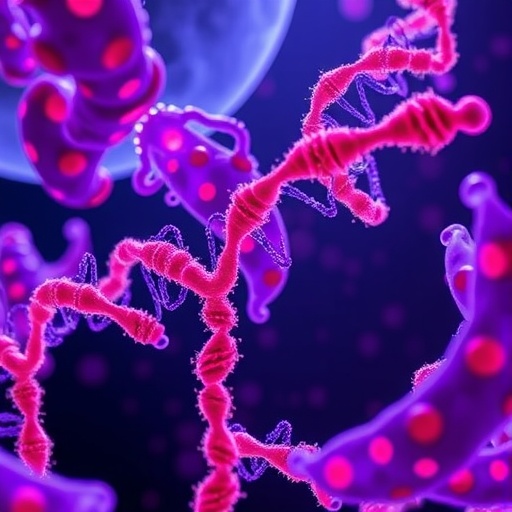
DNA repair has traditionally been viewed as a process centred in the nucleus, where the genome is stored and monitored. A new study from the European Molecular Biology Laboratory (EMBL) challenges that model by identifying the Golgi complex as an unexpected control centre for DNA-repair proteins. The findings suggest that the cell does not simply produce repair factors and send them directly to damaged DNA. Instead, it can store, release, and redirect these proteins between the Golgi and nucleus according to the type of genomic injury detected.
DNA is continuously damaged by environmental chemicals, radiation, metabolic by-products, and mistakes made during replication and cell division. If these lesions are not repaired accurately, they can cause mutations, chromosome rearrangements, or cell death, contributing to diseases including cancer. Human cells therefore rely on several specialised repair pathways, each adapted to a particular form of damage. These include pathways that correct small chemical alterations in DNA, repair breaks in one or both strands, and restore damaged replication structures. The new work indicates that the availability of many of the proteins involved in these pathways is regulated outside the nucleus.
The study was conducted by researchers in Rainer Pepperkok’s group at EMBL Heidelberg, in collaboration with the Human Protein Atlas and Emma Lundberg’s laboratory at Stanford University. The researchers examined where proteins are located within human cells, focusing on proteins that appeared in both the Golgi complex and the nucleus. Best known as the cell’s processing and distribution hub, the Golgi modifies proteins, sorts them, and packages them for delivery to different cellular destinations. Its newly identified connection with genome maintenance expands the organelle’s role far beyond intracellular shipping.
The initial protein-localisation screen revealed more than 300 proteins shared between the Golgi and the nucleus. Among them was a broad collection of DNA-repair factors representing almost every major repair pathway. Their presence at the Golgi was not simply a fixed consequence of protein production. When the researchers exposed cells to chemical agents that cause different types of DNA damage, the proteins changed location in a damage-specific manner. Factors required to address a particular lesion moved from the Golgi into the nucleus, while proteins not needed for that response were removed from the nucleus and sequestered at the Golgi.
This pattern suggests that the Golgi functions as a dynamic reservoir for repair machinery. Rather than allowing all DNA-repair proteins to circulate freely through the nucleus, the cell may limit access to specific factors until they are needed. Such spatial control could help organise the DNA-damage response, reduce inappropriate activity, and ensure that repair proteins are deployed in the correct combination. The discovery also points to a wider principle in cell biology: organelles traditionally assigned to cytoplasmic functions may directly influence nuclear processes through the regulated movement of proteins.
The researchers investigated this mechanism in greater detail using RAD51C, a protein essential for homologous recombination. This repair pathway is particularly important for correcting DNA double-strand breaks, among the most dangerous forms of genomic damage. Homologous recombination uses an intact DNA sequence as a template to restore the correct genetic information, helping cells repair breaks with relatively high accuracy. RAD51C also has clinical importance because inherited or acquired mutations in the gene are associated with elevated risks of cancers including breast and ovarian cancer.
Under normal conditions, RAD51C was retained at the Golgi through an interaction with Giantin, a large structural protein that helps organise the Golgi membrane system. After DNA damage occurred, RAD51C was released from this Golgi-associated pool and moved into the nucleus. There, it accumulated at sites where DNA repair was taking place. When the researchers removed Giantin, RAD51C localisation was disrupted, and the cells were unable to complete the normal repair response. These results link the physical organisation of the Golgi directly to the functional activity of a DNA-repair pathway.
The findings imply that damage-induced relocation is not merely a passive redistribution of proteins. Instead, the Golgi appears to participate in the timing and selection of the cellular response. A damaged cell must rapidly identify the nature of a lesion, mobilise the appropriate repair factors, and prevent conflicting or unnecessary activities. By holding proteins in a defined cytoplasmic compartment and releasing them in response to specific signals, the Golgi may provide an additional layer of regulation. The molecular signals that trigger this release, and the mechanisms that return proteins to the Golgi after repair, remain important questions for future research.
The study also raises the possibility that the Golgi–nucleus connection affects more than DNA repair. The proteins shared between the two organelles were involved in numerous cellular pathways, suggesting that communication between the Golgi and the nucleus is extensive. Changes in Golgi structure or trafficking could therefore influence gene stability, stress responses, and disease processes in ways that have not yet been recognised. Because defects in DNA repair are a defining feature of many cancers, understanding how repair proteins are stored and deployed could eventually inform the development of diagnostic tools or treatments that target cellular organisation as well as the repair enzymes themselves.
By identifying the Golgi as an active participant in the DNA-damage response, the EMBL team has expanded the concept of genome protection from a strictly nuclear operation to a coordinated process involving the entire cell. The work presents the Golgi as a staging area that can store repair factors, control their release, and help determine when they reach damaged DNA. It also reinforces a growing view of the cell as an interconnected system in which cytoplasmic organelles and the nucleus continuously exchange information. Further research will be needed to determine whether similar control mechanisms operate in other organelles and how their failure might contribute to human disease.
News Publication Date: 28-Jul-2026
Web References: https://doi.org/10.1083/jcb.202605024
References: Journal of Cell Biology, DOI: 10.1083/jcb.202605024
Cite Scienmag News
Nathaniel Bowman. (August 1, 2026). New research reveals the Golgi complex helps control DNA repair. Scienmag. https://scienmag.com/new-research-reveals-the-golgi-complex-helps-control-dna-repair/
Nathaniel Bowman. "New research reveals the Golgi complex helps control DNA repair." Scienmag, 1 August 2026, https://scienmag.com/new-research-reveals-the-golgi-complex-helps-control-dna-repair/. Accessed 3 September 2026.
Nathaniel Bowman. "New research reveals the Golgi complex helps control DNA repair." Scienmag. August 1, 2026. https://scienmag.com/new-research-reveals-the-golgi-complex-helps-control-dna-repair/


