


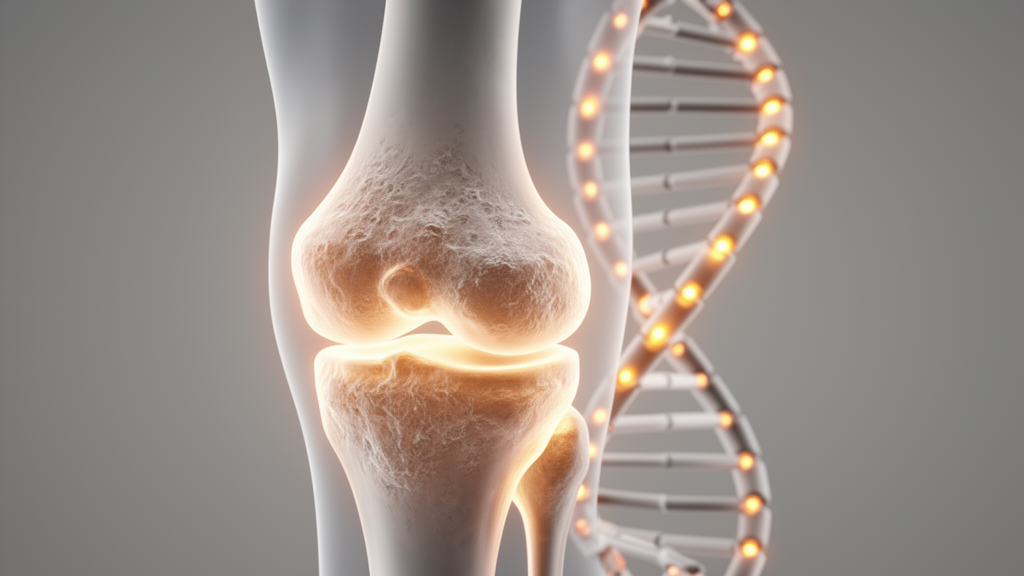
When the human genome was first sequenced, one of the most striking findings was how little separates us from our closest living relatives. Roughly ninety-nine percent of protein-coding DNA is shared between humans and chimpanzees, and even accounting for insertions, deletions, and other structural variants, the overall sequence identity remains above ninety-eight percent. That figure has long posed a puzzle for evolutionary biology: if our genomes are so similar, where do the profound differences in anatomy, physiology, and cognition reside? The emerging answer, reinforced by the new atlas described in this study, is that many of the most consequential changes are not in the genes themselves but in the regulatory instructions that determine when, where, and how strongly genes are switched on.
Gene regulation operates through short DNA sequences, often located far from the genes they control, that serve as binding sites for transcription factors and other regulatory proteins. A single nucleotide change in one of these regions can alter how strongly a gene is expressed in a particular tissue, without changing the protein the gene encodes. This mechanism is attractive from an evolutionary standpoint because it allows natural selection to fine-tune gene activity in specific contexts, such as the developing limb or the growing skull, while leaving the underlying protein machinery intact. Decades of comparative genomics have identified millions of sequence differences between humans and other great apes, but the central challenge has always been distinguishing the handful of differences that matter from the vast majority that are functionally neutral.
The scale of that challenge is worth appreciating. The human and chimpanzee lineages diverged roughly six to seven million years ago, and since that split, each lineage has accumulated tens of millions of substitutions, small insertions and deletions, and larger structural rearrangements. Earlier efforts to prioritize candidate regulatory changes relied on proxies: regions conserved across many mammals but accelerated specifically in the human lineage, for example, or sequences showing signatures of positive selection. These approaches produced valuable candidate lists, including famous loci such as HAR1, a human-accelerated region expressed in the developing brain, but they could not by themselves demonstrate that any given difference actually changes gene activity, let alone that such a change produces a meaningful biological effect in a relevant cell type.
The atlas approach described in this study addresses that gap by systematically testing the functional consequences of sequence differences on gene expression. Techniques for this kind of work have matured considerably in recent years. Massively parallel reporter assays, for instance, allow thousands of candidate regulatory sequences, each carrying either the human or the chimpanzee version of a sequence variant, to be tested simultaneously in a controlled cellular environment. By measuring which version drives stronger expression of a reporter gene, researchers can quantify the regulatory impact of each difference. When such assays are performed in cell types relevant to a particular trait, in this case skeletal cells involved in cartilage and bone formation, the results can be connected directly to biology rather than remaining abstract lists of accelerated sequences.
The choice of the skeleton as the first test case was strategically sound. The skeleton is one of the most obviously modified parts of the body in human evolution. Compared with other great apes, humans have a distinctive pelvis built for habitual bipedal walking, longer legs relative to arms, a shortened and restructured foot with an arch suited for endurance walking and running, a barrel-shaped chest, and a skull balanced atop an upright spinal column with a dramatically reorganized face and jaw. Many of these features depend on changes in the growth, timing, and composition of cartilage and bone during development, which makes skeletal cells a natural place to look for regulatory changes with visible anatomical consequences.
Cartilage itself deserves particular attention in this context. Cartilage is a specialized connective tissue whose mechanical properties depend heavily on molecules in the extracellular matrix, the scaffold of proteins and sugars secreted by cartilage cells. Proteoglycans, large molecules with negatively charged sugar chains, draw water into the matrix and allow it to resist compression, which is why healthy cartilage can cushion joints under load for decades. The finding that humans evolved reduced levels of molecules that help cartilage retain water and withstand pressure suggests that a shift in cartilage mechanics accompanied the reshaping of the human skeleton. A stiffer or less hydrated cartilage matrix could contribute to the distinctive proportions and growth patterns of human bones, but it could also leave joints less resilient to the cumulative wear of a long lifespan and the mechanical demands of bipedal locomotion.
This is where the concept of an evolutionary trade-off becomes scientifically powerful rather than merely rhetorical. Evolutionary trade-offs arise because natural selection optimizes for reproductive success in a given environment, not for long-term health in old age. Traits that enhance survival and reproduction early in life can carry costs that manifest later, after the bulk of selection has already acted. Skeletal degeneration is a textbook example. Osteoarthritis, the progressive breakdown of joint cartilage, is among the most common conditions of aging in humans, and osteoporosis, the loss of bone density and strength, imposes an enormous burden of fractures in older adults. Both conditions are rare or comparatively mild in most other mammals, and chimpanzees in particular show far less osteoarthritis than humans do. If the regulatory changes that helped sculpt the human skeleton also reduced the compressive resilience of cartilage, then our species’ high rates of degenerative joint disease may be, in a real sense, the price paid for the skeletal form that made upright walking and our characteristic body plan possible.
This perspective reframes how such diseases might be studied. Much biomedical research treats osteoarthritis and osteoporosis as purely pathological processes to be halted, but an evolutionary view suggests they may be the predictable consequences of developmental programs that were positively selected for other reasons. Knowing which regulatory changes shifted cartilage gene expression during human evolution gives researchers a specific, testable set of molecular targets. If a particular regulatory change reduces expression of a proteoglycan or a matrix-maintenance gene, then the pathways that regulate that gene become candidate points of intervention, both for understanding disease mechanisms and, potentially, for developing therapies that restore some of the resilience that was traded away.
The comparative dimension of the work also matters. By testing differences between humans and chimpanzees, and potentially extending to gorillas and orangutans, researchers can begin to reconstruct not just what changed in the human lineage but when and in what order. Some regulatory changes will be shared across great apes and reflect deeper primate history; others will be uniquely human or uniquely chimpanzee. Mapping changes onto the primate family tree helps distinguish modifications tied to shared ape traits from those tied specifically to human innovations such as bipedality or enlarged brains. It also helps identify cases where the same biological system was modified independently in different lineages, which can reveal whether there are particularly accessible evolutionary routes to certain traits.
The announcement that the team intends to extend the approach to brain cells points toward what is arguably the most anticipated application of this atlas. Human cognitive abilities, including language, abstract reasoning, and long-term planning, are widely attributed to changes in brain development, but identifying the genetic basis of those changes has proven difficult. The human brain differs from that of chimpanzees in size, in the proportions of cortical regions, in the timing of developmental events, and in patterns of gene expression, yet linking specific sequence differences to specific neural outcomes has remained elusive. Applying the same systematic functional testing to neural cell types, particularly those derived from human and ape stem cells, could produce a comparable catalog of regulatory changes with demonstrable effects on gene activity in the brain, providing a much more concrete foundation for studying the evolution of human cognition than candidate-gene approaches have allowed.
The collaborative structure of the research is also notable. The study brought together groups at McGill University, Kyoto University, and the Weizmann Institute of Science, combining expertise in genomics, computational biology, and evolutionary developmental biology. International collaborations of this kind are increasingly essential for work at this scale, both because the computational and experimental infrastructure is demanding and because comparative primate genomics benefits from diverse perspectives on how to connect molecular data to organismal biology. The involvement of a doctoral student in an international collaborative program as first author reflects the training model that such partnerships are designed to support.
It is worth being precise about what the atlas does and does not establish. Identifying that a sequence difference affects gene expression in a particular cell type is a crucial step, but it is not the same as proving that the change caused a specific anatomical trait. Gene expression differences must be connected to developmental outcomes, and developmental outcomes must be connected to adult form, through additional layers of evidence. The thousands of skeletal regulatory changes identified in this study should therefore be understood as a well-founded starting point, a map of plausible functional candidates, rather than a finished explanation of skeletal evolution. The authors’ own emphasis on the wealth of new avenues for future research reflects this: the atlas narrows the search space from millions of differences to thousands of functionally supported ones, which transforms what is experimentally tractable.
The computational nature of much of the research, noted in the study’s methodological classification, also reflects broader trends in genomics. Modern evolutionary genetics increasingly depends on integrating large comparative datasets, functional assay results, and expression measurements across species and cell types. Machine learning and statistical modeling play growing roles in prioritizing candidates and predicting regulatory effects, though the field remains careful to validate computational predictions experimentally. The combination of computational screening with functional validation, as represented by this atlas, is likely to become the standard workflow for studying gene-regulatory evolution across many organ systems.
Funding from agencies and foundations across Europe, Israel, Japan, and Canada, including the European Research Council, Japan’s Ministry of Education, Culture, Sports, Science and Technology, the Israel Science Foundation, and the Leakey Foundation, illustrates the breadth of support that evolutionary genomics now draws. The Leakey Foundation’s involvement is particularly fitting given its long history of supporting research into human origins, bridging the traditional divide between paleoanthropology, which studies fossils and artifacts, and molecular genetics, which studies living genomes. Studies like this one exemplify the convergence of those traditions: the fossil record documents what skeletal changes occurred, and the regulatory atlas begins to explain how those changes were encoded in DNA.
Looking ahead, the atlas framework could be extended in several directions. Applying it to additional tissues, from muscle to immune cells to reproductive organs, would build a comprehensive picture of gene-regulatory evolution across the body. Testing differences against other ape genomes could refine the timing of changes. Integrating the results with ancient DNA evidence, including Neanderthal and Denisovan genomes, could reveal which regulatory changes emerged before or after the split from our archaic human relatives. And connecting regulatory changes to disease through large-scale human genetic studies of osteoarthritis, osteoporosis, and other conditions could turn evolutionary insight into medical relevance. The study’s publication in Nature, with a DOI of 10.1038/s41586-026-11053-x, positions it as a reference point for this growing program of research into the functional meaning of the small fraction of DNA that makes us human.
Subject of Research: What makes us human? A first atlas of functional DNA changes offers new clues
Article Title: What makes us human? A first atlas of functional DNA changes offers new clues
Article References: What makes us human? A first atlas of functional DNA changes offers new clues. Original publication (Bibliographic details unavailable.)
Image Credits: AI Generated
DOI: Not provided
Keywords: makes, human, first, atlas, functional, changes, offers, clues, scientific research
Cite Scienmag News
Juliet Wilcox. (October 19, 2026). New Genetic Atlas Reveals DNA Changes That Made Humans Vulnerable to Osteoarthritis. Scienmag. https://scienmag.com/new-genetic-atlas-reveals-dna-changes-that-made-humans-vulnerable-to-osteoarthritis/
Juliet Wilcox. "New Genetic Atlas Reveals DNA Changes That Made Humans Vulnerable to Osteoarthritis." Scienmag, 19 October 2026, https://scienmag.com/new-genetic-atlas-reveals-dna-changes-that-made-humans-vulnerable-to-osteoarthritis/. Accessed 19 October 2026.
Juliet Wilcox. "New Genetic Atlas Reveals DNA Changes That Made Humans Vulnerable to Osteoarthritis." Scienmag. October 19, 2026. https://scienmag.com/new-genetic-atlas-reveals-dna-changes-that-made-humans-vulnerable-to-osteoarthritis/


