


Every cancer is, at heart, a genome that has drifted out of balance. As tumor cells divide, whole stretches of chromosomes are duplicated, deleted and reshuffled, and the resulting pattern of gains and losses serves as a molecular fingerprint — one that can separate malignant tissue from its healthy neighbors and reveal how a tumor evolved from a single errant ancestor. A team of French computational biologists has now built a tool that reads this fingerprint directly from gene expression data, quickly enough to run on an ordinary laboratory computer. The software, called FastCNV, is described in a peer-reviewed study published in the journal Genome Medicine by researchers at the Centre de Recherche des Cordeliers, part of Inserm, Sorbonne Université and Université Paris Cité in Paris. In a validation spanning 117 cancer cell line samples, FastCNV inferred chromosomal alterations that closely matched those measured directly from DNA, achieving a median correlation above 0.75 while running several times faster and using far less memory than established methods.
Those alterations are copy number variations, or CNVs: large-scale changes in the number of copies carried by specific genomic regions, ranging from a handful of genes to entire chromosome arms. In cancer, an amplified region may deliver extra doses of oncogenes that drive uncontrolled proliferation, while a deleted region can erase tumor suppressor genes that normally restrain growth. A subtler event, copy-neutral loss of heterozygosity, substitutes one parental chromosome copy with a duplicate of the other, leaving total dosage unchanged while quietly erasing genetic diversity. Because such changes accumulate stepwise over a tumor’s lifetime, its CNV landscape is effectively a record of evolution, with successive generations of subclones each carrying a nested set of aberrations inherited from their progenitors. Reading that clonal architecture is a central ambition of cancer genomics: it reveals which alterations appeared early and are shared by every malignant cell, and which arose late, potentially fueling aggressive behavior or drug resistance.
The most direct way to measure copy number is to sequence tumor DNA, either in bulk or, at far greater cost and effort, from single cells. But DNA methods have blind spots: bulk sequencing averages its signal across whatever mixture of malignant, immune and stromal cells happens to populate a biopsy, diluting copy number calls in impure samples, while single-cell DNA sequencing remains expensive and technically exacting. RNA, by contrast, is captured routinely and in extraordinary detail by two technologies that have transformed cancer biology: single-cell RNA sequencing, or scRNA-seq, which profiles thousands of individual cells one by one, and spatial transcriptomics, which measures gene activity across intact tissue sections while preserving the physical location of every data point. Because the abundance of a gene’s transcripts broadly tracks the number of DNA copies encoding it, chromosome-scale copy number states can in principle be reconstructed from expression profiles — an approach pioneered by tools such as inferCNV, which smooth expression signals along the genome so that broad waves of excess or deficit become visible.
In practice, the inference is fragile. Expression levels fluctuate for reasons that have nothing to do with dosage: transcription fires in bursts, sequencing samples each cell’s transcripts sparsely and stochastically, and cell-type-specific gene programs can masquerade as chromosomal gains or losses. Most existing tools also lean on a supply of confidently normal, diploid cells within the same dataset to define the baseline against which tumor cells are judged — a luxury that tumor-pure samples and cell line experiments rarely offer. The Genome Medicine authors catalog the resulting shortcomings bluntly: slow speed, high memory consumption, reduced accuracy when no diploid reference is available, lower sensitivity at low read counts, and no support for clonal tree construction. Those weaknesses become acute with high-definition spatial platforms such as Visium HD, whose dense, fine-grained datasets can overwhelm software designed for smaller experiments — which is precisely why copy number analysis had never before been extended to this technology.
FastCNV attacks the problem with two core statistical strategies. Instead of hunting for diploid cells within each sample, the software pools diploid references across samples, constructing a far more stable baseline for what normal gene dosage looks like along each chromosome. Within each sample, it then aggregates similar spots or cells that carry few sequencing reads into composite “meta spots” or “meta cells,” deliberately merging weak observations to strengthen the statistical signal available for detecting copy number events. This aggregation tames the noise that plagues shallowly sequenced data without sacrificing the resolution needed to keep distinct cell populations apart. The package also builds a clonality tree automatically, arranging the inferred subclones into an evolutionary diagram that shows how the detected aberrations relate to one another — a task that previously demanded separate analyses or manual curation. And it was engineered for thrift: the analyses presented in the study ran on a modest workstation equipped with 20 CPU cores and 64 gigabytes of memory.
To measure accuracy, the researchers assembled 117 cancer cell line samples for which both scRNA-seq data and bulk whole-exome sequencing, which reads copy number directly from DNA, were available. Cell lines made an ideal proving ground: consisting entirely of malignant cells, they provide a clean ground truth unblurred by stromal or immune bystanders. FastCNV’s inferred copy number profiles correlated strongly with the DNA-derived standard, with a median correlation above 0.75 across the panel — a striking result given that the tool never sees tumor DNA at all. Crucially, the study reports a significant improvement over other established methods such as inferCNV, both in overall accuracy and in behavior at low sequencing depth, where sparse counts cause lesser tools to falter. The result demonstrates that copy number information lies recoverable within even noisy single-cell transcriptomes, provided the statistical machinery is built to reach it.
Speed and resource benchmarks told a similar story. FastCNV ran several times faster than competing methods while using less memory — so much so that benchmarking the alternatives, including tools named xClone and Numbat, had to be moved to a server built around an AMD EPYC 9654 processor, largely because their pre-processing steps demand substantially greater computational resources. FastCNV’s own analyses, by contrast, ran comfortably on the laboratory workstation. For working researchers, the practical meaning is that copy number inference no longer requires a high-performance computing cluster or overnight waits. It becomes a routine step that slots inside a standard analysis pipeline, including one of the field’s most common chores: deciding whether the cells in a single-cell experiment are malignant or merely healthy bystanders.
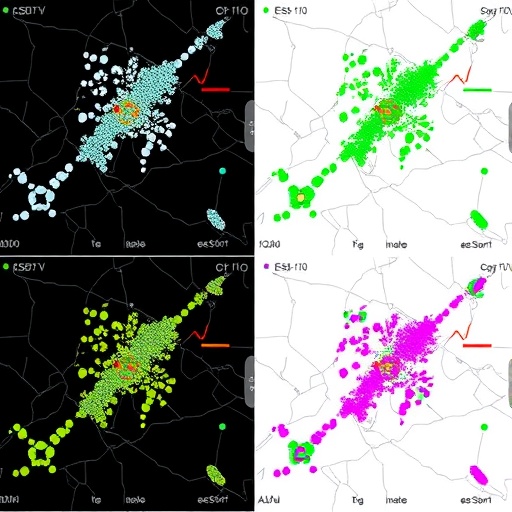
The most striking demonstration came from spatial data. FastCNV is, according to the team, the first method able to analyze CNVs from Visium HD, a high-definition spatial transcriptomics technology that records genome-wide expression across intact tissue at fine spatial resolution. Applied to breast cancer samples profiled with Visium HD, the software identified tumor subclones tightly related to different histologies — the distinct appearances tissue takes under the microscope — effectively drawing a map that links specific genetic aberrations to tumor progression. The evolutionary history reconstructed purely from expression data lined up with the visible architecture of the tissue itself. That convergence carries real weight, because tumor geography is clinically meaningful: regions with different evolutionary histories can behave differently under therapy, and knowing which aberrations localize where offers a route to studying how tumors invade, diversify and acquire resistance within their native spatial context rather than in dissociated, position-blind cell suspensions.
The clinical logic runs deeper still. Copy number aberrations are comparatively stable hallmarks of malignancy that persist even as a cell’s expression program shifts with its surroundings, which makes them a dependable way to flag tumor cells among normal bystanders — one of the core uses the authors cite, alongside characterizing clonal architecture. Because FastCNV requires neither matched normal DNA nor diploid reference cells from within the same sample, it can in principle be applied wherever expression data already exist, including retrospective cohorts sitting in public repositories. Combined with spatial coordinates, copy number inference lets researchers chart not just which cells are cancerous but which branch of the tumor’s family tree they occupy, layering genomics onto the tissue landscapes pathologists have read for more than a century. The authors position FastCNV explicitly as a step toward personalized medicine, in which a patient’s tumor could be screened for clonal structure rapidly and inexpensively as part of routine molecular diagnostics.
FastCNV is written as an R package, the lingua franca of computational biology, and is freely available on GitHub, while the underlying article is published open access in Genome Medicine. The work was led by co-first authors Gadea Cabrejas and Marine Sroussi under the joint supervision of Clarice Groeneveld and Aurélien de Reyniès, with funding from, among others, the French Ministry of Health, the French Ministry of Research, the French National Cancer Institute, the French League Against Cancer and the European Union’s Horizon Europe program. The authors conclude that FastCNV represents “a significant improvement on existing R methods” for copy number detection from spatial and single-cell data “in terms of speed, memory usage, sensitivity and accuracy,” highlighting its potential to advance cancer research and personalized medicine. Its arrival lands as spatial transcriptomics marches from specialist laboratories toward mainstream cancer research and, eventually, clinical pathology, with datasets growing faster than the software built to interpret them. If independent groups confirm the tool’s performance on their own cohorts, the tedious arithmetic of copy number inference could fade into the background of every single-cell and spatial analysis — leaving researchers free to follow the evolutionary stories their tumors are telling.
Cite Scienmag News
Juliet Wilcox. (August 29, 2026). New FastCNV tool predicts copy number variations from spatial and single-cell data. Scienmag. https://scienmag.com/new-fastcnv-tool-predicts-copy-number-variations-from-spatial-and-single-cell-data/
Juliet Wilcox. "New FastCNV tool predicts copy number variations from spatial and single-cell data." Scienmag, 29 August 2026, https://scienmag.com/new-fastcnv-tool-predicts-copy-number-variations-from-spatial-and-single-cell-data/. Accessed 3 September 2026.
Juliet Wilcox. "New FastCNV tool predicts copy number variations from spatial and single-cell data." Scienmag. August 29, 2026. https://scienmag.com/new-fastcnv-tool-predicts-copy-number-variations-from-spatial-and-single-cell-data/


