

Wednesday, July 15, 2026
Science
No Result
View All Result
  • Login
  • HOME
  • SCIENCE NEWS
  • CONTACT US
  • HOME
  • SCIENCE NEWS
  • CONTACT US
No Result
View All Result
Scienmag
No Result
View All Result
Home Science News Cancer

New Drug Design Method Enhances Cancer Treatments with Increased Potency

July 15, 2026
in Cancer
Reading Time: 2 mins read
0
New Drug Design Method Enhances Cancer Treatments with Increased Potency

New Drug Design Method Enhances Cancer Treatments with Increased Potency

65
SHARES
587
VIEWS
Share on FacebookShare on Twitter
ADVERTISEMENT

A new strategy for precision cancer therapy could make antibody-drug conjugates (ADCs) far more potent against heterogeneous tumors. Modern ADCs pair a tumor-seeking antibody with a cytotoxic payload, joined by a linker that guides the drug into cancer cells. In practice, however, each ADC is optimized to recognize one receptor type, leaving tumors with multiple cellular targets resistant to complete eradication.

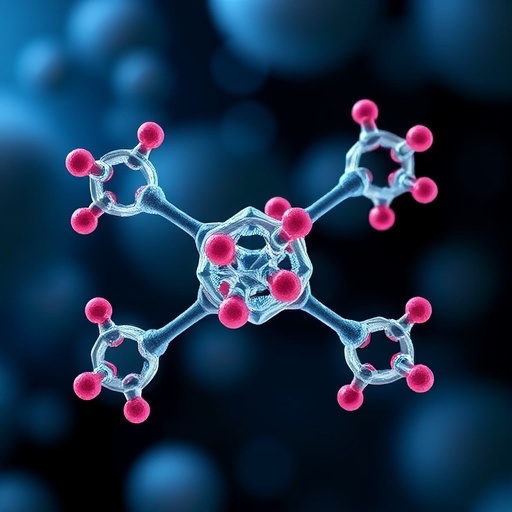
Researchers at Washington University School of Medicine report that ADCs can be re-engineered to “stack” targeting functions inside the body, rather than requiring entirely new drugs for each combination of tumor markers. Their study, published in Nature, demonstrates that self-assembling ADC components can improve how efficiently therapeutic agents accumulate at tumors and enhance antitumor response in vivo.

The approach uses click chemistry, a modular reaction concept that allows engineered molecular parts to join selectively. Instead of administering a single, fully assembled ADC that recognizes only one receptor, the team administers antibody halves equipped with complementary click partners. After the components circulate, the partners snap together at the tumor surface, assembling a multi-target therapeutic complex.

Two major receptor systems illustrate the design. One antibody targets EGFR, while another targets HER2; both receptors drive cancer growth through distinct signaling pathways. In mouse models of pancreatic, gastric, and breast cancer, sequential dosing enables the assembled ADC to bind more effectively when tumor cells express either receptor alone or both simultaneously.

The researchers also implemented a variant where two HER2 antibodies recognize different regions of the same receptor. This increases functional engagement by promoting cooperative binding and can intensify downstream delivery of the cytotoxic payload.

To quantify delivery, the team used radioactive tags to measure drug uptake in tumors. They found that the modified, self-assembling constructs delivered higher amounts to cancer cells than conventional ADCs, consistent with antibody clustering that boosts internalization.

Therapeutic impact was striking. In the pancreatic cancer model, survival reached about 90% at 120 days for animals treated with the self-assembling strategy, compared with less than 80 days on average for standard FDA-approved ADCs. The team also reduced off-target accumulation in the liver by tuning the system.

Beyond these models, the investigators argue the linker chemistry can be manufactured quickly and swapped modularly, enabling faster adaptation to new targets as resistance mechanisms emerge. They suggest the platform could eventually broaden options for cancers that are difficult to treat with conventional single-target ADC designs.

Subject of Research: Animals
Article Title: Modular in vivo antibody-ADC click to reverse drug resistance in tumors
News Publication Date: 15-Jul-2026
Web References: https://www.nature.com/articles/s41586-026-10789-w
References: Simó C, Vanover AC, Albanus RD, Panikar SS, Shmuel S, Benton A, Giraldo-Guzman J, Luna JM, Xu Y, Berry N-K, Keltee N, Liu J, Dehdashti F, Pereira PMR. Modular in vivo antibody-ADC click to reverse drug resistance in tumors. Nature. July 15. DOI: 10.1038/s41586-026-10789-w
Image Credits: Shayla Shmuel

Keywords: antibody-drug conjugates, click chemistry, EGFR, HER2, modular therapeutics, tumor targeting, drug resistance, self-assembly

Tags: ADC re-engineeringantibody half-assemblyantibody-drug conjugatesclick chemistry in drug designenhanced tumor targetingin vivo cancer therapyinnovative cancer treatment methodsmodular drug conjugatesmulti-target cancer treatmentprecision cancer therapyreceptor-specific cancer targetingtumor heterogeneity
Share26Tweet16
Previous Post

Researchers Say Solar Storm Risks May Be Underestimated

Next Post

Study identifies Europe’s most critical wetlands for climate action

Related Posts

ADLM 2026 to Highlight Diabetes Milestones, Space Diagnostics, and Cancer Biomarkers
Cancer

ADLM 2026 to Highlight Diabetes Milestones, Space Diagnostics, and Cancer Biomarkers

July 15, 2026
Integrating Polygenic Scores with Registry Data to Improve Colorectal Cancer Screening
Cancer

Integrating Polygenic Scores with Registry Data to Improve Colorectal Cancer Screening

July 15, 2026
Ulinastatin Shows Therapeutic Effects in Liver Diseases
Cancer

Ulinastatin Shows Therapeutic Effects in Liver Diseases

July 15, 2026
Mussel Protein Forms Protective Vessel Barrier, Then Disappears in Pancreatic Tumors
Cancer

Mussel Protein Forms Protective Vessel Barrier, Then Disappears in Pancreatic Tumors

July 15, 2026
Discovery Paves Way for Drug Therapies for Hypopigmentation Conditions
Cancer

Discovery Paves Way for Drug Therapies for Hypopigmentation Conditions

July 15, 2026
Fred Hutch Announces 2026 Evergreen Fund Awardees
Cancer

Fred Hutch Announces 2026 Evergreen Fund Awardees

July 15, 2026
Next Post
Study identifies Europe’s most critical wetlands for climate action

Study identifies Europe's most critical wetlands for climate action

  • Mothers who receive childcare support from maternal grandparents show more

    Mothers who receive childcare support from maternal grandparents show more parental warmth, finds NTU Singapore study

    27656 shares
    Share 11059 Tweet 6912
  • University of Seville Breaks 120-Year-Old Mystery, Revises a Key Einstein Concept

    1061 shares
    Share 424 Tweet 265
  • Bee body mass, pathogens and local climate influence heat tolerance

    682 shares
    Share 273 Tweet 171
  • Researchers record first-ever images and data of a shark experiencing a boat strike

    546 shares
    Share 218 Tweet 137
  • Groundbreaking Clinical Trial Reveals Lubiprostone Enhances Kidney Function

    531 shares
    Share 212 Tweet 133
Science

Embark on a thrilling journey of discovery with Scienmag.com—your ultimate source for cutting-edge breakthroughs. Immerse yourself in a world where curiosity knows no limits and tomorrow’s possibilities become today’s reality!

RECENT NEWS

  • Study Finds Smokers Rarely Increase Smoking After Switching to Low-Nicotine Cigarettes
  • Machine Learning Method Widens Accurate Use of Martin-Hopkins LDL Risk Equation
  • Researchers Uncover Hidden Identity of Elusive Superconductor
  • New Study Quantifies How Healthier, Sustainable Diets Could Reshape Global Agriculture

Categories

  • Agriculture
  • Anthropology
  • Archaeology
  • Athmospheric
  • Biology
  • Biotechnology
  • Blog
  • Bussines
  • Cancer
  • Chemistry
  • Climate
  • Earth Science
  • Editorial Policy
  • Marine
  • Mathematics
  • Medicine
  • Pediatry
  • Policy
  • Psychology & Psychiatry
  • Science Education
  • Social Science
  • Space
  • Technology and Engineering

Subscribe to Blog via Email

Enter your email address to subscribe to this blog and receive notifications of new posts by email.

Join 5,146 other subscribers

© 2025 Scienmag - Science Magazine

Welcome Back!

Login to your account below

Forgotten Password?

Retrieve your password

Please enter your username or email address to reset your password.

Log In
No Result
View All Result
  • HOME
  • SCIENCE NEWS
  • CONTACT US

© 2025 Scienmag - Science Magazine

Discover more from Science

Subscribe now to keep reading and get access to the full archive.

Continue reading
