


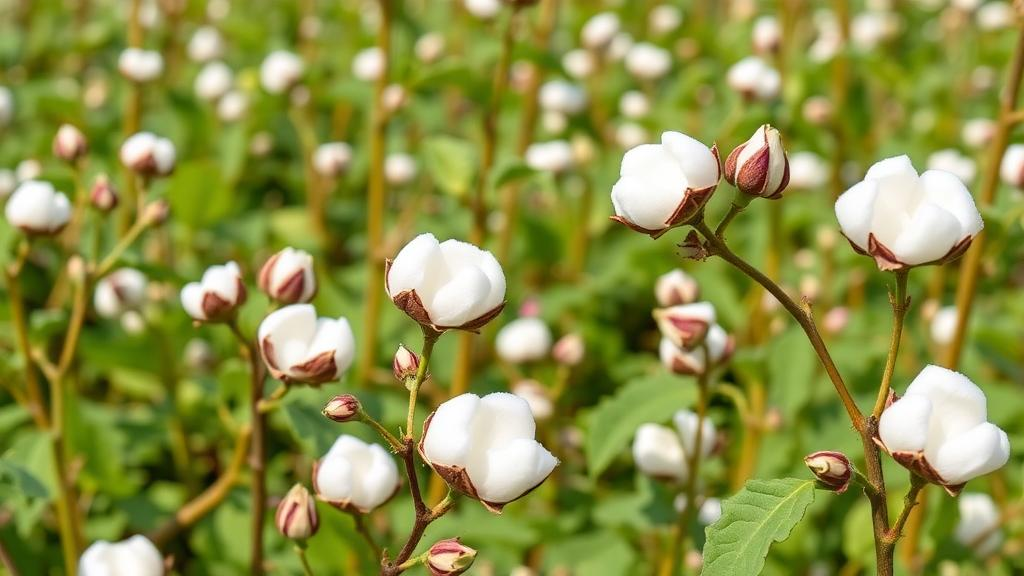
Plant breeders in Punjab have added a new entry to the short list of old-world cotton varieties available to farmers in northern India. PBD 88, a high-yielding desi cotton variety of the species Gossypium arboreum, has been described in the Indian Journal of Genetics and Plant Breeding by a team from Punjab Agricultural University. The variety was developed for the irrigated zones of North India, where most commercial cotton cultivation currently relies on upland cotton, Gossypium hirsutum, a species introduced to the subcontinent and now dominant across the world. The release of a new arboreum cultivar is notable precisely because the species has been steadily displaced over the past half century, despite its deep historical roots in Indian agriculture.
Desi cotton, as the diploid old-world species Gossypium arboreum is known in India, was once the backbone of the country’s cotton economy. India is considered a center of diversity for the species, and its coarse, short-staple fiber served local textile traditions for millennia. With the spread of high-yielding tetraploid hybrids during the Green Revolution era and, more recently, the near-universal adoption of Bt-transgenic hirsutum hybrids for resistance to bollworms, the area under arboreum cultivars contracted dramatically. The crop did not disappear, however. Desi cotton retains genuine agronomic advantages in certain environments, including tolerance to sucking pests, resilience under erratic inputs, and suitability for short-duration cropping systems, which keeps breeding programs invested in the species.
The new variety emerged from the cotton breeding program of Punjab Agricultural University, with work carried out at the university’s Regional Research Station in Bathinda and supported by scientists at the Department of Plant Breeding and Genetics in Ludhiana, the Regional Research Station in Faridkot, and the Dr. JC Bakshi Regional Research Station in Abohar. That geographic spread matters. Cotton performance in Punjab varies considerably across the state’s cotton belt, and a variety intended for recommendation must prove itself across multiple locations before it can be notified for general cultivation. The multi-location trial work described in the author contributions, including hybridization, selection, field experimentation, and data validation across stations, reflects the standard pipeline through which a breeding line becomes a farmer-facing variety in India.
The development of PBD 88 was conducted under the All India Coordinated Research Project on Cotton, the national framework through which new cotton genotypes are tested across agro-climatic zones and evaluated for yield, fiber quality, and disease reaction before release. The AICRP system is one of the largest varietal testing networks in the world, and its trials are designed to separate genuine, broadly adapted genetic improvement from performance that is merely favorable at a single site. For a desi cotton variety to advance through this system and be proposed for the irrigated zones of North India, it must have performed competitively against existing checks under the region’s irrigated management conditions, where the yield ceiling is set by full irrigation, fertilizer response, and the long growing season of the Punjab cotton belt.
The technical challenge in arboreum breeding is reconciling the species’ inherent fiber constraints with modern market demands. Desi cotton carries shorter and coarser staple than tetraploid cottons, which limits its use in fine count spinning. Breeders working with the species therefore focus on pushing seed cotton yield, improving boll retention, managing plant architecture for mechanical and manual picking, and maintaining the pest and disease resilience that justifies the crop’s place in the system. At the same time, arboreum cotton has a niche in coarse yarn, surgical cotton, absorbent products, and blended textiles, and its short duration can allow better rotation with wheat in the cotton-wheat systems of North India. A variety that combines high yield with the species’ natural hardiness addresses both the agronomic and the industrial sides of that equation.
The publication of PBD 88 as a varietal notification and germplasm registration paper serves two purposes. First, it formally documents the variety’s pedigree, performance, and distinguishing characteristics, which is the legal and scientific basis for its notification and for seed production chains to begin. Second, it registers the material in the public record so that other breeders can use it as a parent. Germplasm registration is an underappreciated part of crop improvement: elite adapted varieties carry alleles for adaptation to specific environments, and crossing programs that draw on registered varieties can pyramid those alleles into future cultivars. For a species with a shrinking breeding community, every registered variety is also a conservation event, keeping arboreum genetics actively circulating rather than stored and unused.
The timing of the release is significant for the wider debate about cotton diversity in India. The country’s cotton landscape has become strikingly uniform, with a handful of Bt hirsutum hybrids covering the overwhelming majority of the cropped area. Genetic uniformity at that scale carries risks, from vulnerability to emerging pests and diseases to the loss of options as climate variability reshapes growing conditions. Pink bollworm resistance problems in recent years have intensified interest in alternative genetic backgrounds, and desi cotton’s natural attributes have drawn renewed attention from researchers and from sustainability-focused textile initiatives. A notified arboreum variety for irrigated North India gives farmers in the region a formal, quality-assured option within that conversation, rather than leaving the species to marginal, rain-fed niches.
For Punjab’s cotton farmers, the practical significance of PBD 88 depends on the details that the full paper documents: its yield advantage over existing checks, its fiber parameters, its maturity duration, and its reaction to the diseases and pests prevalent in the region, including bacterial blight and the sucking pest complex. The authors’ contributions indicate that the variety went through hybridization, successive selection, replicated field experiments, quality analysis, and multi-location validation, the sequence through which those agronomic claims are established. Farmers considering the variety will ultimately rely on the state-level recommendation that follows notification, along with the seed multiplication that makes it available through official channels. The involvement of Punjab Agricultural University’s regional stations suggests that seed and demonstration efforts will be concentrated in the state’s traditional cotton districts.
Beyond its immediate application, PBD 88 is a case study in how public breeding institutions preserve crop diversity while pursuing productivity. The team, led by Paramjit Singh and Vineet Kumar with colleagues including Gomti Grover, Dharminder Pathak, Pankaj Rathore, Harish Kumar, and Sunayana, worked within the state research scheme and the national coordinated project, the institutional infrastructure that has sustained Indian varietal improvement for decades. In an era when private-sector hybrids dominate major crops, the continued public release of a non-hybrid, open-pollinated variety of a heritage species is a quiet but meaningful signal. It keeps a genetically distinct cotton species in farmers’ fields, gives breeders a modern adapted parent to work with, and offers the cotton value chain of North India a broader genetic menu at a moment when resilience and diversity have become central to the future of the crop.
Subject of Research: Breeding and release of the desi cotton variety PBD 88 (Gossypium arboreum) for irrigated zones of North India
Article Title: PBD 88: A High-Yielding, Desi Cotton Variety (Gossypium arboreum) for the Irrigated Zones of North India
Article References: Singh, P., Kumar, V., Grover, G., Pathak, D., Rathore, P., Kumar, H., & Sunayana (2026). PBD 88: A High-Yielding, Desi Cotton Variety (Gossypium arboreum) for the Irrigated Zones of North India. Indian Journal of Genetics and Plant Breeding. https://doi.org/10.1007/s44489-026-00052-x
Image Credits: AI Generated
DOI: 10.1007/s44489-026-00052-x
Keywords: PBD 88, desi cotton, Gossypium arboreum, cotton breeding, Punjab Agricultural University, North India, irrigated cotton, variety release, plant genetics, AICRP Cotton, crop yield, agriculture
Cite Scienmag News
Alan Morgan. (October 2, 2026). New Desi Cotton Variety PBD 88 Promises Higher Yields for Irrigated North India. Scienmag. https://scienmag.com/new-desi-cotton-variety-pbd-88-promises-higher-yields-for-irrigated-north-india/
Alan Morgan. "New Desi Cotton Variety PBD 88 Promises Higher Yields for Irrigated North India." Scienmag, 2 October 2026, https://scienmag.com/new-desi-cotton-variety-pbd-88-promises-higher-yields-for-irrigated-north-india/. Accessed 4 October 2026.
Alan Morgan. "New Desi Cotton Variety PBD 88 Promises Higher Yields for Irrigated North India." Scienmag. October 2, 2026. https://scienmag.com/new-desi-cotton-variety-pbd-88-promises-higher-yields-for-irrigated-north-india/


