


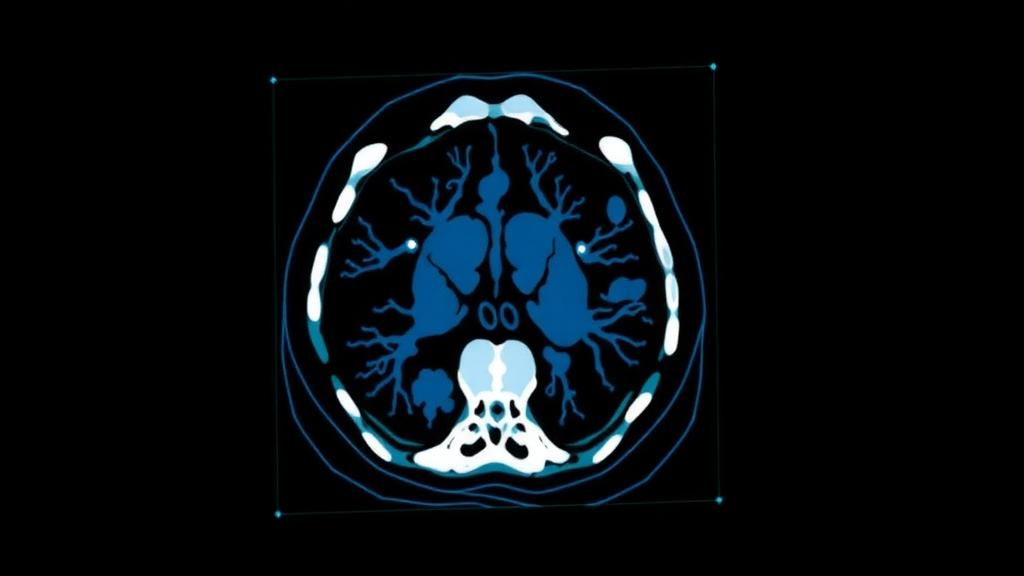
Computed tomography has become one of the most powerful diagnostic tools in modern medicine, but every scan comes with a hidden cost: radiation exposure. To protect patients, hospitals increasingly rely on low-dose CT protocols that dramatically reduce the number of X-ray photons used to image the body. The trade-off is severe. Fewer photons mean noisier, artifact-riddled images, and radiologists can struggle to distinguish subtle pathology from reconstruction noise. A new study published in Applied Intelligence by Son Pham, Ngoc-Thao Nguyen, and Bac Le of the University of Science, Ho Chi Minh City, and Vietnam National University proposes a way to have both safety and clarity, and, crucially, to understand exactly how the reconstruction algorithm arrives at its answer. Their framework, called U-NetL2O, combines the raw power of deep learning with the transparency of classical optimization, offering a rare glimpse inside the black box of medical image reconstruction.
The core problem the researchers tackle is a classic inverse problem in imaging physics. A CT scanner measures how X-rays attenuate as they pass through tissue, and from those projection measurements a reconstruction algorithm must infer the internal structure of the body. When the dose is lowered, the measurements become noisier and the mathematical problem becomes more ill-posed, meaning many different images could plausibly explain the same data. Traditional iterative reconstruction methods handle this by imposing explicit constraints, such as data consistency with the measured projections and regularization assumptions about what natural images look like. These methods are mathematically principled and interpretable, but they are computationally expensive and their hand-crafted priors often fail to capture the full statistical richness of real anatomical images.
Deep learning has swept through this field in recent years. Networks trained on pairs of low-dose and normal-dose images can learn to denoise and reconstruct with remarkable speed and quality, often in a single forward pass. Yet these end-to-end approaches carry a serious liability in a clinical setting: they are opaque. When a network produces a reconstruction, no one can say with confidence which parts of the output are trustworthy measurements and which are hallucinated details invented by the network’s training data. In medicine, where a fabricated structure could lead to a misdiagnosis, this lack of transparency is not a philosophical inconvenience but a practical barrier to adoption. Plug-and-play methods, which insert a learned denoiser into an iterative optimization loop, offer a partial compromise, but they too leave the relationship between the learned component and the optimization objective largely unexamined.
U-NetL2O takes a different route, one rooted in the Learning-to-Optimize paradigm. Instead of training a network to map noisy images directly to clean ones, the authors embed a U-Net-based learned update operator inside an unrolled Linearized ADMM scheme. ADMM, the Alternating Direction Method of Multipliers, is a workhorse of large-scale optimization that breaks a difficult problem into simpler subproblems solved alternately until convergence. In the unrolled version, a fixed number of these iterations are laid out as layers of a network, and the update steps themselves are parameterized by learnable components. The U-Net, a convolutional architecture famous for its success in biomedical image segmentation, serves as the learned update operator that refines the image estimate at each iteration, injecting data-driven prior knowledge about what realistic CT images look like.
The crucial design decision is that the overall optimization structure is preserved. The data-fidelity term, which ties the reconstruction to the actual scanner measurements, remains explicit and intact. The learned network does not replace the physics; it augments it. This means that every intermediate image produced during reconstruction is a meaningful point in the optimization trajectory, not an arbitrary feature activation. If the algorithm converges, it converges toward a solution that satisfies both the measured data and the learned prior. If it fails, the failure occurs within a structured mathematical framework where it can be located and diagnosed. This is precisely the property that end-to-end networks lack, and it is what the authors mean when they describe their method as explainable by construction.
Interpretability, however, is not just an architectural property; it needs to be visible to the people who use the system. To that end, the researchers introduce an optimization-aware explainable AI approach based on heatmap visualizations. Borrowing ideas from gradient-based localization techniques such as Grad-CAM, which highlight which regions of an input most influence a network’s output, their method illustrates how structural information is progressively refined across the optimization iterations. A clinician or researcher can watch, iteration by iteration, which anatomical regions the algorithm is focusing on and how the learned update operator reshapes them. Early iterations may establish coarse structures, while later iterations sharpen edges and suppress noise in targeted areas. The heatmaps turn the reconstruction from a single inscrutable output into a traceable process, revealing the internal dynamics of the learned optimization in a form that humans can inspect and audit.
The framework goes one step further with empirical diagnostic indicators that monitor in-distribution consistency. The idea is statistical: a reconstruction algorithm trained on one class of images should behave predictably when applied to similar data. When the input departs too far from the training distribution, for example because of unusual scanner settings, extreme noise levels, or rare anatomy, the learned components may behave unreliably. The diagnostic indicators provide warning signals that flag heavily degraded reconstructions, alerting users that the output should be treated with suspicion. This kind of built-in self-monitoring echoes broader efforts in the machine learning community, such as model cards and certification frameworks for trustworthy AI, and it addresses a genuine clinical need: radiologists must know not only what an algorithm produces but when that production is likely to be wrong.
Experimentally, the authors report that U-NetL2O achieves competitive reconstruction performance on low-dose CT benchmarks, including the LoDoPaB-CT dataset, a widely used benchmark built from the Lung Image Database Consortium collection that has become a standard proving ground for reconstruction algorithms. Competitive performance is itself notable, because interpretability is often assumed to come at a steep cost in accuracy. Here, the structured optimization framework does not sacrifice image quality to gain transparency. The combination suggests that the dichotomy between principled classical methods and powerful learned methods is not a true trade-off but a design choice, and that hybrid architectures can capture the best of both worlds when the learned components are placed carefully within the mathematical structure.
The significance of this work extends beyond CT reconstruction. Algorithm unrolling, the technique of converting iterative optimization algorithms into trainable network architectures, has emerged as a major theme in signal and image processing precisely because it retains interpretability while gaining representational power. By demonstrating an explainable L2O framework with optimization-aware visualizations and statistical diagnostics, the Vietnamese team provides a template that could be adapted to other inverse problems: magnetic resonance imaging, positron emission tomography, seismic imaging, and astronomical deconvolution all share the same fundamental structure of noisy measurements and ill-posed inference. In each of these domains, the question of whether an algorithm’s output can be trusted is as important as the output itself, and frameworks that make trust verifiable are likely to shape how regulators, clinicians, and scientists adopt machine learning.
The authors have also made their work reproducible, releasing both code and datasets through a public GitHub repository, which allows other researchers to scrutinize, extend, and stress-test the framework. Supported by funding from Vietnam’s National Foundation for Science and Technology Development, the study reflects a growing international effort to make medical AI accountable rather than merely accurate. As low-dose imaging protocols spread and deep learning penetrates deeper into clinical workflows, the demand for systems that can explain themselves will only intensify. U-NetL2O does not claim to have solved medical AI transparency in one stroke, but it demonstrates concretely that a reconstruction algorithm can be simultaneously learned, competitive, and legible, showing its reasoning in heatmaps and flagging its own failures in statistics. In a field where the stakes are measured in diagnoses and radiation doses, that combination may prove to be the most important result of all.
Subject of Research: Explainable learning-to-optimize deep learning for low-dose CT image reconstruction
Article Title: U-NetL2O: An explainable model for low-dose CT image reconstruction
Article References: Pham, S., Nguyen, N.-T., & Le, B. (2026). U-NetL2O: An explainable model for low-dose CT image reconstruction. Applied Intelligence, 56(15), Article 432. https://doi.org/10.1007/s10489-026-07480-y
Image Credits: AI Generated
DOI: 10.1007/s10489-026-07480-y
Keywords: low-dose CT, image reconstruction, explainable AI, learning to optimize, U-Net, ADMM, algorithm unrolling, plug-and-play priors, heatmap visualization, diagnostic indicators, medical imaging, deep learning
Cite Scienmag News
Ophelia Keating. (October 4, 2026). Explainable AI Opens the Black Box of Low-Dose CT Image Reconstruction. Scienmag. https://scienmag.com/explainable-ai-opens-the-black-box-of-low-dose-ct-image-reconstruction/
Ophelia Keating. "Explainable AI Opens the Black Box of Low-Dose CT Image Reconstruction." Scienmag, 4 October 2026, https://scienmag.com/explainable-ai-opens-the-black-box-of-low-dose-ct-image-reconstruction/. Accessed 4 October 2026.
Ophelia Keating. "Explainable AI Opens the Black Box of Low-Dose CT Image Reconstruction." Scienmag. October 4, 2026. https://scienmag.com/explainable-ai-opens-the-black-box-of-low-dose-ct-image-reconstruction/


