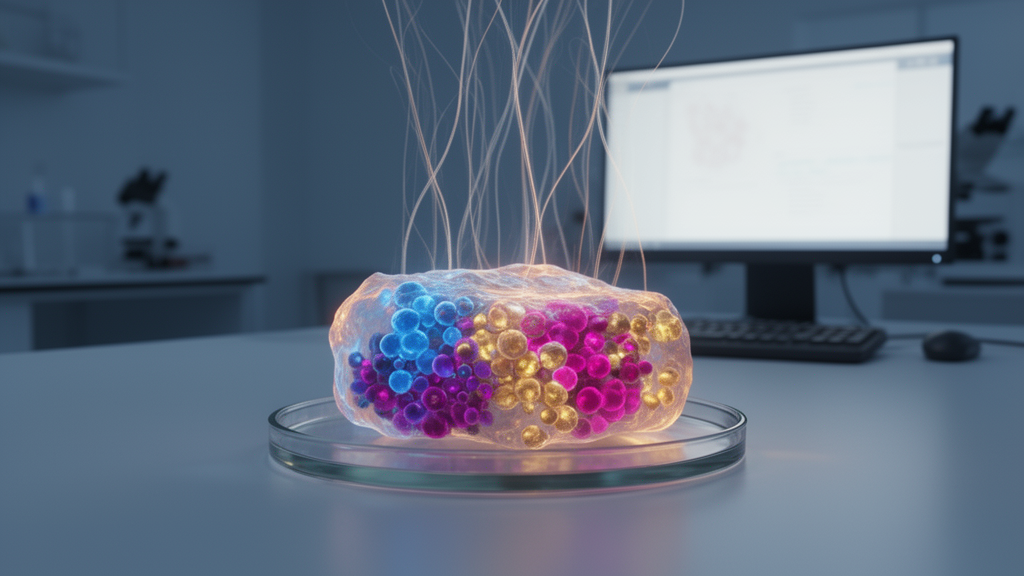
A new computational framework can pull apart the mixed signals inside bulk tissue samples and spatial transcriptomics spots, recovering both the proportions of constituent cell types and the gene expression programs specific to each cell type at single-sample resolution. The method, called BayesPrism-DWLS, was developed after a systematic benchmarking of dozens of deconvolution approaches across mouse gastric, colon, small intestine, lung, and liver tissues, and is described in a research article published in Cell Regeneration on 10 August 2026.
Bulk RNA sequencing captures the genes expressed in a tissue sample, but it reports only average expression levels across all cells, fundamentally lacking cell-type resolution. Spatial transcriptomics technologies such as 10 × Visium and Slide-seq retain spatial information yet generally fail to reach single-cell resolution, because multiple cell types contribute to the signal measured within a single spot. Meanwhile, flow cytometry and single-cell RNA sequencing provide high-resolution cellular profiling but are hindered by high cost, technical variability, high dropout rates, and scalability challenges across large sample cohorts. Computational cell-type deconvolution methods have emerged as a powerful alternative, leveraging multi-omics data to infer both the proportions of constituent cell types and their specific expression patterns from heterogeneous tissue mixtures.
While multiple benchmarking studies have evaluated cell-type deconvolution methods, significant gaps remained. Previous evaluations focused primarily on deconvolution accuracy within specific cancer types or tumor immune microenvironments, or assessed the impact of technical and biological variables on algorithmic performance. Most existing methods were originally optimized for blood-derived or immune-enriched tissues, and their generalizability to other solid tissues remained insufficiently validated. Furthermore, although the estimation of cell-type proportion had reached relative maturity, methods capable of accurately recovering cell-type-specific gene expression profiles at the individual-sample level remained limited. To bridge these gaps, the researchers conducted a comprehensive benchmarking of 25 cell-type proportion deconvolution methods and seven gene expression deconvolution algorithms across multiple tissue types.
The benchmarking framework integrated high-quality, publicly available scRNA-seq datasets with matched or independent bulk RNA-seq datasets from the five tissues. Within each single-cell dataset, cells were annotated into 10 to 17 major cell types using canonical marker genes. For each single-cell dataset, the team simulated 1,000 pseudo-bulk mixtures by randomly sampling and aggregating single cells, producing highly heterogeneous compositions with cell-type proportions ranging from 1% to 95%. Cell-type signature reference expression profiles were constructed by averaging gene expression across cells of the same type and selecting cell-type-specific marker genes. Performance was evaluated using Pearson correlation, root mean square error, cosine similarity, and Bray–Curtis dissimilarity, together with additional experimental validation using immunofluorescence staining on real bulk RNA-seq datasets where ground-truth cellular compositions are not directly available.
Using gastric tissue as a representative example, with scRNA-seq data annotated into 14 major cell types, DWLS (dampened weighted least squares) achieved the highest fidelity with the ground truth, with a near-perfect Pearson correlation coefficient of 0.996 and minimal RMSE of 0.01. Other methods, including FARDEEP, RLR, EpiDISH, SCDC, and MuSiC, performed slightly worse, with Pearson correlations around 0.99 and RMSE values close to 0.02. Across all pseudo-bulk mixtures, DWLS, FARDEEP, RLR, EpiDISH, and MuSiC consistently exhibited lower Bray–Curtis distances compared with other methods, and DWLS achieved the smallest overall deviations. T cells, B cells, and Tuft cells were generally more difficult to resolve, likely due to limited transcriptomic distinctiveness or lower capture efficiency in the reference data, yet DWLS maintained comparatively smaller deviations of less than 0.25 for these challenging populations.
Detection accuracy was assessed using a 1% proportion threshold across 14,000 mixture–cell type prediction instances from the 1,000 simulated mixtures and 14 cell types. In the 9,497 instances where the true proportion was below 1%, DWLS produced the lowest false positive rate at 1.3%, outperforming FARDEEP at 7.3%, RLR and EpiDISH at 12% each, and SCDC and MuSiC at 6% each. CDSeq exhibited a high false positive rate of 97.5%. In the remaining 4,503 instances with a true proportion of at least 1%, DebCAM had the lowest false negative rate at 0.05% but a high false positive rate of 72.5%, while DWLS had the second-lowest false negative rate at 1.7%. DeconvSeq maintained a low false positive rate of 5.2% but failed to detect most present cell types, with a false negative rate of 75.8%. Overall, DWLS achieved the highest prediction accuracy at 98.9%, and it consistently displayed superior accuracy across detection thresholds spanning 0.1% to 100%, particularly at low thresholds corresponding to rare cell types.
Applied to real bulk RNA-seq data from gastric epithelium–specific ALK3 mutant mice and matched controls, DWLS revealed biologically consistent compositional patterns: compared with the antrum, the corpus exhibited a markedly higher proportion of HCl-secreting parietal cells and a lower proportion of mucus-secreting pit cells. In the corpus of ALK3 mutant mice, basal/neck, chief, and proliferating cells were increased while parietal and pit cells were reduced, reflecting disruption of BMP-mediated maintenance of parietal and pit cell differentiation. Immunofluorescence staining and manual cell counting showed strong concordance between experimentally measured trends and DWLS-based estimates, although discrepancies were observed for rare cell types; for example, proliferating cells increased from 10 to 20% based on DWLS estimates, compared with an increase from 7.5% to 17.6% measured by immunofluorescence. Notably, among all evaluated methods, only DWLS consistently recovered the direction of proportional changes across all five epithelial cell types. A pronounced discrepancy emerged when comparing scRNA-seq–derived cell compositions with experimentally measured proportions: in scRNA-seq data, parietal cells accounted for only about 4.5% of epithelial cells, whereas histological studies indicate this population can constitute up to roughly 60% of the gastric corpus epithelium. DWLS-based deconvolution of bulk RNA-seq data yielded substantially higher and more biologically plausible estimates, suggesting that bulk transcriptomic deconvolution can partially compensate for intrinsic technical artifacts of scRNA-seq such as dissociation inefficiency and selective cell loss.
Because proportion estimation and gene expression inference are tightly coupled, errors in proportion estimates, especially for low-abundance cell types, can propagate to gene-level predictions. To improve gene expression prediction accuracy, the researchers incorporated the highly accurate cell-type proportion estimates derived from DWLS into BayesPrism, supplying DWLS-derived proportions as fixed inputs and thereby decoupling proportion estimation from gene expression inference. Among all cell types, BayesPrism-DWLS consistently outperformed all other methods, with the mean cosine similarity increasing from approximately 0.5 to about 0.75. Predicted expression profiles closely matched the ground truth, with Pearson correlation coefficients exceeding 0.95 for most cell types, and low-abundance populations including B cells, T cells, and tuft cells were accurately recovered. The CellR-DWLS variant also exhibited marked improvement, with an approximately twofold increase in mean cosine similarity reaching about 0.5, whereas integrating DWLS proportions into bMIND and swCAM showed minimal improvements over their original implementations.
Validation followed using bulk RNA-seq data from a DSS-induced mouse colitis model, with matched scRNA-seq data serving as an independent reference. DSS treatment was associated with reduced proportions of enterocytes, goblet cells, and stem cells, together with increased fibroblasts and macrophages, consistent with epithelial injury and inflammatory cell infiltration. By analyzing the bulk RNA-seq data across multiple time points, the team identified the top 50 cell-type-specific differentially expressed genes, many of which showed similar enrichment patterns in the corresponding cell types in the scRNA-seq data. Ffar4 was upregulated in goblet cells after two days of DSS treatment, consistent with its known role in promoting goblet cell differentiation and mucus secretion, while Gpx2 was downregulated in stem cells, transit-amplifying cells, and goblet cells, reflecting impaired epithelial barrier function and heightened inflammatory responses. The inferred expression patterns of these genes closely matched those observed in the scRNA-seq data. In a mouse lung influenza infection model treated with the insulin sensitizer MSDC-0602 K, BayesPrism-DWLS inferred an increased proportion of epithelial cells along with a reduction in immune and stromal cells following treatment, and revealed downregulation of key pro-inflammatory mediators including Tnf, Il1b, and Ccl2, primarily within macrophage and neutrophil populations.
The framework was also applied to matched spatial transcriptomic datasets from the DSS-induced colitis model covering naive, inflammation, and regeneration stages, using 10 × Visium data collected at Days 0, 12, and 30 and imaging-based single-molecule MERFISH data obtained at Days 0, 3, 9, and 21. Cell-type deconvolution revealed cell spatial distributions consistent with known colonic architecture, with enterocytes predominantly localized to the upper regions of colonic crypts and stem cells and transit-amplifying cells localized to the crypt base. Comparing Day 12 enterocytes with Day 0, BayesPrism-DWLS identified sets of upregulated and downregulated genes, while spot-level differential expression analysis captured only a subset of these changes, such as Nos2, and missed others, such as Areg, an EGF family member that activates MAPK/ERK and PI3K/AKT signaling pathways to regulate proliferation, differentiation, and tissue repair. Spatially, Nos2 and Areg were primarily expressed in the upper crypt regions, peaking at Day 12, which was confirmed by MERFISH validation. Gene Ontology and KEGG enrichment analyses revealed that upregulated enterocyte genes were enriched for inflammatory and stress-related processes, including response to lipopolysaccharide, antimicrobial humoral response, I-κB kinase/NF-κB signaling, wound healing, and oxidative stress, while downregulated genes were associated with epithelial structural integrity and transport and metabolic functions, indicating impaired nutrient absorption and metabolic activity. The researchers provide an open-source R implementation requiring only three input files: a single-cell count matrix, a bulk RNA-seq or spatial transcriptomics count matrix, and cell-type annotations for the single-cell reference. They note limitations, including dependence on external single-cell reference expression matrices, potential effects of spot selection thresholds on downstream differential expression results, and the fact that most existing deconvolution methods, including theirs, do not explicitly incorporate spatial neighborhood information.
Subject of Research: Computational deconvolution of cell-type proportions and cell-type-specific gene expression from bulk and spatial transcriptomics data
Article Title: Integrated inference of cellular compositions and gene expression programs by deconvolution
Article References: Zhang, Z., Wang, X., Hong, F., Yu, P., Suo, S., & Chen, Y.-G. (2026). Integrated inference of cellular compositions and gene expression programs by deconvolution. Cell Regeneration, 15(1), Article 26. https://doi.org/10.1186/s13619-026-00299-5
Image Credits: AI Generated
DOI: 10.1186/s13619-026-00299-5
Keywords: deconvolution, BayesPrism-DWLS, DWLS, bulk RNA-seq, spatial transcriptomics, single-cell RNA-seq, cell-type proportions, gene expression inference, DSS-induced colitis, 10x Visium, MERFISH, benchmarking
Cite Scienmag News
Brooke Gardner. (October 28, 2026). New computational tool unearths hidden cell-type signals in bulk and spatial transcriptomics. Scienmag. https://scienmag.com/new-computational-tool-unearths-hidden-cell-type-signals-in-bulk-and-spatial-transcriptomics/
Brooke Gardner. "New computational tool unearths hidden cell-type signals in bulk and spatial transcriptomics." Scienmag, 28 October 2026, https://scienmag.com/new-computational-tool-unearths-hidden-cell-type-signals-in-bulk-and-spatial-transcriptomics/. Accessed 30 October 2026.
Brooke Gardner. "New computational tool unearths hidden cell-type signals in bulk and spatial transcriptomics." Scienmag. October 28, 2026. https://scienmag.com/new-computational-tool-unearths-hidden-cell-type-signals-in-bulk-and-spatial-transcriptomics/