


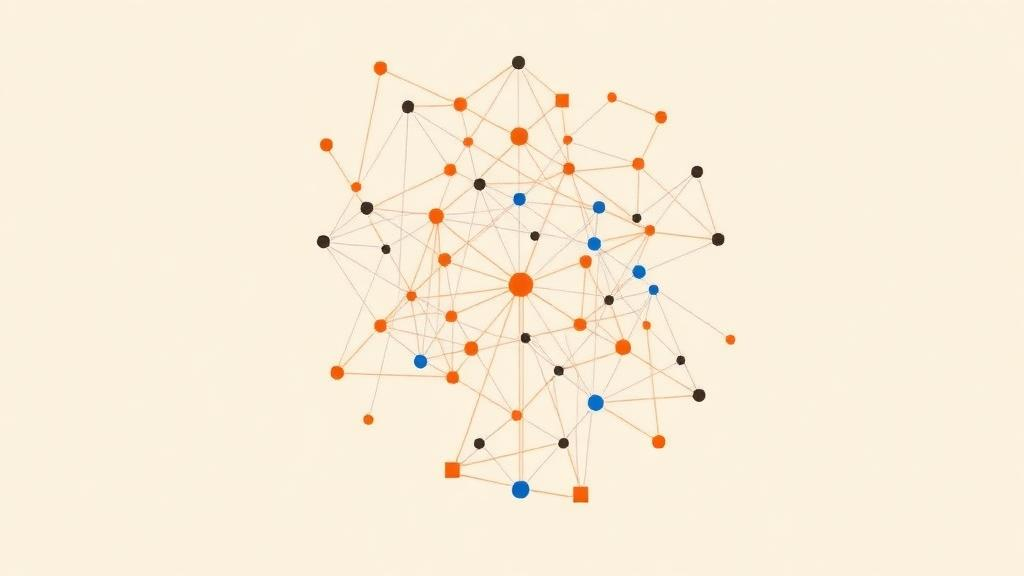
Social media platforms have become the primary arenas where public opinion forms, fractures, and spreads. When a controversial event breaks, users react through posts, reposts, and comments, and those interactions can crystallize into consensus, polarization, or sharp factional divides. For researchers and policymakers alike, being able to forecast how individual opinions will evolve over time is a tantalizing goal, but one that has resisted straightforward solutions. A research team led by Quan Liu of Nanyang Normal University now reports a new model, called GA-ODE, that fuses classical social physics with modern deep learning to predict opinion trajectories more accurately and more robustly than previous approaches. The work, published in Discover Artificial Intelligence, addresses a long-standing tension in computational social science between mechanistic interpretability and raw predictive power.
The difficulty lies in two competing traditions. Classical opinion dynamics models, such as the DeGroot model of 1974, the Friedkin-Johnsen model, and the Hegselmann-Krause bounded-confidence framework, describe how individuals update their views through explicit interaction rules. These models elegantly explain group-level phenomena like consensus formation and polarization, but they rest on simplifying assumptions: global interactions, homogeneous influence weights, or fixed neighborhoods. Real social networks, by contrast, are sparse and locally connected, and different neighbors exert very different degrees of influence on any given user. When the goal shifts from describing aggregate trends to predicting what a specific individual will believe next month, those idealized assumptions begin to crack.
Purely data-driven methods have the opposite problem. Continuous-time stochastic models such as SLANT and SLANT+ can process irregular event streams, while deep sequence models like LSTM and Transformers capture nonlinear patterns in individual histories, and graph neural networks incorporate network topology through neighborhood aggregation. Yet these approaches learn statistical correlations without any explicit formulation of social influence mechanisms. The authors point out that under observational noise, this lack of structural grounding causes substantial error accumulation over long prediction horizons, causing predicted trajectories to drift away from the actual dynamics of opinion change.
GA-ODE, short for graph attention with ordinary differential equations, belongs to an emerging middle ground sometimes called socially informed neural networks, which borrows ideas from physics-informed neural networks and Neural ODEs. The architecture has four cooperating components. First, each user receives a learnable embedding vector concatenated with their initially observed opinion, and a multilayer perceptron converts timestamps into continuous-time feature vectors. Second, a graph attention network computes unnormalized attention scores between a target user and each neighbor, normalizes them through a softmax function, and aggregates neighborhood information using a multi-head mechanism. This allows the model to learn differentiated aggregation weights, reflecting the fact that not all neighbors matter equally.
Third, inspired by the gating machinery of LSTM networks, the model employs a gated evolution unit to balance two opposing forces: individual opinion persistence and neighborhood assimilation. A forget gate, computed jointly from the temporal features and the user’s previous hidden state, determines how much of the historical cognitive state to retain. An input gate and a candidate cell state then control how much aggregated neighborhood information flows into the update, while an output gate regulates the contribution of the cell state to the final hidden representation. A self-attention module subsequently fuses the user’s hidden state with the temporal embedding, capturing the dynamic correlation between who a user is and when the prediction is being made.
The fourth and most distinctive component is a structure-aware ODE consistency constraint rooted in the Stochastic Bounded Confidence Model. Instead of a hard confidence threshold that forbids interaction between people holding divergent views, this probabilistic formulation assigns interaction probabilities inversely related to opinion distance, so individuals are more likely to engage like-minded peers but occasionally interact with those who disagree. The authors derive a continuous-time dynamical system from the discrete interaction rule, and because sampling discrete interaction partners is not differentiable, they apply the Gumbel-Softmax reparameterization trick to create a smooth, differentiable relaxation. The training loss then penalizes the squared difference between the time derivative of the predicted opinion trajectory, computed via automatic differentiation at randomly sampled collocation points, and the expected social influence term restricted to each user’s immediate neighborhood by an adjacency matrix mask.
The team evaluated GA-ODE against ten baselines, ranging from the classical Voter and DeGroot models to spatiotemporal graph networks like STGCN and T-GCN and socially informed rivals such as SINN, NPBC, and TT-SBCM. On three synthetic datasets engineered to produce consensus, polarization, and clustering dynamics, GA-ODE achieved accuracies of 0.892, 0.948, and 0.977 respectively. On a real-world dataset of political interactions gathered from the X platform between December 2023 and March 2024, containing roughly 10,883 messages from 526 users across 384 time steps, it reached an accuracy of 0.655. Compared with the strongest baseline, TT-SBCM, the improvements ranged from 1.5 to 3.7 percentage points, and two-tailed Welch’s t-tests across five random seeds confirmed the gains were statistically significant on every dataset.
Ablation experiments revealed why each piece matters. Replacing graph attention with uniform average-pooling aggregation dropped the macro-F1 score on the consensus dataset from 0.806 to 0.608, confirming that differentiated neighbor influence is essential. Removing the gating mechanism caused similar degradation, showing that opinion inertia cannot be captured by simply concatenating features. Perhaps most intriguingly, the topology-aware mask provided only limited benefits on clean graphs, where the graph attention encoder could already extract sufficient neighborhood information, but proved decisive under structural degradation. When 30 percent of edges were corrupted with spurious connections, GA-ODE maintained an accuracy of 0.621 while the mask-free variant fell to 0.551, and similar advantages appeared under missing edges and isolated nodes.
The robustness tests extended beyond network damage to the dynamics themselves. Real opinion change rarely follows smooth assimilation: sharp disagreement can trigger repulsive interactions driven by cognitive dissonance or the backfire effect, and sudden external events can jolt entire populations at once. When the team injected opinion-repulsion effects into the simulation, baseline models lost 4.6 to 7.3 percentage points of accuracy while GA-ODE lost only 2.3 to 2.8. Under external shocks delivered at specific time points, baselines dropped 3.2 to 5.2 points against GA-ODE’s 1.5 to 1.7. A t-SNE visualization further showed that the model’s latent representations form clearer, more discriminative clusters than those of the SINN baseline on the election data.
The authors are candid about the model’s limits. It assumes that social interactions remain static within the observation window, an idealization that real platforms routinely violate, and it is sensitive to sparsely represented opinion classes, which explains the gap between its accuracy and macro-F1 score on the imbalanced election dataset. Real-world validation also rested on a single platform and topic. Future work, they write, will pursue scalable graph learning and efficient ODE solving for large networks, dynamic graph modeling to capture the co-evolution of relationships and opinions, and broader evaluation across platforms and domains. Even so, GA-ODE offers a compelling demonstration that the century-old mathematics of social influence, when welded carefully onto graph attention networks and continuous-time dynamics, can make the messy evolution of human belief measurably more predictable.
Subject of Research: A hybrid machine learning model combining graph attention and neural ordinary differential equations to predict opinion dynamics on social networks
Article Title: An opinion evolution prediction model based on graph attention and ordinary differential equations
Article References: Liu, Q., Duan, L., Jia, M., & Li, Y. (2026). An opinion evolution prediction model based on graph attention and ordinary differential equations. Discover Artificial Intelligence, 6(1), Article 1474. https://doi.org/10.1007/s44163-026-02445-z
Image Credits: AI Generated
DOI: 10.1007/s44163-026-02445-z
Keywords: opinion dynamics, graph attention networks, neural ordinary differential equations, social media, bounded confidence model, prediction, social networks, polarization, machine learning, computational social science, robustness, socially informed neural networks
Cite Scienmag News
Cassandra Pierce. (October 13, 2026). Neural ODEs and Graph Attention Team Up to Predict How Opinions Spread Online. Scienmag. https://scienmag.com/neural-odes-and-graph-attention-team-up-to-predict-how-opinions-spread-online/
Cassandra Pierce. "Neural ODEs and Graph Attention Team Up to Predict How Opinions Spread Online." Scienmag, 13 October 2026, https://scienmag.com/neural-odes-and-graph-attention-team-up-to-predict-how-opinions-spread-online/. Accessed 13 October 2026.
Cassandra Pierce. "Neural ODEs and Graph Attention Team Up to Predict How Opinions Spread Online." Scienmag. October 13, 2026. https://scienmag.com/neural-odes-and-graph-attention-team-up-to-predict-how-opinions-spread-online/


