


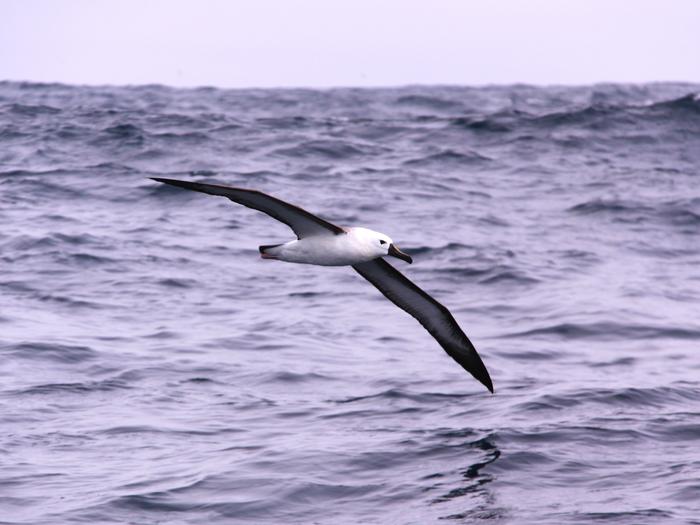
A recent study has unveiled compelling insights into the interaction between offshore wind energy development and marine wildlife. Conducted by a consortium of researchers from prestigious institutions in Spain, the research presents a predictive model that highlights a significant overlap between the feeding grounds of seabirds and marine mammals and regions marked by high wind energy potential. This finding raises crucial concerns regarding the conservation of biodiversity in areas designated for wind farm installations.
The study, published in the Journal of Environmental Management, underscores the urgency of understanding the ecological implications of expanding offshore wind energy. As countries ramp up efforts to harness renewable energy in an attempt to combat climate change, the consequences for marine ecosystems must also be factored into planning and development processes. This is particularly important given the study’s focus on seabirds and marine mammals, whose foraging behaviors may be imperiled by the placement of wind turbines in feeding areas.
Lead researcher Juan Manuel Pérez-García, an ecologist from the Miguel Hernández University of Elche, articulates the need for risk maps to guide the spatial planning of offshore wind farms. Such maps would be instrumental in mitigating potential adverse impacts on biodiversity by informing developers and policymakers of critical habitats that need protection. The researchers argue that while the transition to renewable energy is vital, it must be pursued in a manner that does not compromise ecological integrity.
The methodological approach relied heavily on the intricacies of marine food webs, incorporating a comprehensive analysis of species interactions from the cellular level of phytoplankton to apex predators. This layered understanding allows researchers to predict where seabirds and marine mammals are likely to forage based on the availability of lower trophic level biomass, which plays a pivotal role in supporting marine life.
One of the ground-breaking revelations from the researchers’ model is the concept of bottom-up trophic control, showing that the richness of marine fauna is more closely associated with biomass availability than diversity. This discovery pivots the focus from merely protecting diverse species to ensuring that abundant food sources remain accessible to supporting populations of seabirds and marine mammals alike.
Geographically, the research indicates profound overlap between vital feeding areas and potential wind farm sites, particularly pronounced in the Northern Hemisphere where wind energy development is most vigorous. Interestingly, the overlap is less pronounced in the Southern Hemisphere, a discrepancy that the authors attribute to the dearth of existing data rather than an absence of risk. This raises critical questions about how countries can better accumulate data to safeguard biodiversity against the backdrop of expanding renewable energy initiatives.
The implications of these findings extend to highlighting the inadequacies of many existing marine protected areas (MPAs), which do not sufficiently encompass critical foraging grounds for marine wildlife. In light of these revelations, the researchers advocate for the strengthening and expansion of MPAs to encompass higher risk areas identified by their research. They contend that an integration of ecological assessments into marine spatial planning is imperative for a balanced approach to energy development and conservation.
The paramount objective is to ensure that the shift toward renewable energy does not result in a paradoxical amplification of environmental risk. Pérez-García emphasizes that the aim should not be to inhibit the energy transition, but rather to harmonize it with biodiversity conservation efforts. This dual aim requires collaboration among governments, scientists, and the energy sector to forge a pathway that respects both energy needs and ecological health.
Tracking technologies, including GPS devices placed on seabirds, represent an innovative method for gathering real-time data on marine wildlife movements in proximity to wind farms. Such advancements could elucidate how offshore wind energy developments might disrupt existing feeding behaviors and migration patterns. The ability to monitor these dynamics will not only enrich scientific understanding but also inform regulations and operational practices in the wind energy sector.
The research illustrates a collaborative effort that blends empirical science with environmental stewardship. Funded by a multitude of sources, including the Spanish Ministry of Science and Innovation, the study represents a significant contribution to the ongoing discourse surrounding climate action and ecological preservation. Its findings resonate widely, offering a framework for future studies and policy-making aimed at sustainable energy production and biodiversity conservation.
In conclusion, as the world navigates the complexities of transitioning to renewable energy, this study serves as a clarion call for a thorough and thoughtful approach. The balance between harnessing wind energy and protecting marine ecosystems will require innovative thinking, rigorous scientific inquiry, and a collective commitment to protecting our planet’s invaluable natural resources. The work of Pérez-García and his colleagues stands as a guiding light in this crucial endeavor, pushing for a future where renewable energy and wildlife conservation can coexist.
Cite Scienmag News
Margaret Porter. (April 3, 2025). Navigating the Tension: Researchers Highlight Potential Conflicts Between Offshore Wind Farms and Biodiverse Marine Ecosystems. Scienmag. https://scienmag.com/navigating-the-tension-researchers-highlight-potential-conflicts-between-offshore-wind-farms-and-biodiverse-marine-ecosystems/
Margaret Porter. "Navigating the Tension: Researchers Highlight Potential Conflicts Between Offshore Wind Farms and Biodiverse Marine Ecosystems." Scienmag, 3 April 2025, https://scienmag.com/navigating-the-tension-researchers-highlight-potential-conflicts-between-offshore-wind-farms-and-biodiverse-marine-ecosystems/. Accessed 3 September 2026.
Margaret Porter. "Navigating the Tension: Researchers Highlight Potential Conflicts Between Offshore Wind Farms and Biodiverse Marine Ecosystems." Scienmag. April 3, 2025. https://scienmag.com/navigating-the-tension-researchers-highlight-potential-conflicts-between-offshore-wind-farms-and-biodiverse-marine-ecosystems/


