

Friday, October 23, 2026
Science
No Result
View All Result
  • Login
  • HOME
  • SCIENCE NEWS
  • CONTACT US
  • HOME
  • SCIENCE NEWS
  • CONTACT US
No Result
View All Result
Scienmag
No Result
View All Result
Home Science News Biology

Nasal Bacteria Feed or Starve Staphylococcus aureus Depending on Amino Acid Supply

October 23, 2026
in Biology
Morgan Morrow
By Morgan Morrow Scienmag Editorial Profile - Bacteriology
Reading Time: 3 mins read
0
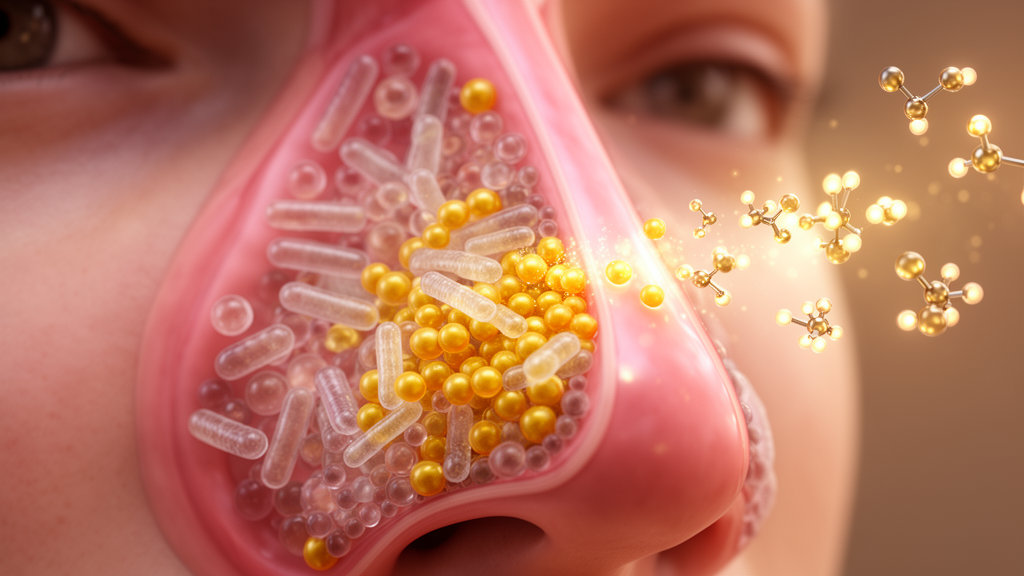
Nasal Bacteria Feed or Starve Staphylococcus aureus Depending on Amino Acid Supply

Nasal Bacteria Feed or Starve Staphylococcus aureus Depending on Amino Acid Supply

65
SHARES
587
VIEWS
Share on FacebookShare on Twitter
ADVERTISEMENT

Only some people carry Staphylococcus aureus in their nose, a trait that predisposes carriers to endogenous infections when the bacterium breaches the skin barrier. A new study suggests that whether S. aureus can establish itself in the nasal niche depends not just on the pathogen itself, but on the metabolic offerings of the surrounding bacterial community.

Researchers assembled a newly curated collection of nasal bacterial strains and carried out systematic pairwise interaction analyses, testing how diverse S. aureus strains compete or cooperate with other members of the nasal microbiota. The experiments revealed that nasal species strongly modulate S. aureus growth, and that these effects are both strain-specific and community-specific.

The modulation was observed in vitro and confirmed in gnotobiotic mice, germ-free animals colonized with defined bacterial communities. This dual approach allowed the team to link laboratory-measured interactions to colonization outcomes in a living host, strengthening the case that nutrient exchange shapes who carries the pathogen.

Nutrient-dependent interactions emerged as key drivers of these relationships. In one striking example, synthetic bacterial communities supplied tyrosine, an amino acid that a particular S. aureus strain could not make for itself. With tyrosine provided by its neighbors, the auxotrophic strain proliferated; without supportive communities, its growth was compromised.

To gauge how widespread this dependency might be, the researchers screened a large collection of S. aureus strains. Roughly 8 percent showed tyrosine dependency, and colonization by these strains was impaired in the absence of communities able to provide the amino acid, indicating that the interaction has broader relevance beyond a single laboratory isolate.

The findings reveal distinct metabolic adaptations that allow S. aureus to exploit specific features of resident nasal communities. Rather than acting as a lone invader, the pathogen appears embedded in complex interspecies networks of cooperation and competition that influence whether colonization succeeds in the human nose.

While microbial cooperation and competition are well documented in environmental and intestinal microbial communities, their impact on pathogen colonization within the nasal microbiome had remained largely unknown. This study addresses that gap by applying the same ecological principles to the anterior nares, the nasal niche where S. aureus carriage occurs.

The authors suggest that these insights may inform microbiome-editing strategies aimed at displacing S. aureus from the nasal niche, since supportive communities can enable auxotrophic strains to persist in that environment.

The work, published open access in Microbiome, underscores that a pathogen’s success in a host niche can hinge on the metabolic generosity of its microbial neighbors, a factor that varies from strain to strain and from community to community.

Subject of Research: How amino acid availability shapes strain- and community-specific interactions between Staphylococcus aureus and the nasal microbiota

Article Title: Amino acid availability influences Staphylococcus aureus interaction with the nasal microbiota in a strain- and community-specific manner

Article References: Camus, L., Franz, J., Gerlach, D., Lange, A., Power, J. J., Navarro-Díaz, M., Stahl, J., Krismer, B., Rapp, J., Bilici, K., Otto, M., Klages, L. J., Starostin, V., Ham, S., Kalinowski, J., Angenent, L. T., Link, H., & Heilbronner, S. (2026). Amino acid availability influences Staphylococcus aureus interaction with the nasal microbiota in a strain- and community-specific manner. Microbiome, 14(1), Article 237. https://doi.org/10.1186/s40168-026-02563-x

Image Credits: AI Generated

DOI: 10.1186/s40168-026-02563-x

Keywords: Staphylococcus aureus, nasal microbiota, amino acids, tyrosine, auxotrophy, microbiome, bacterial interactions, colonization, gnotobiotic mice, metabolism, Amino, acid

Cite Scienmag News

Morgan Morrow. (October 23, 2026). Nasal Bacteria Feed or Starve Staphylococcus aureus Depending on Amino Acid Supply. Scienmag. https://scienmag.com/nasal-bacteria-feed-or-starve-staphylococcus-aureus-depending-on-amino-acid-supply/


Morgan Morrow. "Nasal Bacteria Feed or Starve Staphylococcus aureus Depending on Amino Acid Supply." Scienmag, 23 October 2026, https://scienmag.com/nasal-bacteria-feed-or-starve-staphylococcus-aureus-depending-on-amino-acid-supply/. Accessed 23 October 2026.

Morgan Morrow. "Nasal Bacteria Feed or Starve Staphylococcus aureus Depending on Amino Acid Supply." Scienmag. October 23, 2026. https://scienmag.com/nasal-bacteria-feed-or-starve-staphylococcus-aureus-depending-on-amino-acid-supply/

Tags: acidaminoamino acid auxotrophy in bacteriaamino acid supply and bacterial competitionamino acidsauxotrophybacterial interactionscolonizationgerm-free animal models for nasal microbiotagnotobiotic micein vitro and in vivo studies of nasal bacteriametabolismmicrobial community effects on S. aureus growthmicrobiomemicrobiota influence on pathogen colonizationNasal bacterial microbiota interactionsnasal microbiome modulation of infection risknasal microbiotanutrient exchange in nasal microbiomesrole of tyrosine in bacterial growthStaphylococcus aureusStaphylococcus aureus colonization mechanismsstrain-specific nasal bacteria effectstyrosine
Share26Tweet16
Previous Post

Blocking ERG Protein Radiosensitizes ERG-Positive Prostate Cancers by Disabling DNA Repair

Next Post

Tourism Growth Alone Fails to Deliver Balanced Sustainable Development, Study Finds

Related Posts

Century-old archived tissue samples still yield measurable human DNA
Biology

Century-old archived tissue samples still yield measurable human DNA

October 23, 2026
Segmentation choices reshape spatial transcriptomics results, benchmark finds
Biology

Segmentation choices reshape spatial transcriptomics results, benchmark finds

October 23, 2026
Deep-sea protected areas in the Pacific mining zone are barely connected, model shows
Biology

Deep-sea protected areas in the Pacific mining zone are barely connected, model shows

October 23, 2026
PELICAN Tool Improves Gene Recall in Bacteriophage Genome Annotation
Biology

PELICAN Tool Improves Gene Recall in Bacteriophage Genome Annotation

October 23, 2026
Long-Lived Plasma Cells Take Center Stage in Antibody-Mediated Disease Research
Biology

Long-Lived Plasma Cells Take Center Stage in Antibody-Mediated Disease Research

October 23, 2026
Light-Activated Drugs Kill Enveloped Viruses, but Clinical Uses Stay Narrow, Review Finds
Biology

Light-Activated Drugs Kill Enveloped Viruses, but Clinical Uses Stay Narrow, Review Finds

October 23, 2026
Next Post
Tourism Growth Alone Fails to Deliver Balanced Sustainable Development, Study Finds

Tourism Growth Alone Fails to Deliver Balanced Sustainable Development, Study Finds

  • Mothers who receive childcare support from maternal grandparents show more optimized

    Mothers who receive childcare support from maternal grandparents show more parental warmth, finds NTU Singapore study

    27656 shares
    Share 11059 Tweet 6912
  • University of Seville Breaks 120-Year-Old Mystery, Revises a Key Einstein Concept

    1061 shares
    Share 424 Tweet 265
  • Bee body mass, pathogens and local climate influence heat tolerance

    682 shares
    Share 273 Tweet 171
  • Researchers record first-ever images and data of a shark experiencing a boat strike

    546 shares
    Share 218 Tweet 137
  • Groundbreaking Clinical Trial Reveals Lubiprostone Enhances Kidney Function

    531 shares
    Share 212 Tweet 133
Science

Embark on a thrilling journey of discovery with Scienmag.com—your ultimate source for cutting-edge breakthroughs. Immerse yourself in a world where curiosity knows no limits and tomorrow’s possibilities become today’s reality!

RECENT NEWS

  • AI Models Detect Suicidal Ideation in Amharic Social Media Posts
  • AI Decision Aid for Juvenile Arthritis Scores Well on Safety but Diverges on Treatment Choices
  • Mangrove Microbes Emerge as Untapped Source of Antibiotic and Anticancer Compounds
  • Social Curiosity Linked to Better Motor Function in Older Japanese Adults

Categories

  • Agriculture
  • Anthropology
  • Archaeology
  • Athmospheric
  • Biology
  • Biotechnology
  • Blog
  • Bussines
  • Cancer
  • Chemistry
  • Climate
  • Earth Science
  • Editorial Policy
  • Marine
  • Mathematics
  • Medicine
  • Pediatry
  • Policy
  • Psychology & Psychiatry
  • Science Education
  • Science News
  • Social Science
  • Space
  • Technology and Engineering

Subscribe to Blog via Email

Enter your email address to subscribe to this blog and receive notifications of new posts by email.

Join 5,151 other subscribers

© 2025 Scienmag - Science Magazine

Welcome Back!

Login to your account below

Forgotten Password?

Retrieve your password

Please enter your username or email address to reset your password.

Log In
No Result
View All Result
  • HOME
  • SCIENCE NEWS
  • CONTACT US

© 2025 Scienmag - Science Magazine

Discover more from Science

Subscribe now to keep reading and get access to the full archive.

Continue reading