


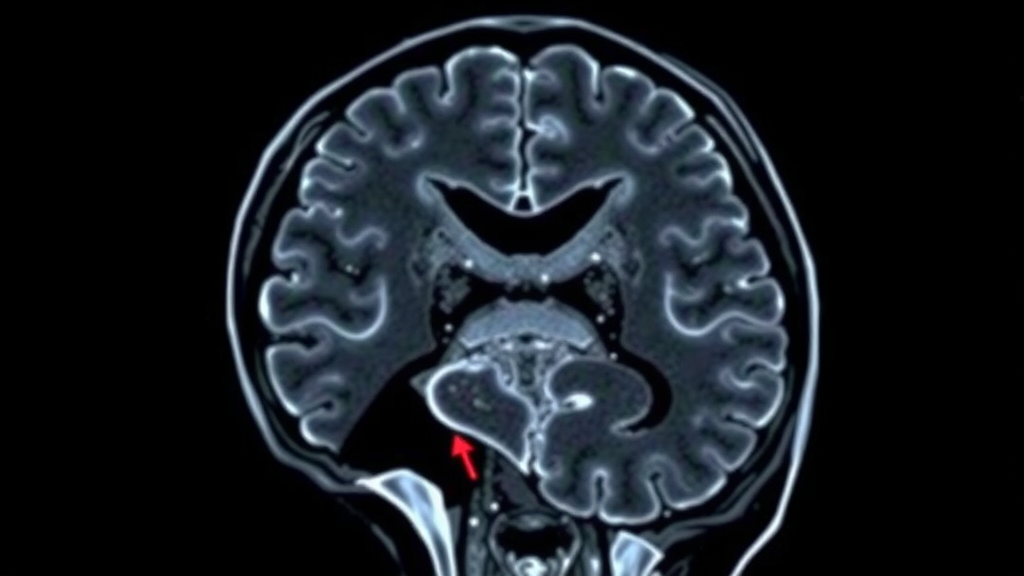
Deep inside the brain, wedged between the insular cortex and the striatum, lies a wafer-thin sheet of gray matter that scientists have long struggled to understand: the claustrum. Now, a systematic review published in Annals of Clinical and Translational Neurology suggests that this enigmatic structure may serve as a visible fingerprint of one of neurology’s most feared emergencies. The review, led by Margherita Burani and Stefano Meletti of the University of Modena and Reggio Emilia, synthesized published cases of new-onset refractory status epilepticus, or NORSE, a catastrophic condition in which previously healthy people develop prolonged seizures that resist standard treatment and whose cause cannot be identified within the first seventy-two hours. In a subset of these patients, magnetic resonance imaging reveals a striking abnormality known as the claustrum sign, a bilateral bright signal in the claustrum on T2-weighted and FLAIR sequences that first drew clinical attention in 2015.
Status epilepticus is the second most frequent neurological emergency by incidence, and in nearly half of cases it proves refractory to first- and second-line therapies. When such refractory status arises in someone without a clear etiology, clinicians label it NORSE, and when it follows a febrile infection beginning between twenty-four hours and two weeks before onset, the subtype is called FIRES, the febrile infection-related epilepsy syndrome. Although rare, these syndromes are devastating, frequently leaving survivors with cognitive decline and drug-resistant epilepsy. Over the past decade, research has increasingly framed cryptogenic NORSE as a syndrome with distinct biological features, including sustained neuroinflammation, dysregulation of the autoimmune response, excessive cytokine release, and direct neuronal injury, yet reliable prognostic markers on brain imaging have remained elusive.
The claustrum itself is one of the most extensively connected regions in the mammalian brain, sending organized projections to essentially the entire cortical mantle. Its principal inputs arrive from limbic, associative, and motor areas of the frontal cortex, with additional one-way connections from the thalamus, the basolateral amygdala, and the hippocampus, as well as serotonergic neuromodulation from the dorsal raphe nucleus. Functionally, activation of the claustrum strongly recruits inhibitory interneurons that suppress cortical pyramidal cells, a feedforward inhibition that limits excessive firing across neural networks and helps synchronize spike timing. This architecture places the claustrum at the heart of the seizure network, and it has also been implicated in amplifying cortical oscillations, allocating attention, and supporting consciousness and cognition, which makes its involvement in prolonged seizures especially intriguing.
To characterize the claustrum sign systematically, the researchers followed PRISMA guidelines and registered their protocol on PROSPERO. Their search, restricted to literature published from 2018 onward, when international consensus definitions of NORSE and FIRES were first established, initially identified 785 records. After deduplication and blinded screening by two reviewers with expertise in status epilepticus and neuroimaging, with disagreements resolved by a third reviewer, 41 publications comprising 25 single case reports and 16 case series met the inclusion criteria, encompassing 206 patients. Of these, 72 exhibited the claustrum sign and 134 did not. The team extracted demographics, prodromal symptoms, seizure semiology, treatment responsiveness, intensive care requirements, immunotherapy use, MRI findings, and outcomes including survival and chronic epilepsy, and assessed study quality with the QUADAS-2 tool.
The resulting portrait of claustrum sign patients is remarkably consistent. After excluding one patient with autoimmune encephalitis, 71 individuals remained, almost all of whom tested negative for neurotropic viruses and autoantibodies and therefore fulfilled the definition of cryptogenic NORSE. They were predominantly young, with a median age of twenty-three years, and just over half were female. Fever was the presenting symptom in 93 percent of cases, typically accompanied by other neurological complaints such as seizures, impaired awareness, psychosis, headache, memory impairment, or language disturbance, and the prodromal phase preceded status epilepticus by an average of about six and a half days. Because no EEG correlates were available during this prodrome, the authors caution that subtle seizures may already have been smoldering before the overt emergency began.
The acute phase was almost uniformly convulsive. Eighty-nine percent of patients with known semiology presented in generalized convulsive status epilepticus or focal seizures evolving into bilateral convulsive seizures, and motor seizures accounted for 98 percent of classified cases. Nearly half of the patients rapidly became refractory to benzodiazepines and antiseizure medications, while the other half progressed to super-refractory status, continuing or recurring despite more than twenty-four hours of anesthetic therapy. Thirty-seven patients required intensive care admission and twenty-five needed anesthesia. On MRI, the signature was overwhelmingly bilateral: 68 of 69 patients imaged during the acute phase showed hyperintensity in both claustra, typically appearing around seven days after seizure onset, though detection ranged from one to twenty-five days, and in one case the sign emerged only after the status had resolved.
Crucially, the claustrum rarely lights up alone. Isolated claustrum hyperintensity occurred in only 24 percent of cases; far more often the abnormality extended into limbic and paralimbic territory, most commonly the medial temporal lobe, followed by the insula, the anterior cingulate gyrus, the pulvinar, the basal ganglia, and diffuse cortical regions. The authors interpret this pattern as evidence that the claustrum sign reflects widespread network dysfunction rather than a focal structural lesion. Follow-up imaging, available for only 45 patients, showed complete resolution in just six cases, while five patients developed bilateral temporal lobe cortical atrophy, suggesting the sign may mark either reversible inflammatory dysfunction or enduring injury that could contribute to epileptogenesis.
Treatment reflected a strong presumption of immune-mediated disease. Ninety-two percent of claustrum sign patients received immunotherapy, with high-dose intravenous steroids used universally, intravenous immunoglobulins in 76 percent, plasma exchange in 22 percent, and biologic agents, including the IL-6 inhibitor tocilizumab, the B-cell-depleting antibody rituximab, and the IL-1 receptor blocker anakinra, administered to twenty patients. Notably, the claustrum sign has also been reported in other hyperinflammatory states, including acute necrotizing encephalopathy, COVID-19-related encephalopathy, and the neurotoxicity that complicates CAR T-cell therapy, supporting the hypothesis that it represents a radiologic correlate of cytokine-mediated neuroinflammation and network instability rather than a disease-specific lesion.
Outcomes carried a heavy long-term burden despite encouraging acute-phase signals. Five patients died during hospitalization, a mortality of 9 percent, and one more lapsed into a persistent vegetative state. Among 54 patients with follow-up data, 74 percent developed chronic epilepsy, mostly resistant to medication, and roughly half showed persistent cognitive deficits, most often affecting memory and executive or attentional function. Only twelve patients returned to their clinical baseline. When the claustrum sign group was compared with the 134 NORSE patients lacking the sign, several statistically significant differences emerged: fever was far more common as a prodrome, convulsive status was nearly universal, super-refractory disease and ICU admission were less frequent, and responsiveness to anesthetic therapy was markedly higher, with a non-significant trend toward lower in-hospital mortality, though the authors urge caution because non-convulsive status in comatose patients was overrepresented in the comparison group.
The review’s limitations are substantial and openly acknowledged. All included studies were case reports or case series without prospective enrollment, MRI protocols and timing varied widely, imaging was interpreted locally without standardization, and the exploratory univariate analysis precluded any claim of independent prognostic value. Even so, the authors conclude that the claustrum sign is a reproducible, time-dependent imaging marker in a distinct subset of NORSE patients characterized by febrile prodrome and convulsive seizures, and that early recognition could aid diagnostic stratification and prompt timely immunomodulatory intervention. They call for prospective, multicenter studies with standardized imaging and longitudinal follow-up to clarify whether this whisper-thin sheet of brain tissue can truly forecast the course of one of medicine’s most violent neurological storms.
Subject of Research: The claustrum sign as a neuroimaging marker in new-onset refractory status epilepticus and FIRES
Article Title: Claustrum Involvement in New Onset Refractory Status Epilepticus: A Systematic Review
Article References: Burani, M., Muccioli, L., Giovannini, G., Orlandi, N., Bisulli, F., & Meletti, S. (2026). Claustrum Involvement in New Onset Refractory Status Epilepticus: A Systematic Review. Annals of Clinical and Translational Neurology, 13(9), 1750-1758. https://doi.org/10.1002/acn3.70490
Image Credits: AI Generated
DOI: 10.1002/acn3.70490
Keywords: claustrum sign, status epilepticus, NORSE, FIRES, neuroinflammation, MRI, epilepsy, immunotherapy, cytokines, neurocritical care, systematic review, seizures
Cite Scienmag News
Ophelia Keating. (September 22, 2026). Mysterious Claustrum Sign on MRI May Track a Devastating Epileptic Emergency. Scienmag. https://scienmag.com/mysterious-claustrum-sign-on-mri-may-track-a-devastating-epileptic-emergency/
Ophelia Keating. "Mysterious Claustrum Sign on MRI May Track a Devastating Epileptic Emergency." Scienmag, 22 September 2026, https://scienmag.com/mysterious-claustrum-sign-on-mri-may-track-a-devastating-epileptic-emergency/. Accessed 5 October 2026.
Ophelia Keating. "Mysterious Claustrum Sign on MRI May Track a Devastating Epileptic Emergency." Scienmag. September 22, 2026. https://scienmag.com/mysterious-claustrum-sign-on-mri-may-track-a-devastating-epileptic-emergency/


