


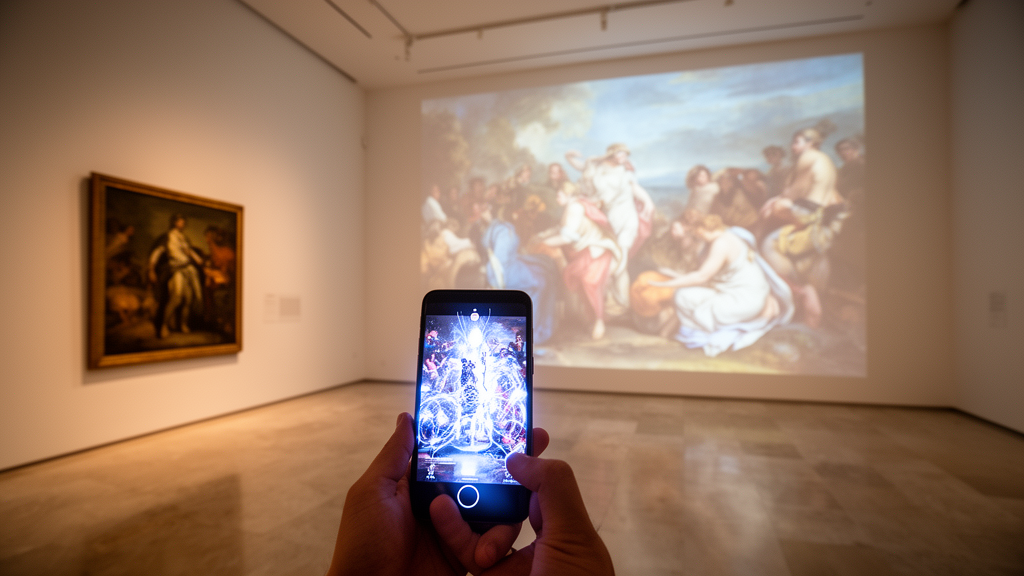
Museums have spent decades counting visitors. Now, a new study argues that the numbers no longer tell the story. As cultural institutions race through digital transformation—launching 3D scans, open datasets, AI chatbots, and crowdsourced transcription projects—the traditional metrics of impact assessment are falling dramatically short. A team of researchers from NOVA University of Lisbon has proposed a radical rethink: merge the disciplines of Digital Curation and Digital Humanities into a single, holistic framework that can finally capture the full spectrum of value museums generate in the digital age.
The research, published in the European Journal of Cultural Management and Policy, systematically analysed six prominent international impact assessment approaches, including the Europeana Impact Playbook, the ISO 16687:2025 standard, the MOI! Museums of Impact framework, the SoPHIA model, the inDICEs Change Impact Assessment Framework, and the CSIRO Impact Evaluation Guide. Each offers distinct strengths, but all share critical blind spots when it comes to digital initiatives, data preservation, participatory practices, and the ethical governance of emerging technologies.
The study’s central argument rests on a conceptual shift first articulated by information scientist Michael Buckland in 1991. Museums have always managed what Buckland called information-as-thing—the physical artefacts in their collections. Digital transformation does not change this core mission; it merely changes the format of that thing into digital surrogates, datasets, and rich metadata. The informational potential of a digital scan or an object’s metadata remains latent until it is activated through curation and analysis. Impact, therefore, is the result of this activation.
Digital Curation provides the principles for managing these digital assets throughout their entire lifecycle—from creation and preservation to access, use, and transformation. The researchers drew on the d-KISTI Digital Curation Lifecycle Model, which reconceptualises curation as a process of active value creation rather than passive preservation. Digital Humanities, in turn, offers the methodologies and computational tools—data mining, network analysis, interactive platforms—to analyse, interpret, and visualise the vast informational value unlocked by curation.
The comparative analysis revealed four persistent challenges across existing models. Most frameworks struggle to move beyond simple output metrics such as website visits or the number of digitised items, failing to assess deeper outcomes like the quality of online engagement or the value generated from data reuse. There is a general absence of integrated frameworks for assessing the ethical governance of data, algorithmic transparency, and the potential biases of artificial intelligence. The cultural pillar of sustainability is often implicit rather than a core dimension, and the environmental impact of digital infrastructures themselves—an often-invisible ecological cost of servers and data storage—is rarely considered. Attributing long-term societal change to a specific museum intervention remains one of the greatest methodological hurdles for the entire field.
In response, the researchers propose the Impact Assessment Model with Digital Curation and Digital Humanities, or IAM-CDH. This multidimensional framework integrates five interconnected thematic dimensions and 45 specific indicators, designed to offer a more holistic, ethical, and sustainable evaluation. The dimensions cover the Digital and Informational Ecosystem, Participation and Co-Creation, Sociocultural and Educational Impact, Culture as a Pillar of Sustainability, and Innovation and Interdisciplinary Collaboration.
The first dimension assesses the quality, ethics, and sustainability of a museum’s digital assets, moving beyond simple access metrics to evaluate metadata quality through FAIR principles and the ethical governance of data and AI. The participation dimension measures the transition of the public from spectator to co-creator, assessing engagement in crowdsourcing and citizen science projects and their tangible impact on knowledge production. The sociocultural dimension evaluates diversity, inclusion, wellbeing, and social cohesion, specifically measuring the development of digital and informational literacy. The sustainability dimension frames museum activities within a holistic paradigm, using curation strategies such as data appraisal and storage optimisation to measure and mitigate the ecological impact of technological infrastructure. The innovation dimension gauges the museum’s role as a catalyst through the reuse of its open data by third parties.
The framework is designed as a virtuous cycle. Better curation enables better assessment, because applying FAIR principles and metadata quality standards generates higher-quality, more reliable data that makes impact measurement more accurate. Better assessment improves curation, because the results provide direct feedback that allows curators to refine their digital strategies and demonstrate the value of their work. The implementation process is structured in three iterative macro-stages: diagnosis and strategic design, implementation of actions and measurement, and evaluation, narration, and continuous adjustment.
The researchers acknowledge that the IAM-CDH is a conceptual framework whose indicators are theoretically grounded but not yet empirically validated in real-world museum settings. Future work should focus on pilot studies across diverse museum contexts, the development of practical open-source tools or dashboards, and deeper research into auditing algorithmic biases in digital collections. The underlying logic, they argue, transcends the museum sector and proves intrinsically adaptable to the wider Galleries, Libraries, Archives, and Museums ecosystem.
Ultimately, the study suggests that Digital Curation and Digital Humanities offer a theoretically robust foundation to reconfigure how museums assess and communicate their impact. The IAM-CDH is proposed as a conceptual framework to assist institutions not only in demonstrating value but in actively shaping it, turning evaluation from a reporting exercise into a strategic, reflexive, and transformative practice that reinforces museums’ societal relevance in the digital age.
Subject of Research: Cultural Heritage and Digital Transformation
Article Title: Integrating digital curation and digital humanities for a holistic museum impact assessment
Article References: Gertrudes, M., & Ochôa, P. (2026). Integrating digital curation and digital humanities for a holistic museum impact assessment. European Journal of Cultural Management and Policy, 16, Article 15930. https://doi.org/10.3389/ejcmp.2026.15930
Image Credits: AI Generated
Keywords: museums, digital curation, digital humanities, impact assessment, cultural heritage, GLAM sector, artificial intelligence ethics, participatory culture, Integrating, digital, curation, humanities
Cite Scienmag News
Courtney Benton. (October 16, 2026). Museums Get a Digital Makeover—and a New Way to Prove Their Worth. Scienmag. https://scienmag.com/museums-get-a-digital-makeover-and-a-new-way-to-prove-their-worth/
Courtney Benton. "Museums Get a Digital Makeover—and a New Way to Prove Their Worth." Scienmag, 16 October 2026, https://scienmag.com/museums-get-a-digital-makeover-and-a-new-way-to-prove-their-worth/. Accessed 16 October 2026.
Courtney Benton. "Museums Get a Digital Makeover—and a New Way to Prove Their Worth." Scienmag. October 16, 2026. https://scienmag.com/museums-get-a-digital-makeover-and-a-new-way-to-prove-their-worth/


