


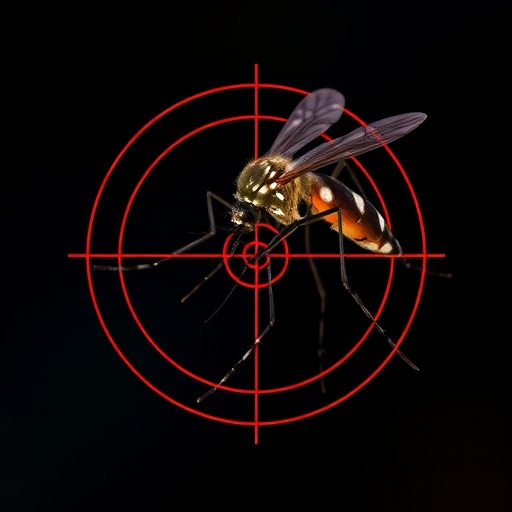
Mosquitoes do not appear to share a universal preference for human beings, according to a new study from Florida International University (FIU). Researchers exposed 119 volunteers to three mosquito species responsible for transmitting major viral diseases and found that no individual was consistently attractive to all of them. Instead, each species favored a different group of people, suggesting that mosquito attraction is shaped by species-specific responses to human body chemistry.
The findings, published in iScience, could influence how scientists design mosquito repellents and disease-control strategies. The three species examined—Aedes aegypti, Aedes albopictus, and Culex quinquefasciatus—can transmit pathogens associated with yellow fever, dengue, Zika, West Nile fever and other illnesses. Although all mosquitoes use chemical signals to locate hosts, the study indicates that they do not interpret human odor in the same way. Their sensory systems appear to extract different information from the complex chemical environment surrounding the human body.
Human scent consists of more than 1,000 volatile organic compounds, or VOCs, many of which are released through the skin, breath and sweat. These molecules evaporate readily and form an odor cloud that mosquitoes can detect from a distance. The insects use specialized olfactory receptors, located mainly on their antennae and other sensory organs, to identify chemical cues associated with a potential blood meal. Carbon dioxide, body heat and moisture also help guide mosquitoes, but odor chemistry can determine which person an insect ultimately approaches.
In the FIU experiments, Aedes aegypti showed a preference for volunteers who were not wearing added fragrances and whose skin lacked certain volatile compounds. This species, a major vector of dengue, Zika, yellow fever and chikungunya viruses, is primarily active during the day. The researchers also observed a modest preference for men over women in the Aedes aegypti tests, although the study’s central result was the importance of individual chemical profiles rather than a simple demographic pattern.
The Asian tiger mosquito, Aedes albopictus, responded to a different chemical signature. It was attracted to elevated levels of ketones and plant-like volatile compounds naturally released by the skin. Ketones are organic molecules produced during normal metabolism and can vary with diet, physiology and other biological factors. Plant-associated VOCs may originate from human skin chemistry, environmental exposure or interactions between skin compounds and resident microorganisms. Like Aedes aegypti, Aedes albopictus feeds mainly during daylight hours and is capable of spreading several medically important viruses.
The southern house mosquito, Culex quinquefasciatus, displayed a distinct pattern. This nighttime-feeding species was strongly influenced by the skin microbiome—the community of bacteria, fungi and other microorganisms living on the surface of the body. Microbes metabolize compounds in sweat and skin secretions, producing secondary chemicals that contribute to a person’s characteristic odor. Some bacterial families appeared to make volunteers more attractive to Culex quinquefasciatus, while others were associated with reduced attraction. This finding connects microbial metabolism directly to the host-seeking behavior of a disease vector.
The researchers combined behavioral preference tests with chemical and microbiological sampling. Volunteers were evaluated according to how strongly mosquitoes responded to them, while odor samples were analyzed to identify volatile compounds and skin samples were examined for microbial composition. Comparing these datasets allowed the team to associate particular chemical molecules and bacterial groups with mosquito attraction or avoidance. The approach is important because it moves beyond the idea that humans are simply “more” or “less” attractive to mosquitoes and instead investigates which biological signals are recognized by each species.
According to Matthew DeGennaro, the FIU neurogeneticist who led the research, the results indicate that the skin microbiome helps define an individual’s human odor signature. Kaylee Marrero, the study’s lead author, said the team had not expected the mosquito species to prefer different people. The discovery that each species may use a distinct microbial or chemical signature suggests that mosquito sensory systems have evolved in different ecological directions, even when the insects feed on the same host.
The findings may eventually support species-specific repellents that interfere with the precise receptors or odor-processing pathways used by a target mosquito. A compound that masks an attractive chemical for Aedes aegypti may have little effect on Aedes albopictus or Culex quinquefasciatus. Tailoring repellents to the dominant mosquito species in a region could improve personal protection and public-health campaigns, particularly in areas where viral transmission changes seasonally or geographically. However, the researchers emphasize that human odor is only one component of mosquito behavior. Temperature, carbon dioxide, movement, clothing, habitat and time of day also influence host selection. The new study provides a chemical framework for understanding why mosquito bites are unevenly distributed among people—and why the answer may depend on which mosquito is doing the biting.
News Publication Date: 21-Aug-2026
Web References: https://www.sciencedirect.com/science/article/pii/S2589004226023849?via%3Dihub
References: https://doi.org/10.1016/j.isci.2026.117006
Cite Scienmag News
Drew Townsend. (August 7, 2026). Mosquitoes target specific blood types—and yours may not be among them. Scienmag. https://scienmag.com/mosquitoes-target-specific-blood-types-and-yours-may-not-be-among-them/
Drew Townsend. "Mosquitoes target specific blood types—and yours may not be among them." Scienmag, 7 August 2026, https://scienmag.com/mosquitoes-target-specific-blood-types-and-yours-may-not-be-among-them/. Accessed 3 September 2026.
Drew Townsend. "Mosquitoes target specific blood types—and yours may not be among them." Scienmag. August 7, 2026. https://scienmag.com/mosquitoes-target-specific-blood-types-and-yours-may-not-be-among-them/


