


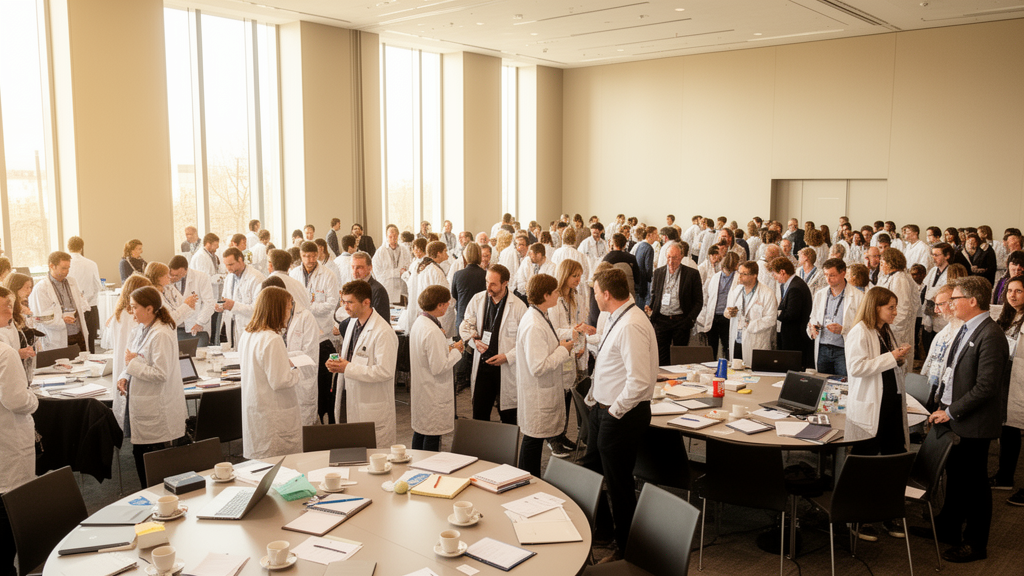
The health of humans, wildlife, and the environment are inextricably linked, and a new article in the journal BioScience outlines what it will take to address that reality. “Key Challenges and Future Research, Education, and Policy Questions in One Health,” led by Mary Ann Ottinger of the University of Houston, introduces BioScience’s One Health Special Issue and reflects the central questions raised by the issue’s authors. Ottinger edited the collection with Geoffrey M. Henebry, Meghann Jarchow, Rodney Keenan, Anna Monfils, Katey Pelican, Pim Martens, Paige S. Warren, and Editor in Chief Charles B. Fenster.
One Health began with a focus on pathogen spillover from wildlife to humans. The framework has since been expanded to include issues such as pollutants, habitat loss, land use, and other anthropogenic stressors.
In the new article, the editors group the field’s challenges into seven areas: disease, agriculture, nature-based approaches and solutions, Indigenous and community issues, education, the One Health conceptual framework, and policy. The grouping is intended to organize the priorities identified by the more than 100 researchers contributing to the special issue, who identify research, education, and policy priorities for safeguarding the linked health of people, animals, and ecosystems.
The topics covered by the collection range widely. They include the search for the ebolavirus reservoir and the effect of invasive plants on tick-borne disease, as well as prairie strips in Midwestern cropland, seagrass meadows, wildland fire, and the century-old US Lacey Act.
The editors hope that the collection will reach readers beyond the journal’s usual audience. “We challenge our traditional readership to consider the direct connection between our work and the health of our families, neighbors, and communities,” the authors write. That appeal underscores the issue’s central argument that scientific work on linked human, animal, and environmental health has direct stakes for everyday life, not only for specialists.
Several contributors also warn against weakening the scientific infrastructure that One Health depends on.
Others emphasize partnership with the people who manage land. “Farmers should be treated as key actors and equal partners in halting the loss of biodiversity,” they write.
The full article is available at https://doi.org/10.1093/biosci/biag099. The One Health Special Collection can be found at https://academic.oup.com/bioscience/pages/one-health.
Subject of Research: A BioScience editorial synthesizing research, education, and policy priorities for the One Health framework linking human, animal, and environmental health.
Article Title: BioScience special issue maps key challenges and opportunities facing one health
Article References: BioScience special issue maps key challenges and opportunities facing one health. Original publication (Bibliographic details unavailable.)
Image Credits: AI Generated
DOI: Not provided
Keywords: One Health, BioScience, Mary Ann Ottinger, pathogen spillover, biodiversity, policy, education, disease ecology, agriculture, scientific funding, special, issue
Cite Scienmag News
Kristina Jarvis. (October 27, 2026). More than 100 researchers map the challenges facing One Health. Scienmag. https://scienmag.com/more-than-100-researchers-map-the-challenges-facing-one-health/
Kristina Jarvis. "More than 100 researchers map the challenges facing One Health." Scienmag, 27 October 2026, https://scienmag.com/more-than-100-researchers-map-the-challenges-facing-one-health/. Accessed 27 October 2026.
Kristina Jarvis. "More than 100 researchers map the challenges facing One Health." Scienmag. October 27, 2026. https://scienmag.com/more-than-100-researchers-map-the-challenges-facing-one-health/


