


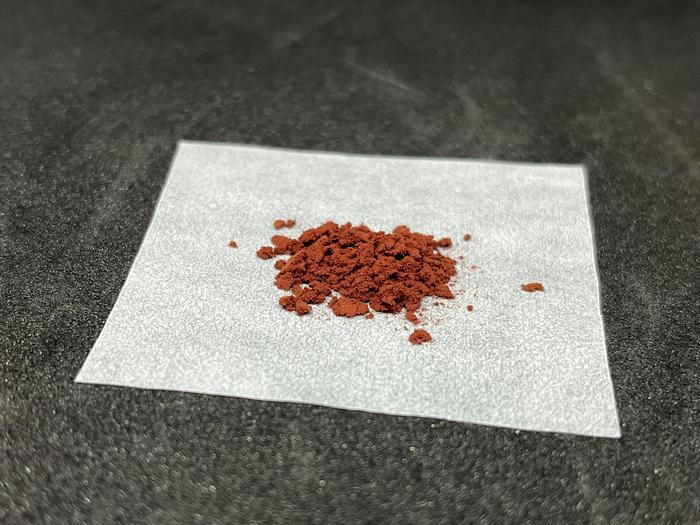
While ethanol in alcoholic beverages impairs drinkers’ motor functions, it is that same substance that can power motor vehicles in a cleaner, more sustainable manner. What is necessary for the production of ethanol is yeast, but ethanol is among the environmental factors that add stress to yeasts, hindering their growth. To promote efficient bioethanol production, scientists have been searching for substances that can help yeasts better withstand ethanol, but few effective ones have been found.

Credit: Osaka Metropolitan University
While ethanol in alcoholic beverages impairs drinkers’ motor functions, it is that same substance that can power motor vehicles in a cleaner, more sustainable manner. What is necessary for the production of ethanol is yeast, but ethanol is among the environmental factors that add stress to yeasts, hindering their growth. To promote efficient bioethanol production, scientists have been searching for substances that can help yeasts better withstand ethanol, but few effective ones have been found.
An Osaka Metropolitan University research team, including graduate student Ilhamzah and Professor Ken-ichi Fujita of the Graduate School of Science and Professor Akira Ogita of the Research Center for Urban Health and Sports, has found that tannin from persimmons improves the growth of the yeast strain Saccharomyces cerevisiae in the presence of ethanol.
“In this study, yeast cultures grown in a medium containing ethanol and persimmon tannin showed an 8.9-fold increase in cell number compared to cultures grown in an ethanol medium without persimmon tannin,” stated Professor Fujita.
The researchers explored persimmon tannin because it is known for its antioxidative properties.
“Persimmon tannin reduced ethanol-induced oxidative stress,” Fujita added. “However, persimmon tannin did not prevent ethanol-induced cell membrane damage. This indicates the potential of persimmon tannin as a protective agent to enhance the yeast’s tolerance to ethanol stress by limiting oxidative damage, rather than limiting damage to the yeast’s cell membranes.”
The findings were published in the Journal of the Science of Food and Agriculture.
###
About OMU
Established in Osaka as one of the largest public universities in Japan, Osaka Metropolitan University is committed to shaping the future of society through “Convergence of Knowledge” and the promotion of world-class research. For more research news, visit and follow us on social media: X, Facebook, Instagram, LinkedIn.
Journal
Journal of the Science of Food and Agriculture
Method of Research
Experimental study
Subject of Research
Cells
Article Title
Persimmon tannin promotes the growth of Saccharomyces cerevisiae under ethanol stress
Article Publication Date
6-Mar-2024
COI Statement
The authors declare no conflict of interest.
Cite Scienmag News
Drew Townsend. (May 16, 2024). More efficient bioethanol production might be possible using persimmon tannin to help yeast thrive. Scienmag. https://scienmag.com/more-efficient-bioethanol-production-might-be-possible-using-persimmon-tannin-to-help-yeast-thrive/
Drew Townsend. "More efficient bioethanol production might be possible using persimmon tannin to help yeast thrive." Scienmag, 16 May 2024, https://scienmag.com/more-efficient-bioethanol-production-might-be-possible-using-persimmon-tannin-to-help-yeast-thrive/. Accessed 4 September 2026.
Drew Townsend. "More efficient bioethanol production might be possible using persimmon tannin to help yeast thrive." Scienmag. May 16, 2024. https://scienmag.com/more-efficient-bioethanol-production-might-be-possible-using-persimmon-tannin-to-help-yeast-thrive/

