


Antimicrobial resistance is spreading through environments far beyond hospitals and clinics, and a new study from the University of Pennsylvania has identified wastewater contamination as a major source of multidrug-resistant bacteria in the Galápagos marine ecosystem. Researchers used a backpack-sized microbiology laboratory to analyze samples directly on San Cristóbal Island, where limited infrastructure, strict conservation rules, and unreliable access to electricity make conventional laboratory work difficult. Their findings, published in Nature Communications, reveal that untreated sewage is entering coastal waters and creating conditions in which bacteria carrying antimicrobial resistance genes can mix, exchange, and potentially generate new resistance combinations.
Antimicrobial resistance, or AMR, occurs when bacteria and other microbes evolve the ability to survive medicines designed to kill them or stop their growth. Although resistance is often associated with clinical settings, antimicrobial compounds, resistant organisms, and resistance genes can also move through sewage systems, soil, rivers, and oceans. Wastewater is particularly important because it brings together bacteria from human populations, hospitals, households, and the surrounding environment. In these densely mixed microbial communities, bacteria can exchange genetic material through processes such as horizontal gene transfer, allowing resistance traits to spread between unrelated strains.
The researchers focused on Puerto Baquerizo Moreno, the principal city on San Cristóbal. Over a two-year period, they collected water from 16 marine locations, two freshwater sites, and two points within the municipal wastewater system containing raw sewage. Molecular tests revealed several coastal “hot spots” consistent with wastewater contamination. The contamination was linked to failures in the local treatment system, allowing sewage to flow toward or directly into the ocean rather than being properly processed. Because the Galápagos is both a protected ecosystem and a heavily visited region, the discharge creates a potential pathway for human-associated microbes and resistance genes to enter sensitive marine habitats.
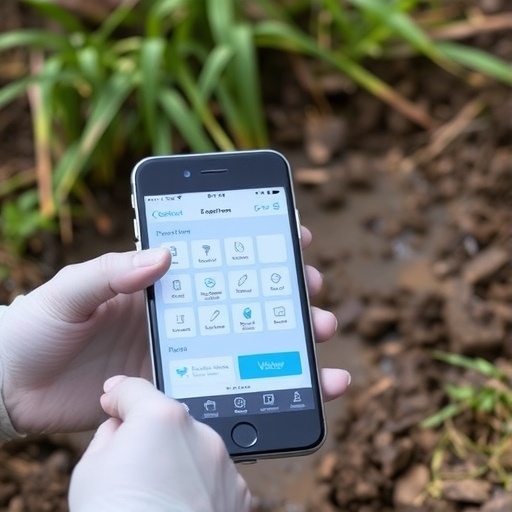
A central innovation in the study was the development of a mobile field laboratory capable of performing much of the analysis on site. Conventional microbiology laboratories typically depend on refrigerators and freezers, specialized instruments, precise pipetting, and a stable electrical supply. Transporting samples back to such facilities can also introduce delays and contamination risks, while preserving biological material during shipment requires a reliable cold chain. The Penn team instead assembled a collection of compact instruments and reagents that could be carried in backpacks and operated in the field, with several devices controlled or monitored using a smartphone.
The portable laboratory included a small quantitative polymerase chain reaction, or qPCR, instrument and a nanopore sequencing device. qPCR detects and measures selected DNA sequences, enabling researchers to estimate the abundance of specific bacterial targets or resistance genes. Sequencing provides a broader view by reading genetic material and helping identify organisms, resistance determinants, and the genetic neighborhoods in which those determinants occur. The team also adapted sample preparation for field use. Reagents were placed in sealed, single-use chambers resembling contact-lens blister packs, reducing the need for conventional tubes and minimizing errors associated with precision pipetting.
The results showed that bacteria recovered from contaminated environments frequently displayed resistance to multiple antibiotics. Among the organisms that could be grown in culture, a large proportion were resistant to drugs from at least three antibiotic classes, meeting the definition of multidrug resistance. Culture-based methods do not capture every organism present in an environmental sample, since many bacteria cannot be readily grown under laboratory conditions. However, combining cultivation with molecular detection and sequencing allowed the researchers to examine both the resistance traits expressed by viable bacteria and the broader pool of resistance genes present in the water.
The genetic data raised particular concern. The researchers observed patterns suggesting that bacteria in the contaminated environment were acquiring, rearranging, and combining antimicrobial resistance genes. Bacteria can exchange DNA through mobile genetic elements, including plasmids, transposons, and integrons. These elements can carry one or several resistance genes and move among bacterial populations. When sewage introduces large numbers of bacteria and antibiotic residues into the same environment, it may increase opportunities for genetic exchange and selection. The study suggests that the Galápagos wastewater system is not merely releasing resistant bacteria but may also be contributing to an active environment in which novel resistance combinations arise.
The findings have implications beyond the islands. Lower- and middle-income countries bear a disproportionate share of the global AMR burden, yet environmental surveillance is often limited by the cost and complexity of laboratory infrastructure. A portable system that can perform molecular diagnostics and sequencing close to the sampling site could make it easier to identify contamination before it spreads widely. It could also support rapid investigations after wastewater failures, provide data for improving treatment systems, and help public-health agencies track resistance in regions where transporting samples to distant laboratories is impractical.
The project also incorporated local engagement and student training. Penn students spent the academic year learning laboratory methods, working with communities in the Galápagos, carrying out field sampling, and analyzing the resulting data. Researchers said that conducting the work in public view helped connect scientific investigation with everyday environmental concerns, including wastewater management and coastal health. Daniel P. Beiting and Lisa M. Mattei of Penn’s School of Veterinary Medicine are now continuing to adapt the mobile laboratory for use in communities that are even more remote. Their objective is to make environmental AMR surveillance more accessible while identifying infrastructure failures that allow resistant microbes to move from human settlements into ecosystems and, potentially, back into human populations.
News Publication Date: 4-Aug-2026
Web References: https://www.nature.com/articles/s41467-026-74899-9; https://www.vet.upenn.edu/directory/danielbeiting/
References: Nature Communications, DOI: 10.1038/s41467-026-74899-9
Cite Scienmag News
Naomi Webster. (August 7, 2026). Mobile testing tracks water quality and antimicrobial resistance in the field. Scienmag. https://scienmag.com/mobile-testing-tracks-water-quality-and-antimicrobial-resistance-in-the-field/
Naomi Webster. "Mobile testing tracks water quality and antimicrobial resistance in the field." Scienmag, 7 August 2026, https://scienmag.com/mobile-testing-tracks-water-quality-and-antimicrobial-resistance-in-the-field/. Accessed 3 September 2026.
Naomi Webster. "Mobile testing tracks water quality and antimicrobial resistance in the field." Scienmag. August 7, 2026. https://scienmag.com/mobile-testing-tracks-water-quality-and-antimicrobial-resistance-in-the-field/


