

Friday, October 23, 2026
Science
No Result
View All Result
  • Login
  • HOME
  • SCIENCE NEWS
  • CONTACT US
  • HOME
  • SCIENCE NEWS
  • CONTACT US
No Result
View All Result
Scienmag
No Result
View All Result
Home Science News Biology

Mitochondrial Dysfunction Emerges as a Shared Network Behind Osteoarthritis Pain

October 23, 2026
in Biology, Science News
Drew Townsend
By Drew Townsend Scienmag Editorial Profile - Cell Biology
Reading Time: 2 mins read
0
Mitochondrial Dysfunction Emerges as a Shared Network Behind Osteoarthritis Pain

Mitochondrial Dysfunction Emerges as a Shared Network Behind Osteoarthritis Pain

65
SHARES
587
VIEWS
Share on FacebookShare on Twitter
ADVERTISEMENT

Osteoarthritis has long been viewed as a disease of worn cartilage, but researchers reviewing the field argue that its clinical burden of chronic pain, functional impairment and reduced quality of life cannot be explained by structural damage alone. In patients, the severity of imaging-detected joint damage and the intensity of pain often do not match, pointing to additional drivers such as metabolic disturbance, inflammatory amplification and neural sensitization.

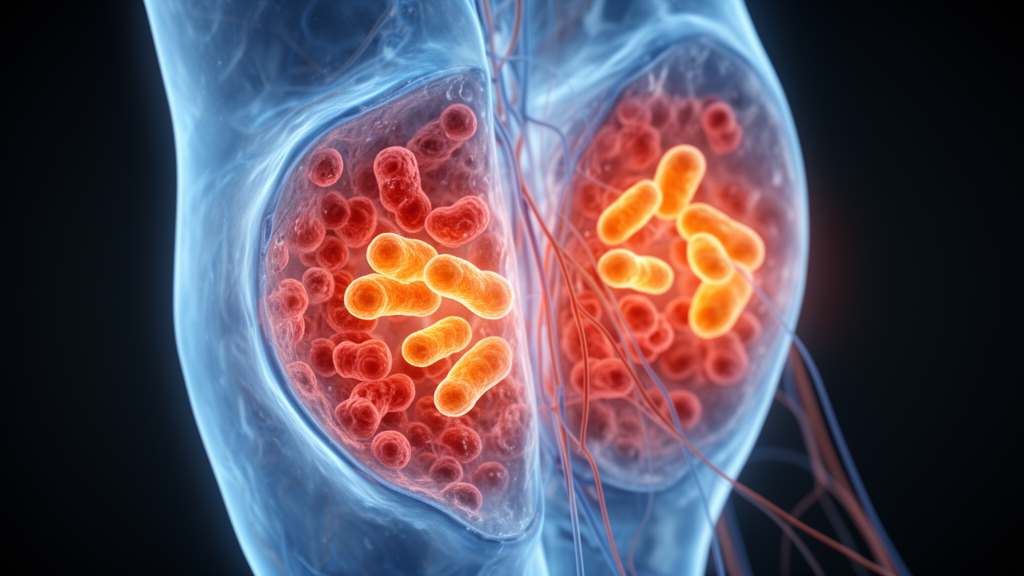
A synthesis published in the osteoarthritis literature proposes that mitochondria are central to this mismatch. Abnormalities in these energy-producing organelles have been observed across cartilage, synovium, subchondral bone and sensory nerve-related compartments. In chondrocytes, the cartilage cells, disruption of mitochondrial homeostasis is accompanied by imbalanced energy metabolism, oxidative stress, impaired quality control and damage to mitochondrial DNA. These changes are associated with cell aging, regulated cell death and degradation of the cartilage matrix.

Importantly, the review stresses that evidence strength and causal hierarchy differ between tissue compartments. Mitochondrial stress in the synovium, subchondral bone and neural compartments may contribute to local inflammation, abnormal bone remodeling and peripheral and central pain sensitization, but the mechanisms are not equally well established everywhere.

The authors highlight potential cross-compartment communication through mitochondria-derived damage-associated molecular patterns and other inflammatory mediators, which could in principle transmit stress signals from one joint tissue to another. However, they are explicit that current evidence is insufficient to establish a continuous causal chain running unidirectionally from cartilage degeneration to pain sensitization. They therefore recommend regarding mitochondria in osteoarthritis as a pathological network shared across multiple tissue compartments and potentially interacting with one another, rather than a single-organ defect.

Building on this perspective, the review uses a hypothesized “metabolism-senescence-pain axis” as a framework for organizing what is known about mitochondrial dysfunction in structural degeneration, cell aging, regulated cell death and pain sensitization, while carefully distinguishing findings from cartilage, synovium, subchondral bone, sensory neurons and central nervous system-related compartments.

By integrating human, animal, in vitro and translational studies, the authors stratify the existing evidence and summarize progress on mitochondria-directed and related therapeutic strategies, along with the barriers that have so far limited their translation into the clinic. Because much of the mechanistic picture rests on animal and cell models, the translational relevance to patients remains an open question.

Looking forward, the review proposes future research directions including cell type-specific delivery of therapeutics, mitochondrial biomarkers, candidate pain-mechanism phenotypes for classifying patients, and composite endpoints that combine mechanism, symptom and structure measures. The authors position this framework as a foundation for dissecting mechanistic heterogeneity, enabling patient stratification and supporting precision intervention in osteoarthritis, a disease in which symptom persistence often outpaces what structural changes alone can explain.

Subject of Research: Mitochondrial dysfunction as a multi-tissue network in osteoarthritis degeneration and pain sensitization

Article Title: From cartilage degeneration to pain sensitization: a multi-tissue mitochondrial dysfunction network in osteoarthritis

Article References: Yang, K., Li, L., & Yu, H. (2026). From cartilage degeneration to pain sensitization: a multi-tissue mitochondrial dysfunction network in osteoarthritis. Frontiers in Cell and Developmental Biology, 14, Article 1914283. https://doi.org/10.3389/fcell.2026.1914283

Image Credits: AI Generated

DOI: 10.3389/fcell.2026.1914283

Keywords: osteoarthritis, mitochondria, pain sensitization, cartilage degeneration, synovium, subchondral bone, oxidative stress, cell senescence, DAMPs, neuroimmune signaling, biomarkers, precision medicine

Cite Scienmag News

Drew Townsend. (October 23, 2026). Mitochondrial Dysfunction Emerges as a Shared Network Behind Osteoarthritis Pain. Scienmag. https://scienmag.com/mitochondrial-dysfunction-emerges-as-a-shared-network-behind-osteoarthritis-pain/


Drew Townsend. "Mitochondrial Dysfunction Emerges as a Shared Network Behind Osteoarthritis Pain." Scienmag, 23 October 2026, https://scienmag.com/mitochondrial-dysfunction-emerges-as-a-shared-network-behind-osteoarthritis-pain/. Accessed 23 October 2026.

Drew Townsend. "Mitochondrial Dysfunction Emerges as a Shared Network Behind Osteoarthritis Pain." Scienmag. October 23, 2026. https://scienmag.com/mitochondrial-dysfunction-emerges-as-a-shared-network-behind-osteoarthritis-pain/

Tags: Biomarkerscartilage degenerationcartilage inflammation and degenerationcell senescencechronic osteoarthritis pain mechanismscross-tissue mitochondrial communicationDAMPsenergy metabolism disruption in joint tissuesinflammatory pathways in joint diseasemitochondriaMitochondrial dysfunction in osteoarthritismitochondrial role in pain amplificationmitochondrial-targeted therapies for osteoarthritisneural sensitization in osteoarthritis painneuroimmune signalingosteoarthritisOxidative stressoxidative stress and mitochondrial DNA damagepain sensitizationPrecision medicinesubchondral bonesubchondral bone remodelingsynovial inflammationsynovium
Share26Tweet16
Previous Post

Teachers Want to Teach Emotional Skills but Lack the Training to Do It, UK Study Finds

Next Post

Digital Payments Lift Nigerian Health Workers’ Morale — When the Systems Work

Related Posts

AI Explanations Collapse When Supply Networks Fracture, Spectral Study Warns
Science News

AI Explanations Collapse When Supply Networks Fracture, Spectral Study Warns

October 23, 2026
Digital Payments Lift Nigerian Health Workers’ Morale — When the Systems Work
Medicine

Digital Payments Lift Nigerian Health Workers’ Morale — When the Systems Work

October 23, 2026
Teachers Want to Teach Emotional Skills but Lack the Training to Do It, UK Study Finds
Science News

Teachers Want to Teach Emotional Skills but Lack the Training to Do It, UK Study Finds

October 23, 2026
How Cardiovascular Health Shapes Lifespan: What the Evidence Shows
Medicine

How Cardiovascular Health Shapes Lifespan: What the Evidence Shows

October 23, 2026
Hungarian Tower Captures Ten Years of Carbon Monoxide Exchange Between Land and Air
Athmospheric

Hungarian Tower Captures Ten Years of Carbon Monoxide Exchange Between Land and Air

October 23, 2026
Simulations reveal why copper-aluminum cable welds fail at the edges
Technology and Engineering

Simulations reveal why copper-aluminum cable welds fail at the edges

October 23, 2026
Next Post
Digital Payments Lift Nigerian Health Workers’ Morale — When the Systems Work

Digital Payments Lift Nigerian Health Workers' Morale — When the Systems Work

  • Mothers who receive childcare support from maternal grandparents show more optimized

    Mothers who receive childcare support from maternal grandparents show more parental warmth, finds NTU Singapore study

    27656 shares
    Share 11059 Tweet 6912
  • University of Seville Breaks 120-Year-Old Mystery, Revises a Key Einstein Concept

    1061 shares
    Share 424 Tweet 265
  • Bee body mass, pathogens and local climate influence heat tolerance

    682 shares
    Share 273 Tweet 171
  • Researchers record first-ever images and data of a shark experiencing a boat strike

    546 shares
    Share 218 Tweet 137
  • Groundbreaking Clinical Trial Reveals Lubiprostone Enhances Kidney Function

    531 shares
    Share 212 Tweet 133
Science

Embark on a thrilling journey of discovery with Scienmag.com—your ultimate source for cutting-edge breakthroughs. Immerse yourself in a world where curiosity knows no limits and tomorrow’s possibilities become today’s reality!

RECENT NEWS

  • AI Explanations Collapse When Supply Networks Fracture, Spectral Study Warns
  • Digital Payments Lift Nigerian Health Workers’ Morale — When the Systems Work
  • Mitochondrial Dysfunction Emerges as a Shared Network Behind Osteoarthritis Pain
  • Teachers Want to Teach Emotional Skills but Lack the Training to Do It, UK Study Finds

Categories

  • Agriculture
  • Anthropology
  • Archaeology
  • Athmospheric
  • Biology
  • Biotechnology
  • Blog
  • Bussines
  • Cancer
  • Chemistry
  • Climate
  • Earth Science
  • Editorial Policy
  • Marine
  • Mathematics
  • Medicine
  • Pediatry
  • Policy
  • Psychology & Psychiatry
  • Science Education
  • Science News
  • Social Science
  • Space
  • Technology and Engineering

Subscribe to Blog via Email

Enter your email address to subscribe to this blog and receive notifications of new posts by email.

Join 5,151 other subscribers

© 2025 Scienmag - Science Magazine

Welcome Back!

Login to your account below

Forgotten Password?

Retrieve your password

Please enter your username or email address to reset your password.

Log In
No Result
View All Result
  • HOME
  • SCIENCE NEWS
  • CONTACT US

© 2025 Scienmag - Science Magazine

Discover more from Science

Subscribe now to keep reading and get access to the full archive.

Continue reading