


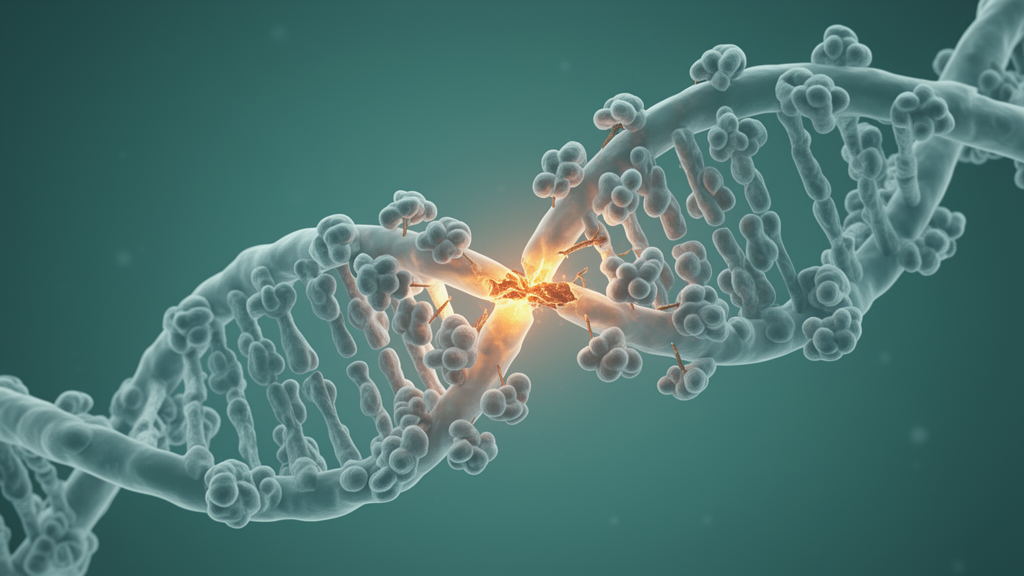
A mini-review concludes that overproduction of chaperone proteins may favour resistance to oxidative stress by supporting survival under stressful conditions and interacting with proteins involved in DNA repair. The authors distinguish this indirect contribution from direct participation in repair, noting that the evidence discussed spans algal, yeast, plant and mammalian-cell studies without establishing clinical benefits in people. The review focuses on “genotype resistance” to oxidative stress, describing it as an integrated characteristic formed by morphological, physiological, biochemical, metabolic and genetic features.
The concept has been examined in ecological, medical and agricultural settings, including adaptation to environmental conditions, disease resistance and tolerance of physical and chemical stressors. The authors argue that the mechanisms contributing to this resistance are interdependent and may involve changes in genes, proteins, enzymes, metabolic pathways and biological networks. Oxidative stress and other damaging agents can produce several forms of DNA injury, including single-strand breaks, double-strand breaks, base and nucleotide modifications, cross-links and dimers.
The resulting damage depends on the damaging agent and on factors such as species, tissue, age, experimental design, cell-cycle phase and physiological state. Cells respond through the DNA damage response, which detects injuries and coordinates repair or apoptosis; related antioxidant and chaperone defence systems may also be activated. Particular attention is given to double-strand breaks, which the review describes as potentially lethal and which can be repaired through homologous recombination or non-homologous end joining.
It also discusses direct reversal of DNA damage, base excision repair, mismatch repair and nucleotide excision repair. Quantifying radiation-induced double-strand breaks can help evaluate and predict cellular or organismal responses to ionising radiation in occupational, accidental and medical settings. Results summarized from the authors’ experiments with the green alga Chlamydomonas reinhardtii, the yeast Saccharomyces cerevisiae and the extremophile Chlorella vulgaris showed differences among strains in DNA susceptibility and double-strand-break repair capacity.
The radio-resistant Chlamydomonas hybrid H-3 had several-fold higher potential for rejoining double-strand breaks than the comparison strains. The authors present these differences as possible contributors to genotype resistance rather than proof that repair capacity alone causes resistance. Mutant experiments with Chlamydomonas strains UVS-10, characterized as deficient in rec-repair, and UVS-14, deficient in mismatch repair, supported the involvement of these repair pathways in genotype resistance to different DNA-damaging factors.
The review also notes that published findings about the contributions of DNA susceptibility and repair capacity have been contradictory, leaving their relative roles incompletely resolved. Heat shock proteins include small HSPs with molecular masses of 10–30 kDa and the HSP40, HSP60, HSP70, HSP90 and HSP100 families. Small HSPs help prevent irreversible aggregation and allow aggregated proteins to be accessed by HSP70 and ClpB/HSP104 chaperones.
HSP70 participates in protein folding, transport, complex assembly, refolding and degradation, while HSP90 acts with other chaperones in later protein-maturation steps. These functions contribute to proteostasis and cellular survival during stress. The review identifies HSP27, HSP70, HSP90 and HSP110 as chaperones associated with regulation of double-strand-break repair, while HSP90 is reported to be required for both homologous recombination and non-homologous end joining.
HSPs are rapidly induced after DNA-damaging exposure and have been identified at DNA-repair sites by confocal microscopy. In mammalian cells, HSP110 has been associated with DNA-repair signalling, and blocking chaperones has increased tumour-cell sensitivity to drugs in the cited studies. These observations do not establish that chaperones directly repair damaged DNA.
Plant heat shock transcription factors regulate HSP expression and downstream antioxidant-enzyme genes. Reactive oxygen species can act as signals in this network, through which HSPs, superoxide dismutase, catalase, peroxidases and glutathione S-transferases contribute to stress tolerance. Overexpression of small HSP17.8 in Arabidopsis and HSP16.9 in tobacco has been associated with increased antioxidant-enzyme activities.
In the Antarctic Chlorella vulgaris strain, high constitutive levels and marked overproduction of HSP70B after heat stress correlated with increased resistance to UV-B irradiation and more clearly expressed photoreactivation and dark repair. The authors propose that HSP70B overproduction together with effective DNA repair may help explain survival in extreme Antarctic conditions and may serve as an indicator of oxidative stress. Overall, the review identifies accelerated DNA repair and activation of the DNA damage response as important components of genotype resistance, including tumour resistance to radio-chemotherapy.
It proposes that chaperones contribute indirectly through their interactions with repair proteins and their broader role in stress survival. The reviewed evidence remains mixed on the relative importance of DNA susceptibility and repair capacity, and the discussion does not demonstrate clinical efficacy for blocking individual chaperones or establish their agricultural applications directly.
Subject of Research: Relationships among chaperone overproduction, oxidative-stress resistance and DNA-repair regulation
Article Title: Does overproduction of chaperone proteins favour the repair of DNA injuries induced by oxidative stress? (Mini review)
Article References: Chankova, S. G., Yurina, N. P., Todorova, T. I., & Parvanova, P. N. (2023). Does overproduction of chaperone proteins favour the repair of DNA injuries induced by oxidative stress? (Mini review). BioRisk, 20, 7-22. https://doi.org/10.3897/biorisk.20.97569
Image Credits: AI Generated
Keywords: oxidative stress, heat shock proteins, DNA repair, genotype resistance, double-strand breaks, cellular stress, plant stress tolerance, protein homeostasis, mini-review, Does, overproduction, chaperone
Cite Scienmag News
Juliet Wilcox. (October 20, 2026). Mini-review links chaperone overproduction with oxidative-stress resistance and DNA-repair regulation. Scienmag. https://scienmag.com/mini-review-links-chaperone-overproduction-with-oxidative-stress-resistance-and-dna-repair-regulation/
Juliet Wilcox. "Mini-review links chaperone overproduction with oxidative-stress resistance and DNA-repair regulation." Scienmag, 20 October 2026, https://scienmag.com/mini-review-links-chaperone-overproduction-with-oxidative-stress-resistance-and-dna-repair-regulation/. Accessed 20 October 2026.
Juliet Wilcox. "Mini-review links chaperone overproduction with oxidative-stress resistance and DNA-repair regulation." Scienmag. October 20, 2026. https://scienmag.com/mini-review-links-chaperone-overproduction-with-oxidative-stress-resistance-and-dna-repair-regulation/


