
Tuesday, October 20, 2026
Science
No Result
View All Result
  • Login
  • HOME
  • SCIENCE NEWS
  • CONTACT US
  • HOME
  • SCIENCE NEWS
  • CONTACT US
No Result
View All Result
Scienmag
No Result
View All Result
Home Science News Biology

Molecular surveillance finds first Swiss record of ‘Candidatus Phytoplasma ulmi’ in a leafhopper

October 20, 2026
in Biology, Science News
Drew Townsend
By Drew Townsend Scienmag Editorial Profile - Cell Biology
Reading Time: 3 mins read
0
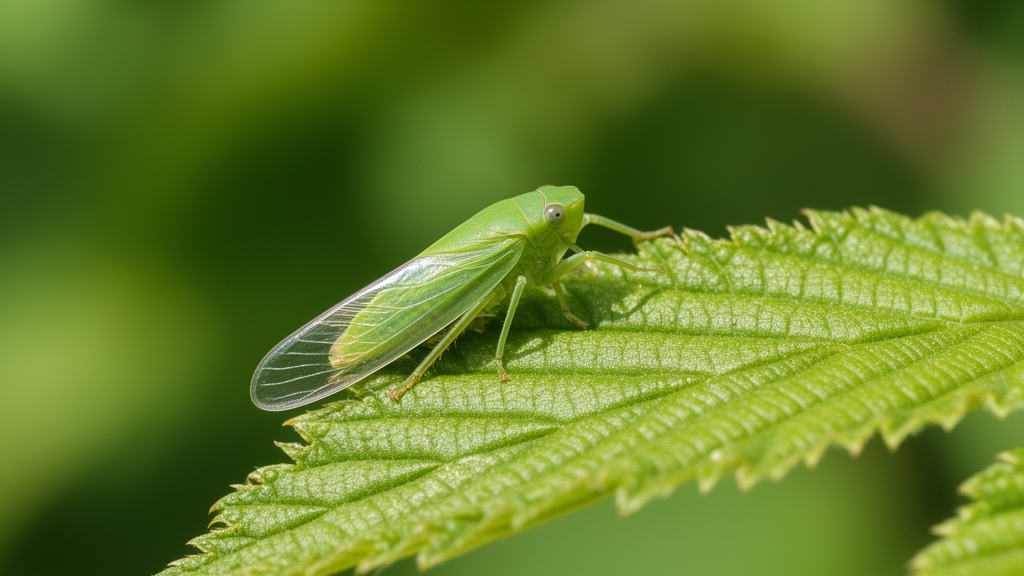
Invasive leafhopper in Switzerland found carrying elm dieback phytoplasma for the first time

Invasive leafhopper in Switzerland found carrying elm dieback phytoplasma for the first time

65
SHARES
587
VIEWS
Share on FacebookShare on Twitter
ADVERTISEMENT

A molecular surveillance study in vineyards and surrounding landscapes in Canton Ticino detected ‘Candidatus Phytoplasma ulmi’ in one of 283 analyzed specimens of the leafhopper Orientus ishidae. The observation was made during routine monitoring undertaken for research on Flavescence dorée phytoplasmas and their insect vectors. Researchers used yellow sticky traps in vineyards, near spontaneous plants known to host alternative vectors, and around gone-wild grapevines and rootstock resprouts.

Sixteen additional monitoring plots were established in 2021 near former vineyard sites, while additional traps and a longer sampling period beginning in mid-July were used in 2022 to increase the chances of capturing leafhoppers during their population peak. Investigators analyzed 16 O. ishidae specimens captured in 2021 and 267 captured in 2022. The infected insect was one of three O. ishidae caught in 2021 at an additional plot near Cugnasco on the southern slope of the Swiss Alps.

It had been captured between 1 and 14 October 2021. Four grapevines sampled at the Cugnasco plot in 2021 had no external symptoms associated with Grapevine Yellows and their molecular analyses did not detect phytoplasmas. Each insect was homogenized separately, and nucleic acids were extracted with a CTAB-based protocol.

The investigators used quantitative PCR targeting 16SrV-group phytoplasmas, followed by nested PCR amplification of the map and imp gene loci. Amplicons were checked by agarose-gel electrophoresis, purified, and sequenced in forward and reverse directions by Sanger sequencing. Maximum-likelihood phylogenetic analyses used the General Time Reversible model and 500 bootstrap replicates, and the resulting trees were visualized in iTOL.

The Swiss imp amplicon differed by one nucleotide, a single-nucleotide polymorphism, from German isolate MT668492, corresponding to 99.78% identity. ‘Candidatus Phytoplasma ulmi’ belongs to ribosomal subgroup 16SrV-A and is associated with dieback, shoot proliferation, and yellows on several Ulmus species. It has previously been recorded in European countries including Italy, Germany, and France.

A recent report from northwestern Italy also identified infected Carpinus betulus, Prunus domestica, and Prunus ulmifolius, showing that the phytoplasma can occur in hosts beyond elm. Previously identified competent vectors include Scaphoideus luteolus in the United States, Macropsis glandacea in Italy, and Amplicephalus curtulus in Chile. The study established only that the phytoplasma was present in one captured insect.

The detection rate among the analyzed O. ishidae was 1 in 283, and the positive result came from monitoring designed primarily to investigate Flavescence dorée vectors rather than from a dedicated survey of Ca. O. ishidae is native to Asia and was first recorded in Europe in 1998. It has since spread across most of the continent and occurs in pre-Alpine and Alpine regions.

Reported host plants include Corylus avellana, Acer species, Alnus glutinosa, Salix species, and Carpinus betulus, many of which are common near vineyards. Previous studies documented its ability to acquire Flavescence dorée phytoplasmas and other phytoplasmas from additional ribosomal groups. The insect can also lay eggs on grapevines and gone-wild grapevines, potentially giving newly hatched nymphs direct access to plant material.

The single positive insect also does not establish a transmission pathway or quantify population-level prevalence. The authors describe O. ishidae as a potential “wild-card” in several phytoplasma pathosystems and call for research on its ecology, agricultural relevance, and possible effects on spontaneous woody plants across the Alpine region.

Subject of Research: First Swiss detection of a phytoplasma in Orientus ishidae through molecular surveillance

Article Title: First detection of ‘ Candidatus Phytoplasma ulmi’ in Switzerland and in Orientus ishidae Matsumura, 1902

Article References: Oggier, A., Debonneville, C., Conedera, M., Schumpp, O., & Rizzoli, A. (2024). First detection of ‘Candidatus Phytoplasma ulmi’ in Switzerland and in Orientus ishidae Matsumura, 1902. Alpine Entomology, 8, 29-34. https://doi.org/10.3897/alpento.8.115588

Image Credits: AI Generated

DOI: 10.3897/alpento.8.115588

Keywords: Candidatus Phytoplasma ulmi, Orientus ishidae, Canton Ticino, molecular surveillance, leafhoppers, phytoplasma, Flavescence dorée, plant pathology, Switzerland, 16SrV-A, First, detection

Cite Scienmag News

Drew Townsend. (October 20, 2026). Molecular surveillance finds first Swiss record of ‘Candidatus Phytoplasma ulmi’ in a leafhopper. Scienmag. https://scienmag.com/molecular-surveillance-finds-first-swiss-record-of-candidatus-phytoplasma-ulmi-in-a-leafhopper/

Drew Townsend. "Molecular surveillance finds first Swiss record of ‘Candidatus Phytoplasma ulmi’ in a leafhopper." Scienmag, 20 October 2026, https://scienmag.com/molecular-surveillance-finds-first-swiss-record-of-candidatus-phytoplasma-ulmi-in-a-leafhopper/. Accessed 20 October 2026.

Drew Townsend. "Molecular surveillance finds first Swiss record of ‘Candidatus Phytoplasma ulmi’ in a leafhopper." Scienmag. October 20, 2026. https://scienmag.com/molecular-surveillance-finds-first-swiss-record-of-candidatus-phytoplasma-ulmi-in-a-leafhopper/

Tags: 16SrV-ACandidatus Phytoplasma ulmiCandidatus Phytoplasma ulmi detection in Swiss leafhopperCanton TicinodetectionFirstFlavescence doréeFlavescence dorée phytoplasma monitoring in vineyardsleafhopper-based plant pathogen detection in Canton Ticinoleafhoppersmolecular analysis of grapevine yellows phytoplasmasmolecular surveillancemolecular surveillance of vineyard insect vectorsOrientus ishidaeOrientus ishidae phytoplasma transmissionphytoplasmaplant pathologyprevalence of phytoplasma-infected leafhoppers in Swiss vineyardsrole of leafhoppers in grapevine disease spreadSwitzerlanduse of yellow sticky traps for insect vector surveillance
Share26Tweet16
Previous Post

Computational study finds rock availability and collection effort do not fully explain plesiosaur diversity patterns

Next Post

Comparative chloroplast genomes place Rhododendron ambiguum near R. concinnum but leave genus relationships unresolved

Related Posts

Case study links technology to higher Yangyuan mung bean farmer income
Science News

Case study links technology to higher Yangyuan mung bean farmer income

October 20, 2026
Observational Study Finds Freelance Hiring Signal Backfired
Technology and Engineering

Observational Study Finds Freelance Hiring Signal Backfired

October 20, 2026
Two New Mushroom Species Emerge from Oman’s Monsoon-Watered Termite Mounds
Biology

Research report: Morphology and multigene phylogeny reveal two new species of Micropsalliota ( Agaricaceae , Basidiomycota ) from Dhofar region, southern Oman

October 20, 2026
Invasive social wasps creep across the South Pacific as a notorious hornet reaches New Zealand
Science News

Review documents 11 invasive social wasp species across the South Pacific

October 20, 2026
Swiss water beetles get first modern checklist in over a century
Biology

Museum and literature review yields annotated checklist of Switzerland’s Hydrophiloidea

October 20, 2026
Three Rare Plants Join the Global Red List as Scientists Sound the Alarm
Biology

IUCN assessments place Campanula bergomensis Near Threatened and two Kyzylkum desert plants Endangered

October 20, 2026
Next Post
Complete Chloroplast Genome of Rhododendron ambiguum Reveals Hidden Diversity and Evolutionary Complexity

Comparative chloroplast genomes place Rhododendron ambiguum near R. concinnum but leave genus relationships unresolved

  • Mothers who receive childcare support from maternal grandparents show more optimized

    Mothers who receive childcare support from maternal grandparents show more parental warmth, finds NTU Singapore study

    27656 shares
    Share 11059 Tweet 6912
  • University of Seville Breaks 120-Year-Old Mystery, Revises a Key Einstein Concept

    1061 shares
    Share 424 Tweet 265
  • Bee body mass, pathogens and local climate influence heat tolerance

    682 shares
    Share 273 Tweet 171
  • Researchers record first-ever images and data of a shark experiencing a boat strike

    546 shares
    Share 218 Tweet 137
  • Groundbreaking Clinical Trial Reveals Lubiprostone Enhances Kidney Function

    531 shares
    Share 212 Tweet 133
Science

Embark on a thrilling journey of discovery with Scienmag.com—your ultimate source for cutting-edge breakthroughs. Immerse yourself in a world where curiosity knows no limits and tomorrow’s possibilities become today’s reality!

RECENT NEWS

  • Case study links technology to higher Yangyuan mung bean farmer income
  • Observational Study Finds Freelance Hiring Signal Backfired
  • Research report: Morphology and multigene phylogeny reveal two new species of Micropsalliota ( Agaricaceae , Basidiomycota ) from Dhofar region, southern Oman
  • Review documents 11 invasive social wasp species across the South Pacific

Categories

  • Agriculture
  • Anthropology
  • Archaeology
  • Athmospheric
  • Biology
  • Biotechnology
  • Blog
  • Bussines
  • Cancer
  • Chemistry
  • Climate
  • Earth Science
  • Editorial Policy
  • Marine
  • Mathematics
  • Medicine
  • Pediatry
  • Policy
  • Psychology & Psychiatry
  • Science Education
  • Science News
  • Social Science
  • Space
  • Technology and Engineering

Subscribe to Blog via Email

Enter your email address to subscribe to this blog and receive notifications of new posts by email.

Join 5,150 other subscribers

© 2025 Scienmag - Science Magazine

Welcome Back!

Login to your account below

Forgotten Password?

Retrieve your password

Please enter your username or email address to reset your password.

Log In
No Result
View All Result
  • HOME
  • SCIENCE NEWS
  • CONTACT US

© 2025 Scienmag - Science Magazine

Discover more from Science

Subscribe now to keep reading and get access to the full archive.

Continue reading