


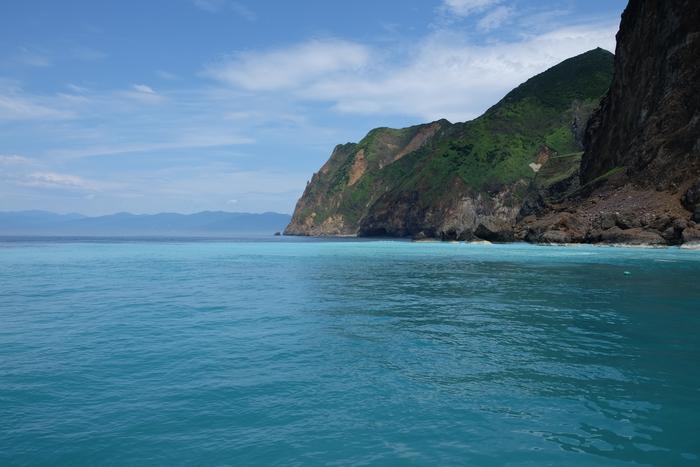
In the realm of Earth’s diverse marine environments, harsh and seemingly inhospitable conditions persist not only in the planet’s deepest abysses but also surprisingly close to the ocean’s surface. One striking example of this paradox can be found near the volcanic island of Kueishantao, situated off eastern Taiwan. In the shallow coastal waters surrounding this island, unique hydrothermal systems release a complex cocktail of chemical compounds sourced from Earth’s interior, profoundly transforming the local seawater chemistry and creating an extreme but biologically rich environment. This phenomenon fundamentally challenges traditional notions that extreme environments are barren, unveiling complex ecosystems thriving under unusual physicochemical stressors.
Hydrothermal vents, traditionally associated with deep-sea environments where sunlight fails to penetrate, are a critical feature of oceanic ecosystems. These vents discharge super-heated, acidic fluids laden with reduced chemical compounds such as sulfur and other minerals directly into surrounding waters. In deep-sea systems, these emissions serve as the primary energy source supporting intricate communities through chemosynthesis, a process independent of photosynthesis. Remarkably, similar venting activity occurs at comparatively shallow depths near Kueishantao, with hydrothermal plumes rising through waters only around ten meters deep. The physical and chemical characteristics of these systems create an unusual milieu where biological adaptation and biogeochemical cycling intertwine in complex ways.
The waters around Kueishantao are infused with high concentrations of sulfur and other reactive compounds sourced through hydrothermal activity. These inputs alter the seawater’s pH drastically, rendering the local marine environment highly acidic and rich in dissolved minerals. Despite the seemingly hostile chemical conditions, Kueishantao’s hydrothermal vents support a thriving biosphere dominated by microorganisms adapted to exploit the energy-rich chemical substrates available. Contrary to expectations, these acidic vents teem with microbial life that harnesses unique metabolic pathways to convert inorganic carbon into organic biomass, underpinning the broader food web.
At the heart of this microbial community lies a group of bacteria known as Campylobacteria. These microorganisms capitalize on an energy-efficient carbon fixation cycle known as the reductive tricarboxylic acid cycle (rTCA cycle). Unlike the more ubiquitous Calvin cycle employed by most photosynthetic organisms, the rTCA cycle circumvents several energy-intensive enzymatic steps, allowing these bacteria to thrive in energy-limited environments. This efficiency confers a remarkable metabolic advantage under the energetic constraints imposed by shallow hydrothermal systems, enabling Campylobacteria to dominate primary production amid intense chemical and thermal gradients.
The rTCA cycle facilitates the conversion of inorganic carbon dioxide into organic compounds with significantly lower ATP investment compared to conventional cycles. Through a series of reductive carboxylation reactions, this biochemical pathway efficiently assimilates carbon into precursor molecules for cellular biomass. This process becomes pivotal in the hydrothermal vent ecosystem of Kueishantao, where sunlight-driven photosynthesis is insufficient or absent, and energy availability relies heavily on chemical reductants. By utilizing the rTCA cycle, Campylobacteria act as indispensable primary producers, initiating carbon flow through an ecosystem sustained by chemical energy rather than solar radiation.
Researchers have employed sophisticated isotope ratio analyses to elucidate the pathways of carbon fixation and transfer within the Kueishantao hydrothermal system. Isotopic signatures reveal that carbon fixed via the rTCA cycle is not confined to microbial biomass but is transferred into higher trophic levels, including local fauna such as crabs inhabiting the vent fields. This discovery marks a significant breakthrough in understanding how chemosynthetically derived carbon permeates marine food webs, underscoring the ecological importance of these shallow-water hydrothermal habitats as active sites of carbon cycling and energy transfer.
The implications of such findings extend beyond local ecosystem dynamics, providing critical insights into global biogeochemical cycles. Shallow hydrothermal vents like those at Kueishantao may contribute substantially to carbon processing in coastal oceans, a realm historically overshadowed by deep-sea vent studies. Understanding the fundamental mechanisms that govern carbon assimilation and transfer in these systems aids in constructing more comprehensive models of the marine carbon cycle, which is integral to predicting Earth system responses to environmental changes such as ocean acidification and climate variability.
This research forms a vital component of the broader scientific endeavor conducted under the auspices of the Cluster “The Ocean Floor – Earth’s Uncharted Interface,” an initiative aimed at unraveling the complexities of ocean-floor ecosystems facing dynamic environmental conditions. By integrating geological, chemical, and biological perspectives, this program strives to elucidate how interfacial processes between the seafloor and overlying waters govern ecosystem structure, elemental cycling, and ultimately Earth system functioning. Studies of shallow hydrothermal systems contribute key data and conceptual advances toward these objectives.
Technological advancements in isotopic analysis and in situ sampling have been instrumental in enabling this research. Precise measurements of carbon isotope ratios facilitate the tracing of metabolic pathways and the connectivity of organisms within hydrothermal communities. Such detailed biochemical insights were previously unattainable, thus the emerging data from Kueishantao hydrothermal vents represent a milestone in marine microbial ecology and geochemistry. The combination of field studies and laboratory analyses continues to shed light on the adaptive strategies of extremophiles, with potential ramifications for biotechnology and our understanding of life’s resilience.
The biogeochemical uniqueness of the Kueishantao hydrothermal system also challenges preconceived boundaries of habitability in marine environments. The coexistence of extreme acidity, elevated temperatures, and fluctuating chemical fluxes creates a habitat that supports life while pushing organisms toward metabolic specialization. These systems serve as natural laboratories for studying evolutionary adaptation, metabolic innovation, and the interplay between Earth’s geology and biology. Such findings deepen our appreciation for the diversity and complexity of life in extremis, expanding the horizons of marine science.
Furthermore, understanding carbon fluxes and energy transfer in these vent ecosystems is crucial when assessing their role in the broader ocean system, especially under anthropogenic pressures. Coastal marine ecosystems are increasingly impacted by pollution, warming, and acidification. The resilience and functional contributions of hydrothermal vent communities, including carbon sequestration and nutrient transformations, might influence the stability and productivity of adjacent marine habitats. Consequently, studies like this one enrich ecosystem management frameworks and contribute to sustainable environmental stewardship.
The study’s findings also resonate with planetary science and astrobiology disciplines, where the search for life in extraterrestrial oceans often revolves around analogs to Earth’s hydrothermal systems. Understanding how life can flourish in chemically extreme but energy-rich environments informs hypotheses regarding potential habitability on icy moons such as Europa or Enceladus. The metabolic flexibility exemplified by Campylobacteria’s utilization of the rTCA cycle broadens the biochemical possibilities for life in analogous extraterrestrial settings, opening new frontiers in the quest to identify life beyond Earth.
Ultimately, the meticulous exploration of the Kueishantao hydrothermal vents reveals that energy-efficient biochemical pathways empower microorganisms to thrive in conditions previously assumed too hostile to sustain complex ecosystems. This capacity for carbon fixation and subsequent trophic transfer drives vibrant biological communities in shallow yet extreme marine environments. As research unravels these intricate interactions, it elucidates fundamental processes shaping marine ecosystems and contributes crucial knowledge toward addressing global environmental challenges.
News Publication Date: 15-Apr-2025
Web References: DOI: 10.5194/bg-22-1853-2025
Cite Scienmag News
Daisy Hatcher. (April 16, 2025). Microorganisms Harness a Hidden Powerhouse to Boost Metabolism. Scienmag. https://scienmag.com/microorganisms-harness-a-hidden-powerhouse-to-boost-metabolism/
Daisy Hatcher. "Microorganisms Harness a Hidden Powerhouse to Boost Metabolism." Scienmag, 16 April 2025, https://scienmag.com/microorganisms-harness-a-hidden-powerhouse-to-boost-metabolism/. Accessed 4 September 2026.
Daisy Hatcher. "Microorganisms Harness a Hidden Powerhouse to Boost Metabolism." Scienmag. April 16, 2025. https://scienmag.com/microorganisms-harness-a-hidden-powerhouse-to-boost-metabolism/


