


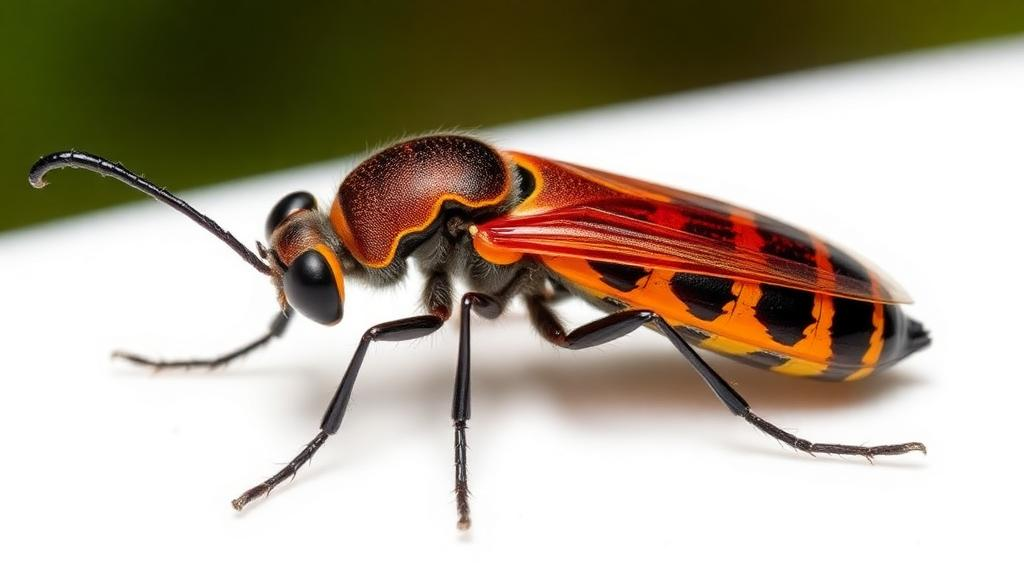
Insect herbivores destroy a staggering share of the world’s harvests every year, and the chemical arsenal deployed against them is steadily losing its edge. Pesticide resistance keeps evolving, environmental costs keep mounting, and regulators keep tightening the rules. Against that backdrop, a new review published in Plant Biosystems argues that one of the most promising frontiers in crop protection lies not in the plant itself, but in the vast communities of microbes that live on, in and around it. The paper, authored by Keerthivarman Krishnan, Subhashini Selvaraj, Aravind Krishnamoorthy and Banoth Madhu, makes a provocative claim: the science of microbiome-mediated pest resistance has already discovered its mechanisms, and what it desperately needs now is a way to make them work reliably in real farm fields.
The conceptual heart of the review is the plant holobiont, the idea that a plant and its associated microbiota should be understood as a single functional unit. This includes the rhizosphere, the teeming microbial zone surrounding the roots; the phyllosphere, the leaf and stem surfaces exposed to air and insects; and the endophytes, microorganisms that live entirely inside plant tissues. Traditional models of herbivore resistance treat the plant as a solitary defender, deploying its own chemical and structural weapons against attackers. The holobiont framework insists that this picture is incomplete, because a substantial portion of what looks like plant defence is actually produced, modulated or amplified by microbial partners that conventional breeding programmes never select for.
The authors organize the evidence for microbiome-based regulation into three principal routes. The first is direct chemical warfare: soil and root-associated microbes can produce insecticidal metabolites, including toxic secondary compounds and volatile organic molecules that repel or kill herbivores outright. The second route is immunological priming. Beneficial microbes can place the plant’s own signalling machinery on high alert, sensitizing the jasmonic acid, salicylic acid and ethylene pathways that govern responses to chewing insects, sap-suckers and pathogens respectively. A plant whose defences have been primed by its microbiome responds faster and more strongly when an insect begins feeding, often before the attacker has inflicted serious damage. The third route is perhaps the most surprising: microbes can attack the attacker from within, disrupting the gut microbiota of insect herbivores and thereby impairing their digestion, development and survival.
Each of these mechanisms is well supported by experimental evidence, and the review is careful to say so. Mycorrhizal fungi, for example, have been shown to prime the accumulation of antiherbivore compounds in tomato and to increase herbivore mortality, while arbuscular mycorrhizal colonization can reshape the phyllosphere community and alter plant defences during simultaneous attack by aphids and pathogens. Root-associated microbes have been repeatedly linked to improved plant tolerance of insect damage, a conclusion reinforced by recent systematic reviews and meta-analyses. The soil-borne legacy, in which a previous crop’s microbiome shapes the defence chemistry of the next generation growing in the same soil, adds a further layer of complexity and opportunity.
Yet the review’s central argument is not a celebration of these findings but a diagnosis of their fragility. Mechanisms that perform beautifully in growth chambers and greenhouses routinely fail or underperform in the field, and the authors contend that this lab-to-field gap, rather than any shortage of mechanistic discovery, is now the binding constraint on the entire field. The reason is that microbiome-mediated resistance is governed by a web of interacting variables that controlled experiments deliberately hold constant. Plant genotype shapes which microbes colonize the roots and leaves. Soil chemistry determines nutrient availability and microbial competition. Climate variability alters both the plant’s physiology and the composition of its microbial partners. Agricultural management, from fertilization to tillage to crop rotation, reshuffles the community yet again. Crucially, these factors do not simply add up; they interact non-additively, meaning that a microbial consortium that confers strong resistance under one combination of conditions may confer none under another.
The review reconciles several apparently contradictory findings on this point. Nitrogen nutrition, for instance, can regulate plant defence against herbivores in ways that either amplify or suppress microbiome effects depending on dose and timing. Soil moisture has been shown to mediate plant-microbe-herbivore interactions, so a treatment that works in a wet season may fail in a dry one. Agricultural intensification, with its high inputs and simplified rotations, tends to degrade the very rhizosphere diversity that underpins natural defence, which helps explain why microbiome-based approaches often show more promise in less intensive systems. Even the insects themselves carry microbiomes that exchange and interact with plant-associated communities, adding a second layer of ecological contingency to every field trial.
Where the field has advanced most rapidly, the authors argue, is in measurement and prediction rather than delivery. Multi-omics approaches, combining genomics, transcriptomics, metabolomics and proteomics, can now identify resistance-associated taxa with increasing precision and predict community function with growing confidence. Machine-learning models trained on these datasets can sift through thousands of microbial candidates and flag the combinations most likely to protect a given crop. Synthetic community experiments, in which researchers assemble defined mixtures of microbes and test them under controlled conditions, have demonstrated that protective community patterns can be identified systematically rather than by trial and error. Microbiome-assisted breeding, which treats the microbial partners as heritable components of crop performance, is emerging as a parallel strategy.
But predictive power has not yet translated into consistent field performance, stable formulations or regulatory clarity. Live microbial products are notoriously difficult to manufacture, store and deploy; a consortium that thrives in a laboratory flask may collapse on a seed coating or in a bag of granular inoculant. Once released into a field, introduced strains face competition from resident communities that may exclude them before they can establish. Regulators, meanwhile, still lack clear frameworks for evaluating live microbial pest-control products whose effects depend on context rather than on a single active ingredient. The review suggests that closing these translational gaps will require field-scale experimentation designed around ecological realism, not more greenhouse papers.
The stakes are rising. Climate change is expected to increase crop losses to insect pests as warming accelerates insect metabolism and expands the range of many species, and shifting precipitation patterns will further destabilize the microbial communities on which the holobiont approach depends. The authors argue that this makes the microbiome not a luxury but a necessity for climate-resilient integrated pest management: a plant whose microbial partners help buffer it against variable conditions is inherently more robust than one relying on a single engineered trait or a scheduled spray. In their view, the plant holobiont could become a pillar of sustainable agriculture, but only if the discipline redirects its energy from discovering yet more mechanisms to explaining, predicting and stabilizing performance across the messy gradient of real-world environments.
For farmers, the message is cautiously optimistic. The biology is real, the mechanisms are documented, and the analytical tools to exploit them are maturing fast. What remains is the hardest part of translational science: converting elegant interactions observed in controlled settings into dependable, affordable and regulatable products that work across soils, seasons and management systems. If the field takes the review’s diagnosis seriously, the invisible communities surrounding every root may yet become one of agriculture’s most powerful allies against its oldest enemies.
Subject of Research: Microbiome-mediated regulation of plant defence against insect herbivores
Article Title: Microbiome based regulation of plant insect interactions
Article References: Krishnan, K., Selvaraj, S., Krishnamoorthy, A., & Madhu, B. (2026). Microbiome based regulation of plant insect interactions. Plant Biosystems, 160(4), Article 236. https://doi.org/10.1007/s44473-026-00245-y
Image Credits: AI Generated
DOI: 10.1007/s44473-026-00245-y
Keywords: plant holobiont, microbiome, insect herbivory, jasmonic acid, salicylic acid, rhizosphere, phyllosphere, endophytes, multi-omics, machine learning, integrated pest management, sustainable agriculture
Cite Scienmag News
Alan Morgan. (October 2, 2026). Microbes May Hold the Key to Protecting Crops from Insect Pests. Scienmag. https://scienmag.com/microbes-may-hold-the-key-to-protecting-crops-from-insect-pests/
Alan Morgan. "Microbes May Hold the Key to Protecting Crops from Insect Pests." Scienmag, 2 October 2026, https://scienmag.com/microbes-may-hold-the-key-to-protecting-crops-from-insect-pests/. Accessed 4 October 2026.
Alan Morgan. "Microbes May Hold the Key to Protecting Crops from Insect Pests." Scienmag. October 2, 2026. https://scienmag.com/microbes-may-hold-the-key-to-protecting-crops-from-insect-pests/


