A wide-ranging review published in Clinical Phytoscience has brought together decades of research on the ability of medicinal plants and their natural extracts to halt the growth and division of cancer cells, a property known as anti-proliferative activity. The review, authored by Mohamad Hesam Shahrajabian and Wenli Sun and published on 30 September 2026, argues that natural products derived from medicinal plants play a noticeable role in the development of anti-proliferative and anti-cancer agents, while stressing that many species used across different traditional medical systems have still not been fully or scientifically evaluated as potential therapeutic components. The article is published as an open access review, and its authors describe it as an effort to map which plants, which chemical constituents, and which mechanisms of action have so far been documented in the scientific literature.
The methodology behind the review was a systematic retrieval of relevant literature from Scopus, PubMed, Google Scholar, Embase, and African Journals Online, using targeted and structured search terms and published sources. The authors state that they examined the scientific literature from 1991 to March 2026 through a bibliometric analysis of published sources, and that the screening process was carried out in three stages: screening of title, abstract, and full text. Duplicate studies and those falling outside the scope of the search were excluded. The information gathered came from randomized control experiments, review articles, and analytical studies and observations, with keywords including the common and Latin names of various agricultural and horticultural species, anti-proliferative effects, cell division, mitosis, natural products, and flavonoids.
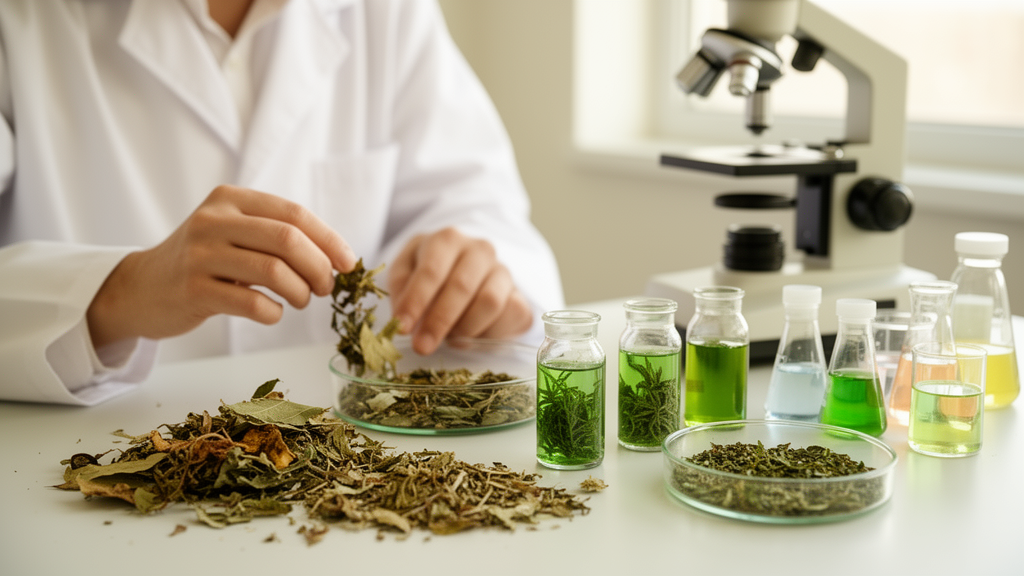
The review identifies a long list of plants whose anti-proliferative characteristics have pointed, in the authors’ words, to anticancer activities. Among the most important species named are soursop, garlic, turmeric, sage, grape vine, aloe vera, Chinese onion, common myrtle, gin berry, golden berry, green tea, jujube, lemon balm, licorice, marjoram, oregano, pepper, pomegranate, rosemary, spinach, sumac, and Syrian rue. The authors conclude that many medicinal plants and herbs need to be studied further because of their diverse pharmacological potential, unique chemical components, and their role as rich repositories for new pharmacological agents in drug discovery. They also note that anti-proliferative components can be considered as drugs with inhibitory effects, a framing that underscores how laboratory observations of growth inhibition are being translated into candidate therapeutic concepts.
Chemically, the review catalogues an extensive roster of constituents with reported anti-proliferative activities. These include β-sitosterol, α-amyrin, hexadecenoic acid methyl ester, a series of pulcherrimin compounds, cristatin A, the annopentocins, muricapentocin, annohexocin, the annomuricins, muricin J, K, and L, methyl gallate, agathisflavone, anacardicin, zoapatanolide A, precocene II, cis,cis-germacranolides, metalmpolides, meisoindigo, and flavopiridol. More broadly, the authors state that anti-proliferative chemical ingredients include flavonoids, triterpenes, sesquiterpene lactones, certain glycosylated steroids, chlorogenic acid derivatives, loliolide, stearic acid, and volatile components such as chalcones and catechols. In the conclusion, the review adds that the medicinal plants concerned contain secondary metabolites such as terpenoids and flavonoids which can induce apoptosis and cell cycle arrest, making them, in the authors’ assessment, an appropriate source for promising potential new anti-cancer drugs.
Several specific research findings are highlighted to illustrate how these constituents act. The review reports that broussoflavonol F, a prenylated flavonoid isolated from the Macaranga genus, showed anti-angiogenesis and anti-tumor effects in colon cancer through regulating the HER2-RAS-MEK-ERK pathway. Benzenesulfonamide derivatives were found to show high anti-proliferative activity against MRC-5, HEPG-2, and MCF-7 cell lines. Oleanolic acid was reported to inhibit mesangial cell proliferation and inflammatory response in anti-Thy1 nephritis rats via the IL-17/ERK/AKT pathway, and to increase pathological injury and renal function in that model. The plant flavonoid isoliquiritigenin was described as anti-proliferative in pituitary explants without changing cell lineages, possibly inducing p21 expression leading to cell arrest and apoptosis, and possessing weak estrogenic activity based on induction of Cckar.
The review also describes synthetic and semi-synthetic chemistry built on natural scaffolds. Curcumin is presented as a naturally occurring agent proposed as a cancer chemo-preventive agent and proposed for treating human malignancy. Indolylglyoxyamide and arylthioindole scaffolds can generate potent inhibitors of tubulin polymerization and cancer cell growth, while chalcone derivatives can inhibit the proliferation of tumor cells and disrupt the mitotic process. Cinnamohydroxamic acid is noted as one of several pharmacophores targeting histone deacetylases, enzymes that are overexpressed in a large variety of human cancers. Piperazine and its derivatives are reported as an important anti-proliferative agent for treatment of PC-3 prostate cancer cell lines, and gallic acid, resveratrol, catechins, and other natural components are known to show anti-proliferative activities and antiradical scavenging characteristics that are important to protect membranes from oxidation.
Geographically, the review spans traditional medicine systems across several continents. In Peru, plants reported to show high anti-proliferative activity include Lepechinia heteromorpha leaves, with ledol, limonene, and β-pinene; Aloysia citriodora flowers and leaves, with geranial, neral, and limonene; Myrcianthes myrsinoides leaves, with limonene and α-pinene; and Dalea carthagenensis leaves, with (E)-β-ocimene, β-myrcene, and α-pinene. From the Peruvian Amazon, the review lists the leaves of Annona montana, the leaves of Bertholletia excelsa, seed and pericarp of Bunchosia armeniaca, the whole fruit of Genipa americana, pericarp and seed of Inga edulis, exocarp and mesocarp of Oenocarpus bataua, the whole fruit of Solanum sessiliflorum, and the leaves, seeds, pericarp of Theobroma species. Two Amazonian fruits, Mauritia flexuosa and Theobroma grandiflorum, were reported to reduce the number of viable human colorectal cancer cells using SW480 cell lines, in a non-dose-dependent behavior compared to control cells.
Traditional Indian medicine features prominently in the review, which lists Achyranthes aspera, Aegle marmelos, Amaranthus tristis, Asclepias curassavica, Cynodon dactylon, and Tabernaemontana heyneana as plants commonly used to treat cancer, together with their constituent chemistry. Other regional accounts include a study by the Wancho community of the Eastern Himalayas in India identifying Mikania micrantha, Ostodes paniculata, Tithonia diversifolia, Blumea balsamifera, Acorus calanus, Casearia zeylanica, and Phlogacanthus parviflorus; Ethiopian extracts of Rumex nepalensis and Dodonaea angustifolia, which displayed high anti-proliferative activity with minimal toxicity to normal cells; Asian traditional medicines in Malaysia and Singapore including Vitex trifolia, Vernonia amygdalina, Strobilanthes crispus, Pereskia bleo, Leea indica, Clinacanthus nutans, and Clausena lansium; Thai medicinal plants including Xylinbaria minutiflora, Sida rhombifolia, Nymphoides indica, Albizia chinensis, and Cassia fistula, which caused inhibition of the HeLa cancer cell line; and Zimbabwean plants including Agelanthus pungu, Carissa edulis, Dombeya rotundifolia, Flacourtia indica, Lannea discolor, Leucas martinicensis, Solanum incanum, Strychnos cocculoides, Strychnos spinosa, and Viscum verrucosum, which were demonstrated to show anti-proliferative activities against HL60 and Jurkat T cell lines.
Cell line studies from other traditions fill out the picture. The hydroalcoholic extract of Matricaria chamomilla was found to have significant anti-proliferative effects on Saccharomyces cerevisiae, with a concentration of 3000 micrograms per millilitre causing a noticeable decline in yeast growth and decreasing the cells’ survival rate by up to 48 percent. Extracts of Boophone haemanthiodes, Amaryllis belladonna, and Crossyne flava, members of the Amaryllidaceae family, selectively induced cytotoxicity in glioblastoma cells. Green tea polyphenols, which consist of catechins, (-)-epigallocatechin, (-)-epigallocatechin-3-gallate, (-)-epicatechin, and (-)-epicatechin-3-gallate, showed that epicatechin chemosensitized ovarian cancer cells to bleomycin-induced growth inhibition without any toxicity to normal cells. Ethanolic extracts of Streblus asper showed moderate-to-high cytotoxic action towards A549 cells, while Silybum marianum and Chelidonium majus showed high anti-proliferative activities against HeLa and HepG2 cells. The methanol extract of Debregeasia longifolia leaves showed high potent toxicity to liver cancer cells, Daphne altaica showed inhibitory effects on all cancer cell lines tested, and Chimaphila umbellata showed high anti-proliferative activity on human breast cancer cells through RIP1K/RIP3K-mediated necroptosis. The methanol extract of Azima tetracantha leaves was reported to inhibit inflammatory enzymes and the proliferative potential of breast cancer cells, and Eucalyptus leaves, rich in hydrolysable tannins, showed strong cellular anti-proliferative properties in HepG2 cells.
The review concludes that more than one-third of the world’s best-selling drugs come from natural products, and that natural products remain important sources for the development and synthesis of new drugs because of their multiple pharmacological effects and structural diversity. It states that medicinal plants can reduce cell division both indirectly and directly, reducing cell proliferation rates, that specific components can interrupt the mechanism of mitosis, and that some plants can trigger apoptosis in cancer cells or halt the normal progression of the cell cycle. The authors emphasize the importance of medicinal plants and herbs with anti-proliferative activities in food, nutritional, and medicinal sciences. As the authors themselves note, however, many medicinal plants in different traditional medicinal sciences have not been fully considered and scientifically evaluated as potential anti-proliferative therapeutic components, and the review is a synthesis of published literature rather than a clinical trial, so its conclusions describe preclinical and literature-based evidence rather than demonstrated patient benefits.
Subject of Research: Anti-proliferative and potential anticancer properties of medicinal plants and their natural extracts
Article Title: Anti-proliferative effects of medicinal plants, evaluation of biocompatibility, and properties of various natural extracts
Article References: Shahrajabian, M. H., & Sun, W. (2026). Anti-proliferative effects of medicinal plants, evaluation of biocompatibility, and properties of various natural extracts. Clinical Phytoscience, 12(1), Article 27. https://doi.org/10.1186/s40816-026-00442-4
Image Credits: AI Generated
DOI: 10.1186/s40816-026-00442-4
Keywords: medicinal plants, anti-proliferative activity, natural products, anticancer agents, flavonoids, apoptosis, cell cycle arrest, phytochemistry, traditional medicine, drug discovery, plant extracts, review
Cite Scienmag News
Ophelia Keating. (October 28, 2026). Medicinal Plants Show Anti-Proliferative Potential in sweeping Review of Natural Extracts. Scienmag. https://scienmag.com/medicinal-plants-show-anti-proliferative-potential-in-sweeping-review-of-natural-extracts/
Ophelia Keating. "Medicinal Plants Show Anti-Proliferative Potential in sweeping Review of Natural Extracts." Scienmag, 28 October 2026, https://scienmag.com/medicinal-plants-show-anti-proliferative-potential-in-sweeping-review-of-natural-extracts/. Accessed 28 October 2026.
Ophelia Keating. "Medicinal Plants Show Anti-Proliferative Potential in sweeping Review of Natural Extracts." Scienmag. October 28, 2026. https://scienmag.com/medicinal-plants-show-anti-proliferative-potential-in-sweeping-review-of-natural-extracts/