


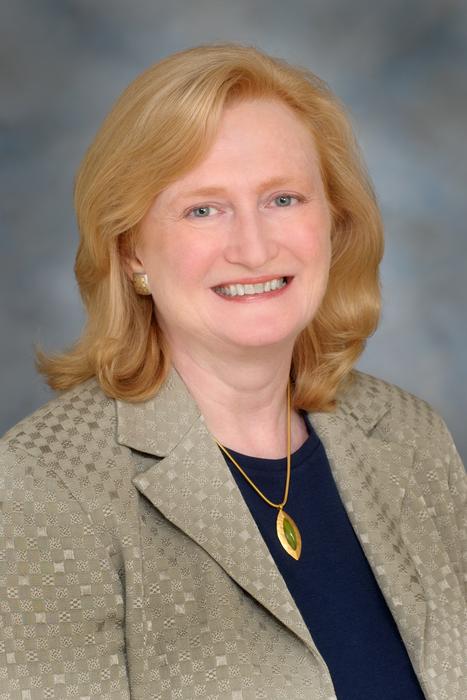
HOUSTON ― Sharon Dent, Ph.D., professor of Epigenetics and Molecular Carcinogenesis at The University of Texas MD Anderson Cancer Center, has been elected to the National Academy of Sciences (NAS). Dent is a global leader in the field of chromatin research whose foundational work has helped define the role of chromatin in cancer growth and development.

Credit: The University of Texas MD Anderson Cancer Center
HOUSTON ― Sharon Dent, Ph.D., professor of Epigenetics and Molecular Carcinogenesis at The University of Texas MD Anderson Cancer Center, has been elected to the National Academy of Sciences (NAS). Dent is a global leader in the field of chromatin research whose foundational work has helped define the role of chromatin in cancer growth and development.
Dent is one of 120 members and 24 international members elected this year in recognition of their distinguished and continuing achievements in original research. The NAS, established in 1863 by President Abraham Lincoln, is a private, nonprofit society of distinguished scholars engaged in scientific and engineering research.
With her election, Dent joins eight previously elected MD Anderson scientists in the NAS, including James P. Allison, Ph.D., Neal Copeland, Ph.D., Ronald A. DePinho, M.D., Nancy Jenkins, Ph.D., V. Craig Jordan, Ph.D., Guillermina (Gigi) Lozano, Ph.D., Helen Piwnica-Worms, Ph.D., and Richard Wood, Ph.D.
“Being elected to the National Academy of Sciences is a well-deserved recognition of Dr. Dent’s tremendous research contributions over the years,” said Peter WT Pisters, M.D., president of MD Anderson. “Her discoveries have furthered our understanding of cancer mutations, aiding in the future development of highly targeted therapies. We are proud to have her as a valued member of the MD Anderson research community and we celebrate her outstanding work to advance our mission to end cancer.”
Dent’s work is in the field of epigenetics, which studies how human behaviors and the environment can cause changes that affect genes and lead to inherited traits without changing the DNA sequence. Unlike genetic mutations, epigenetic changes, which alter how the body reads a particular DNA sequence, are reversible.
Most of the work in the Dent laboratory focuses on understanding the role of chromatin and chromatin-modifying proteins in regulating gene expression, genome integrity and other essential cellular processes. Chromatin is a mixture of DNA and histone proteins that form our chromosomes, and this complex can receive and transmit signals from the body’s cells. In particular, Dent and her colleagues study various components of the SAGA chromatin-modifying complex, such as Gcn5 – a histone acetyltransferase – to examine how certain mutations lead to abnormal chromatin folding and subsequent diseases, such as cancer.
“This is an enormous honor,” Dent said. “It highlights the impact of the discoveries made by all of the hard-working and brilliant members of my lab over the past 31 years, and I am truly grateful for this distinction.”
Dent’s research helps scientists and clinicians develop therapeutic strategies to target processes that can treat cancer. Most recently, she and her colleagues showed that the SAGA complex contains specific oncoproteins, MYC and MAF, which promote the transformation of normal cells into tumors by dysregulating the signaling pathways involved in cell growth. Targeting the SAGA complex could lead to new ways to treat multiple myeloma and other cancers, such as lymphoma and neuroblastoma.
Dent graduated magna cum laude from the University of North Texas with a Bachelor of Science in biochemistry, and earned her Ph.D. in biochemistry from Rice University. After a postdoctoral fellowship at Rice University and a fellowship at the National Institutes of Health’s Laboratory of Cellular & Developmental Biology, she joined MD Anderson as an assistant professor in the Department of Biochemistry and Molecular Biology in 1993. She was promoted to professor in 2004 and, only three years later, became the founding director of the Center for Cancer Epigenetics. She served as chair of the Department of Epigenetics and Molecular Carcinogenesis from 2010 to 2023 and as ad interim dean of the MD Anderson UTHealth Houston Graduate School of Biomedical Sciences from 2022 to 2024.
Dent was elected as a member of the American Academy of Arts and Sciences and as a fellow of the American Association for the Advancement of Science (AAAS). Her honors include induction into the Greater Houston Women’s Chamber of Commerce Hall of Fame, the John Mendelsohn Award for Faculty Leadership, the Ruth Legett Jones Distinguished Chair in the Department of Epigenetics and Molecular Carcinogenesis, and the President’s Leadership Award from MD Anderson.
“Dr. Dent’s research has been transformative in the field of epigenetics, revealing unexpected functions beyond transcriptional regulation in cellular processes. We congratulate her on being included in this prestigious community of scientists,” said Giulio Draetta, M.D., Ph.D., chief scientific officer of MD Anderson. “Her work embodies the spirit of MD Anderson’s research ecosystem, which drives breakthroughs that can significantly improve the lives of patients with cancer.”
Read this press release in the MD Anderson Newsroom.
– 30 –
Cite Scienmag News
Nathaniel Bowman. (May 1, 2024). MD Anderson researcher Sharon Dent elected to prestigious National Academy of Sciences. Scienmag. https://scienmag.com/md-anderson-researcher-sharon-dent-elected-to-prestigious-national-academy-of-sciences/
Nathaniel Bowman. "MD Anderson researcher Sharon Dent elected to prestigious National Academy of Sciences." Scienmag, 1 May 2024, https://scienmag.com/md-anderson-researcher-sharon-dent-elected-to-prestigious-national-academy-of-sciences/. Accessed 6 September 2026.
Nathaniel Bowman. "MD Anderson researcher Sharon Dent elected to prestigious National Academy of Sciences." Scienmag. May 1, 2024. https://scienmag.com/md-anderson-researcher-sharon-dent-elected-to-prestigious-national-academy-of-sciences/

