


A groundbreaking study led by McGill University researchers has revealed an uneven distribution of methane emissions across the island of Montreal, with the city’s east end emerging as a critical hotspot. This revelation underscores the pressing need to address urban methane sources, especially as the city strives to meet its ambitious greenhouse gas reduction targets. Methane, though less abundant than carbon dioxide, has an outsized climate impact due to its potency as a greenhouse gas, trapping heat at a rate approximately 32 times greater than CO2 on a molecule-to-molecule basis.
The comprehensive four-year mobile monitoring survey, covering over 3,300 square kilometers including key off-island locations, identified more than 3,000 methane hotspots. This figure, while lower than what is observed in similarly dense urban environments, still represents a significant challenge for city planners and environmental policymakers. The study’s detailed mobile air sampling methodology provided second-by-second measurements of carbon dioxide and methane, enabling precise identification and quantification of emissions sources.
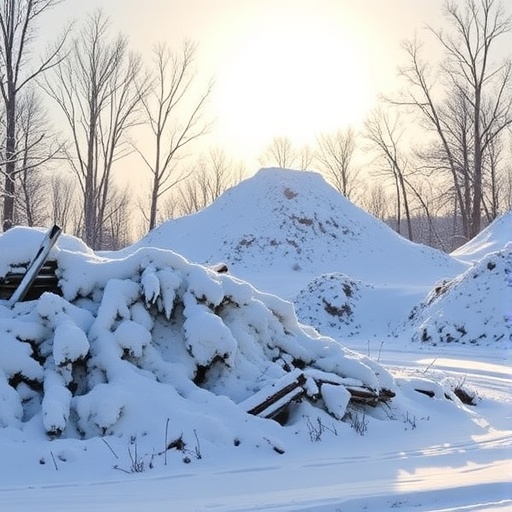
One of the most surprising findings of the study was the significant methane emissions from Montreal’s largest snow dump located at the Francon Quarry in the east end. Comparable in emissions intensity to the city’s former and current landfills, this site warrants urgent attention. As snow is dumped and melts in this location, a transient lake forms, creating anaerobic conditions ideal for methane-producing microbes to thrive and release potent greenhouse gases.
The east end of Montreal, characterized by a dense population and aging infrastructure, emerged as the focal point for elevated methane concentrations. The research team linked this pattern in part to the prevalence of natural gas leaks distributed across older natural gas line networks. The increased potential for leaks in this area is compounded by the higher number of natural gas delivery systems required to serve a larger population.
The study’s innovative methodological approach included three fixed survey routes traversed weekly for ten consecutive weeks across densely populated regions and a corridor near the Lachine Canal. This strategy allowed the team to monitor temporal fluctuations in methane emissions, distinguishing between persistent emission sources and those that exhibited more sporadic release patterns. Wind data were integrated into the analysis to improve localization accuracy of emissions.
Contributing to the study were multiple collaborators, including Environment and Climate Change Canada, which facilitated much of the vehicular monitoring, and BIXI, the local bikeshare service. BIXI supported the research by providing free memberships, enabling scientists to extend their sampling reach in areas less accessible by car. This multimodal surveying approach enhanced spatial coverage across complex urban terrain.
The study also provided critical insights into the inadequacies of existing official inventories of greenhouse gas emissions, which rely heavily on estimations rather than direct measurements. Montreal’s emissions inventory, while comprehensive, lacks the granularity revealed through this mobile monitoring survey. Such data precision is crucial for informing policy interventions and operational changes needed to meet the province’s target to reduce greenhouse gas emissions by 37.5% by 2030.
Passive emission sources such as inactive landfills continue to be the largest contributors to the city’s methane output. These sites, including those repurposed for urban renewal like Parc Frédéric-Back, release methane steadily over extended periods. However, urban waste management practices, including snow removal dumping, have been underrecognized until now as equally significant contributors to methane release.
Disentangling the contribution of methane from natural gas leaks versus waste-related emissions remains a critical task, as strategies for mitigation vary substantially. Repairing aging pipelines requires infrastructural investment, whereas improved waste management and landfill remediation involve biological and chemical engineering innovations. The study’s future phases aim to assess seasonal variations in methane and the capacity of landfill microbial communities to mitigate emissions biologically.
Peter Douglas, Associate Professor and co-author, emphasized that understanding emission source distribution is imperative for effective mitigation. Methane’s atmospheric lifetime is shorter than CO2, suggesting that targeted emission controls could yield rapid climate benefits if hotspots are promptly identified and managed.
The research, recently published in Environmental Research Communications, represents one of the most comprehensive urban methane monitoring efforts to date. Its findings challenge existing urban environmental paradigms and provide a replicable model for other metropolitan areas grappling with methane emissions. As global cities seek pathways to decarbonize, such precise, data-driven studies will be crucial in shaping effective climate policy and operational reforms.
In essence, Montreal’s journey toward achieving its greenhouse gas reduction goals hinges not only on reducing carbon dioxide but also on rapidly addressing methane emissions, particularly from urban waste and aging infrastructure. This study serves as a clarion call for robust, ongoing monitoring paired with responsive policy that targets the most impactful sources of greenhouse gases in urban environments.
Keywords
Greenhouse gases, Atmospheric gases, Atmospheric methane, Climate monitoring
Cite Scienmag News
Bethany Barker. (October 17, 2025). McGill Study Identifies Montreal Snow Dumps and Inactive Landfills as Significant Methane Emitters. Scienmag. https://scienmag.com/mcgill-study-identifies-montreal-snow-dumps-and-inactive-landfills-as-significant-methane-emitters/
Bethany Barker. "McGill Study Identifies Montreal Snow Dumps and Inactive Landfills as Significant Methane Emitters." Scienmag, 17 October 2025, https://scienmag.com/mcgill-study-identifies-montreal-snow-dumps-and-inactive-landfills-as-significant-methane-emitters/. Accessed 3 September 2026.
Bethany Barker. "McGill Study Identifies Montreal Snow Dumps and Inactive Landfills as Significant Methane Emitters." Scienmag. October 17, 2025. https://scienmag.com/mcgill-study-identifies-montreal-snow-dumps-and-inactive-landfills-as-significant-methane-emitters/


