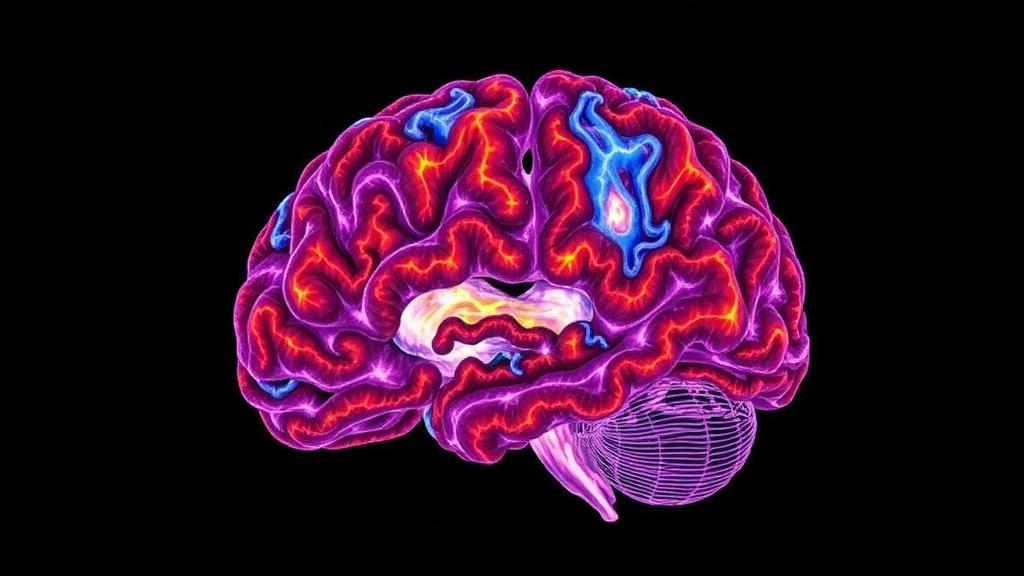
For decades, the cerebellum has been the quiet afterthought of Alzheimer’s research. Neuroscientists have poured their attention into the cortex and hippocampus, the wrinkled seat of memory where plaques and tangles accumulate most visibly, while the cauliflower-shaped structure at the back of the brain was largely dismissed as a bystander. A new study, published in Nature Communications, upends that complacency. A team led by Feixiong Cheng of the Cleveland Clinic Genome Center has produced one of the most detailed single-cell atlases ever assembled for the human cerebellum in the context of Alzheimer’s disease and related dementias, and the picture that emerges is anything but passive. The cerebellum, the data suggest, carries its own disease-associated molecular signatures, its own vulnerable cell types, and its own set of potentially causal genetic variants that could reshape how researchers think about the origins of dementia.
The scale of the undertaking is itself remarkable. The researchers isolated 103,861 individual nuclei from postmortem brain tissue, drawing from both the cerebellum and the frontal cortex of patients who died with Alzheimer’s disease or related dementias as well as cognitively healthy controls. Crucially, they did not merely read the genes active in each nucleus. Using a technique called single-nucleus multiome sequencing, they simultaneously captured two layers of information from every single cell: the RNA transcripts being produced, which reveal what the cell is doing, and the accessibility of chromatin, the packaged DNA that reveals which regulatory switches are open for business. This paired readout, combining RNA-seq and ATAC-seq on the same nucleus, allows scientists to connect not just which genes are active but why, tracing each gene back to the specific DNA control elements that govern it.
From this dual-layer dataset, the team mapped an extraordinary web of regulatory architecture: 431,834 significant peak-to-gene linkages spanning the various cell subtypes of the cerebellum and cortex. Each linkage connects an open chromatin region, a candidate cis-regulatory element, to the gene it likely controls. This is the wiring diagram of gene regulation, cell type by cell type, and it allowed the researchers to see how the disease rewires that wiring differently in each cellular neighborhood. The approach matters because complex diseases like Alzheimer’s rarely act through a single gene or a single cell type. They act through coordinated shifts in regulatory programs, and those shifts are invisible to bulk tissue analysis, which averages away the very cell-specific differences that define the pathology.
Among the most striking findings is the identification of disease-associated genes in cerebellar granule cells, the tiny, densely packed neurons that make up the bulk of the cerebellum’s neuronal population. Differential trajectory analysis, a computational method that tracks how cells shift along disease-associated molecular paths, pinpointed two genes in particular: STMN1 and CLU. CLU, also known as clusterin, is a well-established Alzheimer’s risk gene involved in clearing amyloid-beta and managing cellular stress, and finding it dysregulated in granule cells ties the cerebellum directly into pathways long studied in the cortex. STMN1, which regulates the dynamic scaffolding of neurons, adds a second thread. The implication is that granule cells, far from being spared, undergo their own disease-relevant transcriptional drift that mirrors, in miniature, the degenerative programs seen in cortical neurons.
The study then pushed beyond association toward causation by integrating its epigenomic data with genome-wide association study results and three-dimensional genome organization data. Genes and their regulatory elements physically loop through nuclear space, and by overlaying genetic risk variants onto this folded chromatin landscape, the team identified two likely causal variants with cell type-specific effects. One variant sits in a regulatory element linked to SEZ6L2 in Purkinje cells, the large, elaborately branched neurons that serve as the cerebellum’s sole output layer. The other connects to KANSL1 in granule cells. This kind of triangulation, combining chromatin accessibility, genetic association, and physical genome contact maps, is increasingly the gold standard for moving from a haystack of statistical signals to a handful of biologically testable suspects.
And test them they did. Using cerebellar organoids, miniature brain-like structures grown from patient-derived induced pluripotent stem cells, the researchers deployed CRISPR interference, a technique that silences specific regulatory elements without cutting the DNA itself. When they silenced the variant-containing regulatory elements in the organoids, expression of SEZ6L2 and KANSL1 dropped, and the perturbation rippled outward into gene programs associated with neurodegeneration. This is the experimental loop that gives the atlas its power: a variant is flagged computationally, then its functional consequence is demonstrated in a living human cellular model. It transforms a correlation into a mechanism, at least in preliminary form, and provides a template for how the hundreds of thousands of other regulatory linkages in the dataset might eventually be interrogated.
Why does the cerebellum matter so much here? Clinically, Alzheimer’s disease and related dementias are defined by cognitive decline, and the cerebellum is traditionally cast as the coordinator of movement, balance, and motor learning. But the cerebellum contains more than half of all the neurons in the human brain, and growing evidence links it to cognitive and emotional processing as well. Neuropathologically, the cerebellum is affected in Alzheimer’s disease, yet the cell type-specific genomic and epigenomic changes there had remained poorly understood. This study fills that void with unprecedented resolution, and the finding that Purkinje cells and granule cells harbor disease-linked regulatory variants suggests the cerebellum may participate in the disease process in ways that cortical-focused research has overlooked. It also raises the possibility that cerebellar changes could contribute to the motor and non-motor symptoms that often accompany dementia.
The technical achievement deserves emphasis in its own right. Postmortem human brain tissue is notoriously difficult material: cells are fragile, RNA degrades, and nuclei must be extracted carefully to preserve meaningful molecular states. Capturing both transcriptome and chromatin accessibility from the same single nucleus, across more than a hundred thousand nuclei from diseased and healthy brains, requires a level of throughput and computational integration that was impractical only a few years ago. The resulting dataset, with its 431,834 regulatory linkages and cell type-specific disease trajectories, is being made available as a resource, and such atlases tend to become community infrastructure, mined for years by labs studying everything from amyloid biology to therapeutic target discovery.
The translational horizon is equally significant. If variants regulating SEZ6L2 in Purkinje cells and KANSL1 in granule cells are confirmed as causal contributors, they become candidate drug targets, and the organoid-based CRISPR screening platform used here offers a way to test candidate therapeutics against specific regulatory mechanisms before animal or human trials. The work was supported by the National Institute on Aging and multiple partner institutions, including the Cleveland Alzheimer’s Disease Research Center, reflecting the coordinated, multi-center effort that dementia research increasingly demands. For a field that has watched anti-amyloid therapies deliver modest benefits at enormous cost, the prospect of cell type-specific regulatory targets, grounded in human tissue and validated in human organoids, is precisely the kind of new angle the field needs.
None of this means the cerebellum is about to become the sole focus of Alzheimer’s research, and the authors are careful to frame their findings as insights into the pathological role of the cerebellum rather than a complete causal account. Single-nucleus data capture snapshots, not the full temporal arc of a disease that unfolds over decades, and organoids, however sophisticated, remain simplified models of an organ shaped by vascular, immune, and systemic influences. But the study marks a clear shift in scope: from the cortex-centric view that has dominated the field toward a whole-brain, cell-resolved understanding of dementia. If the cerebellum’s granule cells and Purkinje cells carry their own disease programs and their own genetic vulnerabilities, then any complete theory of Alzheimer’s disease, and any serious effort to treat it, will have to account for what happens in the back of the brain as well as the front.
Subject of Research: Single-nucleus multiomic profiling of the human cerebellum in Alzheimer's disease and related dementias
Article Title: A single-nucleus multiome map of the human cerebellum with Alzheimer’s disease and related dementias
Article References: A single-nucleus multiome map of the human cerebellum with Alzheimer’s disease and related dementias. (n.d.). https://doi.org/10.1038/s41467-026-78232-2
Image Credits: AI Generated
DOI: 10.1038/s41467-026-78232-2
Keywords: Alzheimer's disease, cerebellum, single-nucleus multiome, RNA-seq, ATAC-seq, granule cells, Purkinje cells, SEZ6L2, KANSL1, CRISPR interference, brain organoids, gene regulation
Cite Scienmag News
Cassandra Pierce. (October 14, 2026). Massive Cell-by-Cell Map Reveals the Cerebellum’s Hidden Role in Alzheimer’s Disease. Scienmag. https://scienmag.com/massive-cell-by-cell-map-reveals-the-cerebellums-hidden-role-in-alzheimers-disease/
Cassandra Pierce. "Massive Cell-by-Cell Map Reveals the Cerebellum’s Hidden Role in Alzheimer’s Disease." Scienmag, 14 October 2026, https://scienmag.com/massive-cell-by-cell-map-reveals-the-cerebellums-hidden-role-in-alzheimers-disease/. Accessed 14 October 2026.
Cassandra Pierce. "Massive Cell-by-Cell Map Reveals the Cerebellum’s Hidden Role in Alzheimer’s Disease." Scienmag. October 14, 2026. https://scienmag.com/massive-cell-by-cell-map-reveals-the-cerebellums-hidden-role-in-alzheimers-disease/