Cities are getting hotter, and the way they are built has everything to do with it. A new bibliometric review published in Theoretical and Applied Climatology has mapped twenty years of scientific literature on the relationship between urban morphology, the physical form and structure of cities, and the urban heat island effect, the well-documented phenomenon in which urban areas run measurably warmer than their rural surroundings. The study, led by Shiyao Liu of Universiti Putra Malaysia and Xi’an Mingde Institute of Technology, together with Azmiah Binti Abd Ghafar and Siti Sarah Herman, analyzed exactly 1,000 English-language journal articles and review papers published between 2005 and 2024 and indexed in the Web of Science Core Collection. The result is the most structured overview to date of how this research field has grown, who is driving it, and where it is heading.
The team used CiteSpace, a widely adopted bibliometric software tool developed by Chaomei Chen, to visualize the intellectual landscape of the field. Rather than reading every paper in depth, bibliometric analysis treats the literature itself as data: publication counts, co-authorship links between countries and institutions, keyword co-occurrence patterns, thematic clusters, and sudden surges in the popularity of specific terms, known as citation bursts. This approach allows researchers to detect the invisible architecture of a scientific discipline, revealing which ideas dominate, which are fading, and which are emerging. The authors are careful to note an important caveat: these patterns reflect how the research community has organized itself and where it has chosen to focus, not direct evidence of the underlying climatological mechanisms themselves.
One of the clearest findings is a dramatic acceleration in publication output, particularly after 2015. This timing is no accident. The past decade has seen a string of deadly heatwaves across Europe, South Asia, and the Middle East, alongside rapid urbanization in China, Southeast Asia, and Africa. As more than half of the global population now lives in cities, a figure highlighted by United Nations urbanization projections, the stakes of understanding urban heat have risen sharply. Previous studies have attributed excess mortality during heatwaves to the urban heat island effect, and researchers have increasingly recognized that the geometry of streets, the density of buildings, and the arrangement of green space are not merely aesthetic choices but determinants of thermal exposure for millions of people.
The collaboration analysis reveals a field that is geographically concentrated but only partially integrated. China and the United States emerge as the dominant publication and collaboration nodes, with several European and Asian research institutions forming additional major hubs. Yet the networks remain fragmented: substantial portions of the literature are produced within national or institutional silos, with limited cross-border integration. This matters because urban climate problems are inherently comparative. A street canyon in Hong Kong behaves differently from one in Phoenix or Karlsruhe, and the field’s ability to generalize depends on researchers in different climates and planning cultures testing each other’s methods and findings. The authors identify this fragmentation as a key weakness that future work must address.
On the thematic side, the keyword analysis identified a stable core of persistent research concerns. Land surface temperature and air temperature remain the fundamental measured variables, typically retrieved from thermal remote sensing satellites or dense networks of ground sensors. Sky view factor, a geometric measure of how much of the sky is visible from a given point on the ground, and street-canyon geometry recur constantly because they govern both the trapping of longwave radiation at night and the shading and airflow that moderate daytime temperatures. Thermal comfort, the human-centered dimension of the problem, also features prominently, connecting the physics of urban climates to the experience of pedestrians.
The temporal and burst analyses tell a story of cumulative broadening. In the earlier years of the study period, research emphasized foundational measurement and the morphological characterization of urban surfaces: cataloging building densities, impervious surface fractions, and vegetation indices, and linking them to satellite-derived temperature patterns. Over time, while these foundations remained visible in the literature, computational modeling gained increasing prominence. Researchers moved from describing correlations to simulating the physical processes involved, using urban canopy models, computational fluid dynamics, and energy balance approaches to predict how specific configurations of buildings and vegetation alter airflow, turbulence, and heat removal from street canyons. Laboratory techniques such as water tunnel measurements with particle image velocimetry have even been brought to bear on the question of how buoyant flows flush heat out of urban canyons.
Two conceptual frameworks stand out in the field’s recent evolution. The first is the Local Climate Zone classification system, introduced by Ian Stewart and Tim Oke in 2012, which provides a standardized taxonomy of urban surface types, from compact high-rise to scattered low-rise and dense trees. The review found that Local Climate Zones have become an increasingly prominent organizing tool, allowing researchers in Nanjing, Hong Kong, Phoenix, and Las Vegas to compare heat island behavior across structurally similar but climatically different neighborhoods. The second is the rise of outdoor thermal comfort as a planning-oriented endpoint. Studies of pocket parks in high-rise high-density environments, street configurations in Mediterranean climates, and human-centered design strategies for dense urban spaces signal a shift from diagnosis toward intervention.
This shift toward application is perhaps the most consequential trend the review documents. The literature increasingly connects urban morphology to questions of policy and practice: how planning indicators shape heat island intensity, how compactness and green infrastructure strategies trade off against ventilation and energy consumption, and how building energy demand is coupled to the thermal environment that urban form creates. The authors note that planning-oriented applications have gained increasing prominence in the most recent phase of the field, reflecting demand from city governments for actionable guidance as heat action plans become standard instruments of climate adaptation. Lessons from policy implementation in multiple cities are now entering the peer-reviewed record, closing the loop between research and practice.
At the same time, the review is candid about the limits of what bibliometrics can show. The patterns it reveals describe the organization and priorities of the research literature, not the causal structure of urban climates themselves. A surge in keywords related to thermal comfort indicates where scholarly attention has flowed, not necessarily where the most important physical mechanisms lie. The authors argue that this distinction matters for interpreting the field’s trajectory and for identifying genuine gaps. Among the areas they highlight as requiring more integrated investigation are comparative studies spanning multiple cities and climates, methodological work to harmonize the diverse measurement and modeling approaches currently in use, and application-oriented research that rigorously tests whether design interventions deliver the cooling benefits they promise.
For a field born from the observation that cities make their own weather, the past two decades have transformed urban heat research from a descriptive exercise into a quantitative, interdisciplinary, and increasingly policy-relevant science. This new knowledge map provides the field with something it has lacked: a systematic account of its own growth, its geographic asymmetries, and its thematic evolution. As heatwaves intensify and urban populations expand, the geometry of the built environment will remain one of the few levers cities can actually pull to protect their residents from extreme heat. Knowing precisely where the science stands, and where the silos and gaps persist, is the first step toward pulling that lever effectively.
Subject of Research: Bibliometric analysis of urban morphology and urban heat island research from 2005 to 2024
Article Title: Urban morphology and the urban heat island effect: a bibliometric review and knowledge mapping of research evolution and thematic trends (2005–2024)
Article References: Liu, S., Ghafar, A. B. A., & Herman, S. S. (2026). Urban morphology and the urban heat island effect: a bibliometric review and knowledge mapping of research evolution and thematic trends (2005–2024). Theoretical and Applied Climatology, 157(10), Article 616. https://doi.org/10.1007/s00704-026-06569-1
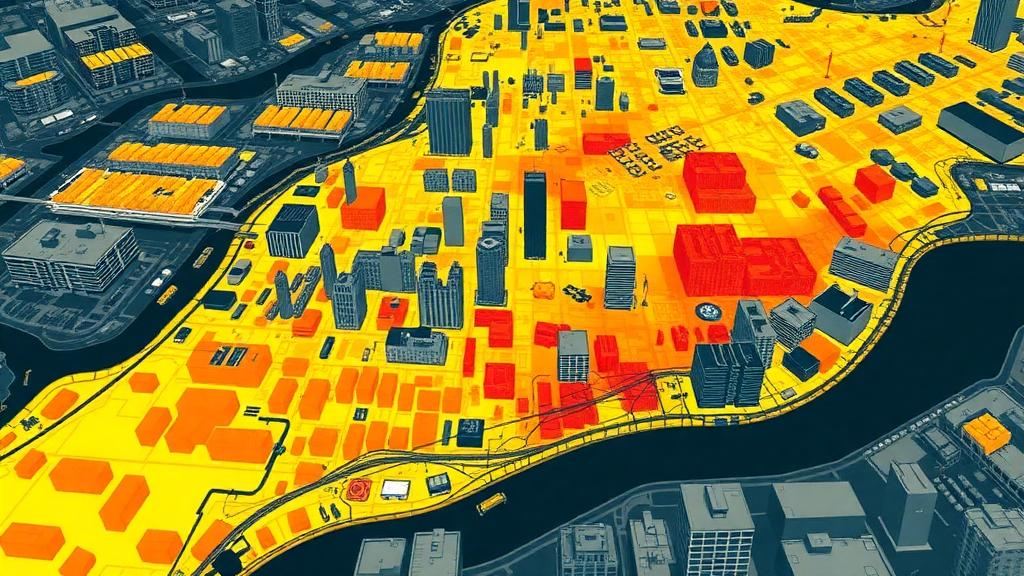
Image Credits: AI Generated
DOI: 10.1007/s00704-026-06569-1
Keywords: urban heat island, urban morphology, bibliometrics, CiteSpace, land surface temperature, sky view factor, street canyon, thermal comfort, Local Climate Zones, urban planning, remote sensing, research collaboration
Cite Scienmag News
Violet Maxwell. (October 7, 2026). Mapping Two Decades of Research on How City Shape Drives Urban Heat. Scienmag. https://scienmag.com/mapping-two-decades-of-research-on-how-city-shape-drives-urban-heat/
Violet Maxwell. "Mapping Two Decades of Research on How City Shape Drives Urban Heat." Scienmag, 7 October 2026, https://scienmag.com/mapping-two-decades-of-research-on-how-city-shape-drives-urban-heat/. Accessed 8 October 2026.
Violet Maxwell. "Mapping Two Decades of Research on How City Shape Drives Urban Heat." Scienmag. October 7, 2026. https://scienmag.com/mapping-two-decades-of-research-on-how-city-shape-drives-urban-heat/