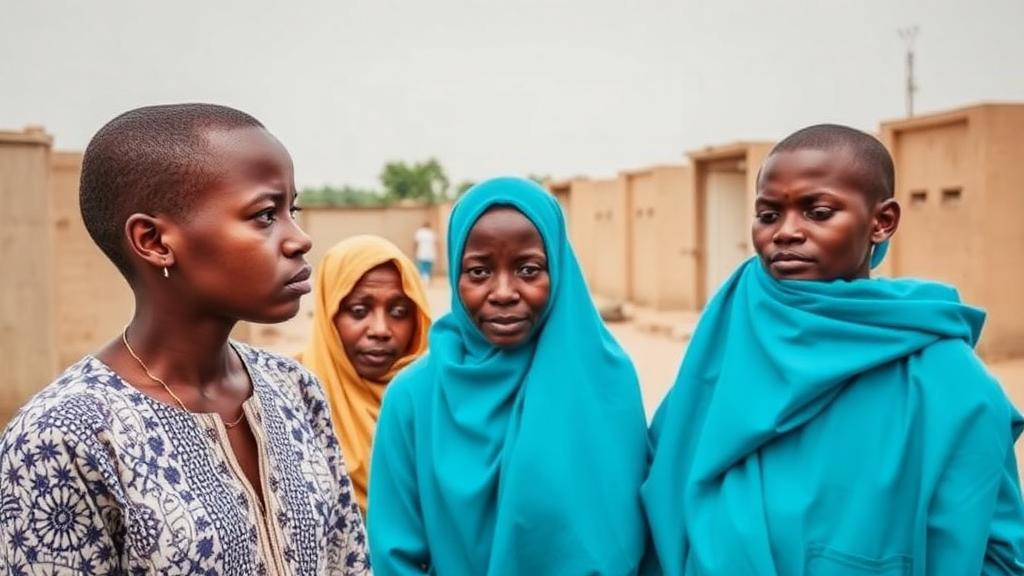
In the contested urban landscape of Mogadishu, where decades of conflict have fractured institutions and strained public trust, a new study offers one of the most detailed accounts yet of how ordinary residents shape the fate of development projects in their own neighborhoods. Researchers from SIMAD University in Somalia set out to understand how community participation influences sustainable development in a fragile, post-conflict city, and their findings suggest that the timing of participation matters as much as its depth. According to the study, published in Discover Sustainability, the earliest moments of a project—when priorities are still being set—are the decisive window in which local voices either align an initiative with real community needs or leave it drifting toward failure.
The research team, led by Faduma Jama Hussein of the Department of Social Work and Social Administration, together with Omar Arabow Addan and Hibo Ilyas Ahmed, adopted a qualitative phenomenological design to capture how stakeholders experience participation from the inside. Rather than measuring project outputs with external indicators, the researchers conducted semi-structured interviews with 27 purposively selected participants, including community leaders, civil society representatives, municipal officials, and community members. This approach allowed them to reconstruct the lived sequence of development initiatives in Mogadishu—planning, implementation, monitoring, and continuity—and to trace how perceptions of involvement shifted across each stage.
Thematic analysis of the interview material revealed a striking pattern: participation in Mogadishu is stage-specific and context-dependent. Participants most consistently identified early planning and priority-setting as the critical entry point. When residents were consulted before budgets were drafted and objectives were fixed, projects were perceived to align far more closely with local needs. Once that window closed, later opportunities for involvement tended to produce weaker effects, because the fundamental direction of the initiative had already been decided. In other words, consultation after the fact could inform communities about decisions, but it rarely changed them.
The implementation stage emerged as the phase that converted consultation into something more durable: cooperation. Participants described how involving residents during execution encouraged local contributions of labor, materials, and local knowledge, and enabled practical problem-solving when obstacles arose on the ground. In a city where formal institutional capacity is limited, this community-level improvisation appears to function as an informal resilience mechanism, keeping projects moving through disruptions that would otherwise stall them. The researchers found that implementation-phase participation transformed residents from passive beneficiaries into active partners with a stake in the outcome.
Community monitoring, by contrast, presented a more complicated picture. Participants regarded resident oversight of ongoing projects as valuable for accountability and quality control, yet the study found that monitoring was the least consistently institutionalized stage of participation. Where mechanisms for community-based monitoring existed, they were often informal, dependent on individual goodwill rather than embedded procedures. The authors suggest that this gap represents one of the most promising targets for reform, because sustained monitoring with transparent reporting could extend the benefits of early participation across the entire life cycle of a project.
The study also mapped the conditions that enable or constrain participation, and the results read as a diagnostic checklist for anyone working in fragile urban settings. Transparent communication, inclusive representation, institutional responsiveness, and trust emerged as the strongest enablers of engagement. Conversely, inadequate information, socioeconomic pressures on households, unequal inclusion of marginalized groups, limited institutional capacity, mistrust between communities and authorities, and persistent security constraints all weakened participation. In Mogadishu, where security considerations shape daily movement and where trust in public institutions remains fragile, these barriers are not abstract—they determine who shows up, who speaks, and whose concerns are recorded.
Perhaps the most sobering finding concerns the depth of participation itself. Drawing on the established typology of participatory development, the researchers observed that participation in Mogadishu occurred mainly through consultation and collaboration. Evidence of full community control over decisions and resources—the highest rung of the participation ladder—was limited. Residents were frequently asked for their views, and sometimes invited to work alongside implementing agencies, but they rarely held final authority over budgets, design choices, or resource allocation. This distinction matters theoretically: the study extends participatory development theory by showing that consultation produces stronger perceived benefits precisely when community input demonstrably affects decisions and is sustained through implementation and monitoring, rather than ending at the town-hall stage.
The authors are careful about the limits of their evidence. Because the study relies on stakeholder accounts rather than objective project indicators or a counterfactual design, its findings concern perceived relationships and mechanisms, and they do not establish causal effects. A community that feels ownership of a water project, for example, may report better outcomes even if measured service metrics are unchanged. Still, in a context where reliable administrative data are scarce, systematically gathering the perceptions of those closest to the projects provides an evidence base that conventional evaluations often miss, and it illuminates the mechanisms through which participation is thought to work.
The ethical architecture of the research reflects the sensitivity of the setting. The study protocol was reviewed and approved by the SIMAD University Institutional Review Board, and all participants provided informed consent before data collection. Written consent was documented through signed forms where participants were comfortable signing; where anonymity or security concerns made signing risky, verbal consent was documented instead. Participation was voluntary, withdrawal carried no penalty, and all responses were anonymized. These procedures underscore a broader point for the field: conducting rigorous social research in fragile cities requires methodological flexibility without compromising the protection of human participants.
The practical implications are concrete. The authors recommend early participatory planning as the non-negotiable first step, paired with documented feedback loops so communities can see how their input shaped final decisions. Inclusive project committees, deliberately structured to bring marginalized voices to the table, would address the unequal inclusion that participants identified as a persistent barrier. Finally, community-based monitoring with transparent reporting would institutionalize the oversight role that residents already value but rarely get to perform systematically. For Mogadishu, and for other post-conflict cities wrestling with how to make aid and municipal investment stick, the message is clear: sustainable development is not something delivered to communities, but something built with them, beginning on the very first day of planning and continuing long after the ribbon is cut. The research was supported by SIMAD University, and the article is available open access, making its insights accessible to the practitioners, municipal officials, and community organizers who need them most.
Subject of Research: Community participation in sustainable development in Mogadishu, Somalia
Article Title: Exploring the role of community participation in promoting sustainable development in Mogadishu, Somalia
Article References: Hussein, F. J., Addan, O. A., & Ahmed, H. I. (2026). Exploring the role of community participation in promoting sustainable development in Mogadishu, Somalia. Discover Sustainability. https://doi.org/10.1007/s43621-026-04881-4
Image Credits: AI Generated
DOI: 10.1007/s43621-026-04881-4
Keywords: community participation, sustainable development, Mogadishu, Somalia, participatory governance, post-conflict cities, qualitative research, community monitoring, stakeholder interviews, fragile states, urban development, Discover Sustainability
Cite Scienmag News
Violet Maxwell. (October 7, 2026). In Mogadishu, Early Community Voice Decides Whether Development Projects Last. Scienmag. https://scienmag.com/in-mogadishu-early-community-voice-decides-whether-development-projects-last/
Violet Maxwell. "In Mogadishu, Early Community Voice Decides Whether Development Projects Last." Scienmag, 7 October 2026, https://scienmag.com/in-mogadishu-early-community-voice-decides-whether-development-projects-last/. Accessed 7 October 2026.
Violet Maxwell. "In Mogadishu, Early Community Voice Decides Whether Development Projects Last." Scienmag. October 7, 2026. https://scienmag.com/in-mogadishu-early-community-voice-decides-whether-development-projects-last/