


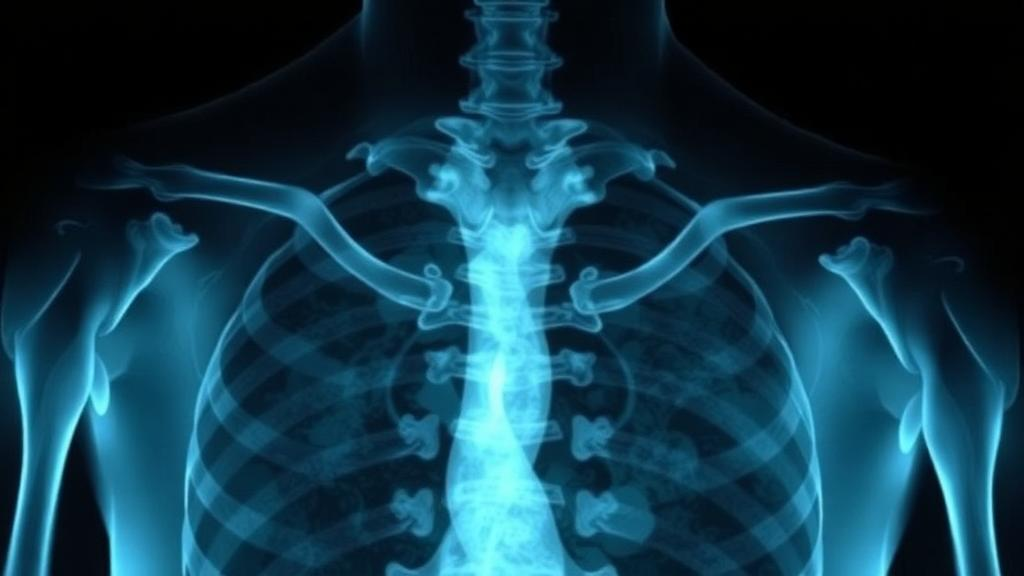
Rotator cuff tears are among the most common culprits behind shoulder pain and lost mobility, yet the imaging workhorse used to detect them is often out of reach for many patients. Magnetic resonance imaging remains the gold standard for evaluating the soft tendons of the shoulder, but it is expensive, time-consuming, and not always available, particularly in rural or resource-limited settings. Plain shoulder X-rays, by contrast, are fast, cheap, and universally accessible, which is why they dominate initial clinical assessments. The problem is that tendons barely show up on radiographs, so identifying a tear from an X-ray alone is notoriously difficult even for experienced clinicians. A team of researchers in Urumqi, China, now reports a new artificial intelligence framework designed to close that gap, squeezing diagnostic information out of X-ray images that the human eye and conventional algorithms tend to miss.
The study, published in BMC Medical Imaging by a multidisciplinary group from Xinjiang Medical University and its Sixth Affiliated Hospital, introduces a model called WEM-Mamba, short for Wavelet-Enhanced MedMamba. The work sits at the intersection of two of the hottest trends in medical deep learning: state space models, the efficient new architecture family that includes Mamba, and frequency domain analysis, which extracts information about textures and edges that spatial-domain models often overlook. According to the authors, most existing approaches, whether convolutional neural networks, vision transformers, or earlier Mamba variants, concentrate almost exclusively on modeling features in the spatial domain, leaving the rich frequency content of medical images underexploited. For a task like rotator cuff classification, where subtle textural signatures in the radiograph may hint at tendon damage, that omission could mean losing exactly the evidence that matters most.
To understand why frequency matters, it helps to think about what an X-ray actually encodes. Radiographs are dense grids of intensity values, and while clinicians read them as pictures of bones and soft tissue shadows, mathematically they can be decomposed into components that vary at different spatial scales and orientations. Fine, rapidly changing patterns correspond to high-frequency content such as edges and fine texture; smooth, slowly varying patterns correspond to low-frequency content such as broad anatomical structures. The Haar wavelet transform, a classical mathematical tool that dates back decades, provides a principled way to split an image into these frequency bands while keeping the spatial location of each feature intact. WEM-Mamba exploits this by embedding a Haar wavelet decomposition step directly inside its core processing module, so the network can examine the image simultaneously through spatial and frequency lenses.
Technically, the framework builds on MedMamba, a medical imaging variant of the Mamba architecture. Mamba and its relatives are built on state space models, which process sequences, including sequences of image patches, using recurrent-style computations that scale linearly with input length rather than quadratically as attention mechanisms in transformers do. That efficiency makes state space models attractive for medical imaging, where high-resolution images and limited training data are the norm. The researchers’ key innovation is the Wavelet-Enhanced SS-Conv-SSM module, or WESS. In this module, an input feature map is decomposed by the Haar wavelet transform into multiple frequency sub-bands. These sub-bands are processed and then synergistically fused with the global context modeling that the state space model provides, before an inverse wavelet transform can reconstruct the enhanced representation. The result is a hybrid design in which convolutional operations capture local detail, the state space model captures long-range dependencies across the image, and the wavelet pathway injects multi-band frequency features that neither of the other two components would extract on their own.
The team evaluated WEM-Mamba on a dataset of shoulder X-ray images collected retrospectively from routine clinical examinations at the Sixth Affiliated Hospital of Xinjiang Medical University, with ethics approval and anonymized patient data. They benchmarked their model against fifteen representative competitors spanning the major architecture families: convolutional neural networks, transformers, multi-layer perceptrons, and Mamba variants. WEM-Mamba came out on top, achieving an accuracy of 0.8950, an F1-score of 0.9309, a precision of 0.9078, a recall of 0.9552, and an area under the curve of 0.9116. Notably, the recall figure, which measures how many true tears the model successfully flags, is the highest of its headline metrics, a property that matters greatly in screening contexts where missed diagnoses carry the greatest cost. Equally important for real-world deployment, the model is compact: it contains 14.92 million parameters and requires only 2.04 gigafloating-point operations per inference, a footprint modest enough to run on ordinary clinical hardware rather than specialized computing clusters.
The performance-to-cost ratio is one of the study’s most compelling aspects. Deep learning models in medical imaging have often chased accuracy at the expense of size and speed, producing architectures too heavy for the very hospitals that need them most. By combining the linear-scaling efficiency of state space models with the lightweight Haar wavelet transform, the authors demonstrate that careful architectural design, rather than brute-force scale, can deliver strong classification performance on modest computational budgets. For clinics in underserved regions, where shoulder X-rays are already the first-line examination but specialist radiology expertise may be scarce, a compact model that augments the initial radiograph with a tear probability estimate could meaningfully accelerate referrals for MRI and definitive treatment.
The research also carries a broader message for the machine learning community. Wavelet-based feature extraction has a long pedigree in signal processing and image compression, but it has been somewhat eclipsed in the deep learning era by purely learned representations. The success of WEM-Mamba suggests that classical mathematical transforms and modern sequence models are not rivals but complements. The wavelet decomposition imposes a physically meaningful inductive bias, telling the network explicitly where the fine textures and edges live, while the state space model supplies the flexible global reasoning that fixed transforms cannot. In domains where training data are limited, as is nearly always the case in medicine, building such structural knowledge into the architecture may prove more data-efficient than expecting a generic network to rediscover it from scratch.
Caveats remain, and the authors are candid about them. The study was conducted on a single-center dataset, and all conclusions are explicitly framed as valid under the data and experimental settings of this particular investigation. The researchers state that further validation on larger-scale, multi-center, and external datasets is required before the approach can be considered robust, and that the clinical application value of the framework needs continued assessment in subsequent research. Single-center datasets can encode site-specific scanner settings, patient demographics, and imaging protocols, all of which can inflate apparent performance when a model is tested on data from the same source. Multi-center trials with external test sets are the standard next step for any diagnostic AI aspiring to clinical use, and this work is no exception.
Nevertheless, the study represents a thoughtful and timely contribution to computer-aided diagnosis of musculoskeletal injuries. It addresses a genuine clinical bottleneck, the gap between cheap first-line X-rays and definitive but costly MRI, with a method that is technically novel, computationally lean, and empirically competitive. The work was supported by a range of Chinese research funding programs, including the National Natural Science Foundation of China and multiple Xinjiang regional initiatives, and the article is published open access, making the full technical details available to researchers worldwide. If the promised multi-center validation bears out the single-center results, wavelet-enhanced state space models like WEM-Mamba could become a standard tool in the radiology toolbox, helping ensure that a patient’s first, cheapest image is not the last word on their shoulder pain.
Subject of Research: A wavelet-enhanced Mamba-based deep learning framework for classifying rotator cuff tears in shoulder X-ray images
Article Title: WEM-Mamba: a Wavelet-Enhanced MedMamba framework for rotator cuff tear classification in X-ray images
Article References: Wang, Z., Liu, Z., Li, J., Aboduaini, Y., Abulaiti, A., Li, S., Yakufu, M., Halike, A., Xv, L., & Li, G. (2026). WEM-Mamba: a Wavelet-Enhanced MedMamba framework for rotator cuff tear classification in X-ray images. BMC Medical Imaging. https://doi.org/10.1186/s12880-026-02740-2
Image Credits: AI Generated
DOI: 10.1186/s12880-026-02740-2
Keywords: rotator cuff tear, deep learning, Mamba, state space model, wavelet transform, frequency domain features, X-ray imaging, medical image classification, computer-aided diagnosis, shoulder pain, MedMamba, BMC Medical Imaging
Cite Scienmag News
Ophelia Keating. (October 7, 2026). Wavelets Meet Mamba: AI Reads Shoulder X-rays to Spot Rotator Cuff Tears. Scienmag. https://scienmag.com/wavelets-meet-mamba-ai-reads-shoulder-x-rays-to-spot-rotator-cuff-tears/
Ophelia Keating. "Wavelets Meet Mamba: AI Reads Shoulder X-rays to Spot Rotator Cuff Tears." Scienmag, 7 October 2026, https://scienmag.com/wavelets-meet-mamba-ai-reads-shoulder-x-rays-to-spot-rotator-cuff-tears/. Accessed 8 October 2026.
Ophelia Keating. "Wavelets Meet Mamba: AI Reads Shoulder X-rays to Spot Rotator Cuff Tears." Scienmag. October 7, 2026. https://scienmag.com/wavelets-meet-mamba-ai-reads-shoulder-x-rays-to-spot-rotator-cuff-tears/


