


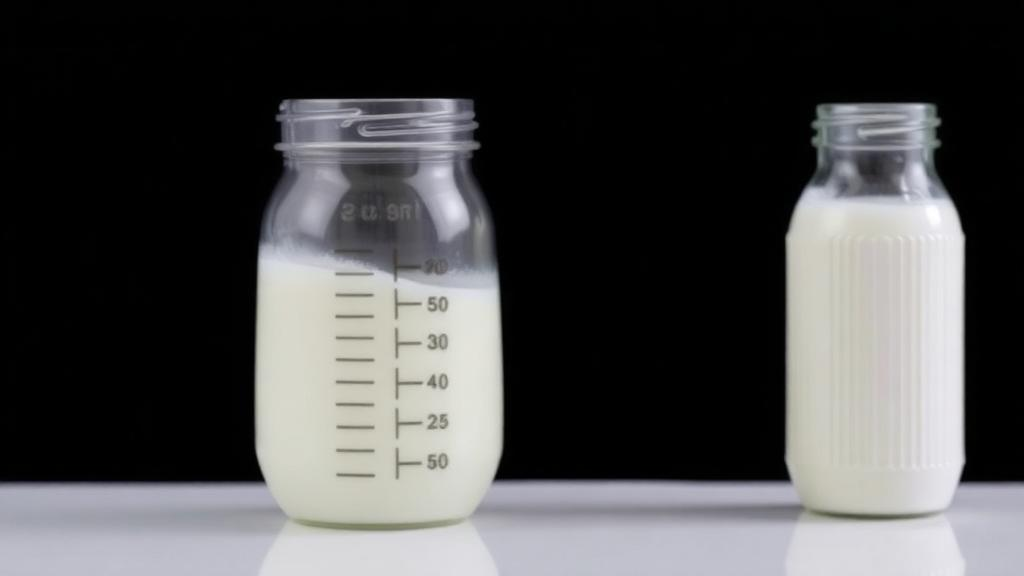
Breast milk is often described as the most complete food a newborn can receive, a fluid fine-tuned by evolution to deliver nutrients, immune factors, and growth signals during the most vulnerable months of human development. Yet the same biological channel that carries antibodies and essential fatty acids can, in principle, carry environmental contaminants as well. A new pilot study from Hamadan, Iran, has now examined one of the less glamorous but widely discussed classes of dietary chemicals — nitrate and nitrite — in the breast milk of lactating mothers, and the results offer a reassuring message for nursing parents: the levels detected were consistently below the exposure thresholds considered acceptable for infants in the first six months of life.
The research, published in Environmental Science and Pollution Research, was led by Vahid Ghasemzadeh-Mohammadi of Hamadan University of Medical Sciences together with colleagues from several Iranian institutions, including Shahid Beheshti University of Medical Sciences and the National Nutrition and Food Technology Research Institute. The team collected breast milk samples from 93 lactating mothers whose infants were between zero and six months old. Rather than treating all newborns as a single group, the researchers divided the infants into three age bands — zero to two months, two to four months, and four to six months — a decision that matters, because both milk consumption patterns and body weight change rapidly across the first half-year, and both variables directly shape how much of any given chemical an infant actually ingests per kilogram of body weight.
To understand why nitrate and nitrite attract regulatory attention in the first place, it helps to trace their journey through the environment and the body. Nitrogen compounds are ubiquitous: they cycle through soil, water, and crops, and human activity — above all intensive fertilizer use — has amplified their presence in the food supply. Leafy vegetables, cured meats, and contaminated drinking water are the dominant dietary sources for adults. In the body, nitrate can be reduced to nitrite, and nitrite in turn can react with amines to form N-nitroso compounds, some of which are carcinogenic in animal studies. For infants, the classic toxicological concern is methemoglobinemia, a condition in which nitrite oxidizes the iron in hemoglobin so that the molecule can no longer carry oxygen efficiently. Infant hemoglobin is chemically more susceptible to this oxidation, and the enzymes that normally reverse it are less active in the first months of life, which is why nitrate limits for drinking water are set with formula-fed infants specifically in mind.
But the story is not purely one of hazard. Nitrate and nitrite are also physiological molecules with genuine roles in human biology. They serve as precursors to nitric oxide, a signaling gas that regulates vascular tone, supports blood pressure control, and participates in gastrointestinal and immune defenses. The enterosalivary circulation — in which nitrate is concentrated in saliva, reduced to nitrite by oral bacteria, and converted to nitric oxide in the acidic stomach — is now recognized as an important homeostatic pathway. Some researchers have even argued that the nitrite naturally present in human milk may contribute to neonatal gastric and cardiovascular physiology, particularly in the early weeks when an infant’s own nitric oxide production pathways are still maturing. Risk assessment for these compounds therefore involves a delicate balance between their potential harms at high doses and their physiological functions at the low doses typical of most diets.
Against this backdrop, the Hamadan team set out to quantify what exclusively breastfed infants actually receive. The analytical backbone of the study was ion chromatography, a technique that separates charged species in a liquid sample and quantifies them with high specificity, allowing nitrate and nitrite to be measured independently even in a biologically complex matrix like milk. The researchers paired these measurements with interview-based data on each infant’s age, body weight, and daily milk consumption, obtained from the mothers themselves. From these inputs they calculated the estimated daily intake of each compound for every age group, expressing exposure relative to body weight so that the results could be compared against established health-based guidance values.
A distinctive strength of the study lies in its statistical approach. Rather than relying on a single point estimate — which would assume, unrealistically, that every infant drinks the same amount of milk with the same contaminant concentration — the team used Monte Carlo simulation, a probabilistic method that samples repeatedly from the measured distributions of concentrations, consumption rates, and body weights. Each iteration of the simulation represents one plausible infant, and running the model thousands of times produces a full distribution of possible exposures rather than a single average. This matters because risk decisions based on averages can miss the sensitive tail of the population: the small infant who drinks relatively more milk per kilogram of body weight, or the mother whose milk carries higher concentrations. Probabilistic assessment reveals how likely it is that any individual infant would exceed a safety threshold, which is a far more informative question for public health.
The verdict from the simulations was consistent across the board. Nitrate and nitrite were detectable in every one of the 93 milk samples, confirming that exposure is essentially universal among the infants studied. However, the estimated daily intakes remained below the acceptable thresholds for both non-carcinogenic and carcinogenic risk in all three age groups. In other words, even accounting for the variability in milk composition and infant consumption captured by the Monte Carlo model, the exposure of exclusively breastfed infants in this population to nitrate and nitrite through milk alone does not appear to reach levels of toxicological concern. The authors also note that, given the role of these compounds as nitric oxide precursors, the concentrations observed may even contribute to normal physiological processes rather than undermining them.
The study also probed whether maternal characteristics influenced the contaminant burden in milk. Maternal body mass index, age, and educational level showed no significant association with nitrate or nitrite concentrations. This null result is itself informative: it suggests that, within this population, the variation in milk nitrate and nitrite is not easily explained by the demographic factors most often collected in biomonitoring studies, and that other determinants — perhaps dietary patterns, water sources, or metabolic factors — would need to be examined to understand what drives concentration differences between mothers. The work builds on earlier research by overlapping teams, including a 2025 probabilistic assessment of potentially toxic elements in breastfed infants in the same city, indicating a sustained effort to map the early-life exposome in an Iranian urban population.
Context from the broader literature helps calibrate these findings. Previous analyses have compared the nitrite and nitrate content of human milk with infant formula and bovine milk, finding that human milk contains measurable amounts of both compounds and that these may be biologically meaningful rather than incidental. Regulatory bodies such as the European Food Safety Authority have re-evaluated nitrate and nitrite as food additives, weighing genotoxicity concerns against physiological benefits, while epidemiological work has linked high nitrate in drinking water to adverse birth outcomes and cancer risk in adults. The Hamadan study adds a specific and previously underexplored data point: the exposure of exclusively breastfed infants via milk, which is distinct from the formula-and-water pathway that dominates most infant nitrate risk assessments.
The authors are careful to frame their conclusions within the limits of a pilot design. Ninety-three mother-infant pairs from a single city cannot represent an entire country, let alone the diverse exposure conditions that different geographies and water systems create. The team explicitly recommends further biomonitoring studies with larger sample sizes and broader geographic coverage to better characterize exposure pathways and long-term health implications. Still, for the parents lying awake at three in the morning wondering whether every trace chemical in breast milk is a threat, the study offers a measured dose of perspective: one of the most scrutinized nitrogen contaminants of the modern food system is present in human milk, but at levels that fall comfortably within safe limits — and may, in small physiological amounts, be part of what makes early human development work as it should.
Subject of Research: Nitrate and nitrite exposure through breast milk and probabilistic health risk assessment in exclusively breastfed infants
Article Title: A pilot study on nitrate and nitrite concentration in breast milk: probabilistic risk assessment in breastfed infants
Article References: Ghasemzadeh-Mohammadi, V., Moslemi, M., Behbahan, S. E. B., Vahidinia, A., Sharifi, A., & Abedi, A.-S. (2026). A pilot study on nitrate and nitrite concentration in breast milk: probabilistic risk assessment in breastfed infants. Environmental Science and Pollution Research. https://doi.org/10.1007/s11356-026-38283-w
Image Credits: AI Generated
DOI: 10.1007/s11356-026-38283-w
Keywords: breast milk, nitrate, nitrite, infant exposure, probabilistic risk assessment, Monte Carlo simulation, ion chromatography, methemoglobinemia, nitric oxide, breastfeeding, environmental contaminants, public health
Cite Scienmag News
Daisy Hatcher. (October 7, 2026). Nitrate and Nitrite in Breast Milk Fall Below Risk Thresholds for Infants, Study Finds. Scienmag. https://scienmag.com/nitrate-and-nitrite-in-breast-milk-fall-below-risk-thresholds-for-infants-study-finds/
Daisy Hatcher. "Nitrate and Nitrite in Breast Milk Fall Below Risk Thresholds for Infants, Study Finds." Scienmag, 7 October 2026, https://scienmag.com/nitrate-and-nitrite-in-breast-milk-fall-below-risk-thresholds-for-infants-study-finds/. Accessed 7 October 2026.
Daisy Hatcher. "Nitrate and Nitrite in Breast Milk Fall Below Risk Thresholds for Infants, Study Finds." Scienmag. October 7, 2026. https://scienmag.com/nitrate-and-nitrite-in-breast-milk-fall-below-risk-thresholds-for-infants-study-finds/


