


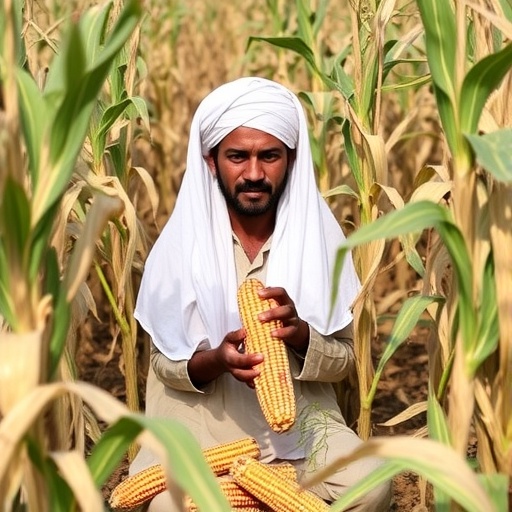
In a transformative study poised to impact agricultural practices significantly, researchers Khan, A., Khan, S.U., and Ali, S. analyzed the intricate dynamics of climate adaptation and efficiency within maize farming. Their comprehensive exploration, set against the backdrop of Khyber Pakhtunkhwa, Pakistan’s diverse agro-climatic zones, casts light on critical issues affecting food security and resource management. As climate variability accelerates, understanding how such changes influence crop productivity and farmers’ adaptive strategies becomes increasingly vital.
The study’s results reveal stark disparities across the various agro-climatic zones, showcasing that not all regions are equally equipped to cope with climatic changes. Farmers in some areas exhibit advanced adaptive techniques, while others lag, struggling to implement necessary changes. This variation not only threatens the livelihoods of individual farmers but also poses a risk to the overall agricultural sustainability in the region. By identifying these efficiency gaps, the research lays the groundwork for targeted interventions that can help enhance resilience.
Maize, being a staple crop, carries immense socio-economic significance. The findings underscore how climate-related stressors such as erratic rainfall patterns and rising temperatures compromise maize yields. The researchers delineate these impacts, pointing out that regions with less adaptive capacity experience a direct decrease in production levels, leading to food insecurity. Thus, addressing these climate-related challenges is paramount for safeguarding food sources and supporting local economies.
Moreover, the study emphasizes the need for integrating knowledge and innovation into farming practices. By utilizing climate-smart agricultural techniques, farmers can better manage their crops under changing environmental conditions. This approach not only maximizes productivity but also sustains soil health and conserves water. There is a growing recognition that transferring knowledge through extension services and educational programs can empower farmers to adopt innovative practices that are conducive to climate resilience.
Assessment of local agro-climatic conditions is crucial in formulating effective strategies. The researchers advocate for localized solutions, positing that one-size-fits-all approaches are inadequate. Instead, the adaptation strategies should be tailored to specific environmental challenges faced by different farming communities. This localized perspective can enhance the efficacy of interventions and ensure that resources are utilized efficiently.
The study also highlights the role of governmental policies in shaping adaptive capacity. Policy frameworks that are supportive and provide incentives for adopting climate-resilient practices can accelerate the transition towards sustainable maize farming. Additionally, the researchers argue that collaboration among stakeholders—farmers, local governments, NGOs, and researchers—is essential for building a cohesive response to the challenges posed by climate change.
As the report delves deeper, it illustrates the tangible benefits that can be derived from investing in agricultural research and development. By supporting innovations in maize farming, not only can yield efficiency be improved, but farmers’ resilience to climate shocks can also be fortified. The long-term vision involves creating an agricultural system that is both productive and sustainable, thereby ensuring economic viability for future generations.
In addition, the findings shed light on the socio-economic factors that shape farmers’ decisions regarding climate adaptation. Access to resources, availability of technology, and financial support are pivotal in determining how effectively farmers can respond to climate variability. Initiating programs that extend credit facilities or subsidize the costs of modern agricultural tools can boost farmers’ adaptation efforts, leading to enhanced productivity and resilience.
The multi-disciplinary nature of the research allows it to resonate with a wide audience, bridging gaps between scientific understanding and practical application. As the pressures of climate change begin to manifest more prominently, bridging these gaps becomes increasingly imperative. Innovations derived from this research could serve as a beacon for not just Khyber Pakhtunkhwa, but also for other regions facing similar challenges globally.
The pressing nature of climate change necessitates that discussions around adaptation strategies permeate agricultural policy-making. This study serves as a launching point for broader conversations about how to tackle climate impacts on agriculture. It encourages a re-evaluation of existing policies to ensure they are inclusive and adaptable to the fluctuating realities of climate patterns.
In summary, the research conducted by Khan and colleagues provides a critical insight into the intersection of climate adaptation and maize farming efficiency. It uncovers the existing gaps while offering pathways for improvement and resilience-building measures. The implications of this study extend beyond academic boundaries, calling for urgent action among policymakers, researchers, and agricultural practitioners.
A call to action emerges as we recognize that the future of maize farming in Khyber Pakhtunkhwa—and potentially in other regions—depends on our collective ability to adapt to climate change. Through knowledge transfer, policy reform, and community engagement, an adaptable agricultural framework can be established. This framework would ideally safeguard food security while promoting sustainable farming practices that are resilient to future climate uncertainties.
In conclusion, this study underscores the critical role of adaptive strategies in ensuring agricultural sustainability. The findings are not just a reflection of current realities but also a roadmap towards future resilience. It is incumbent upon various stakeholders to act upon these insights, ensuring that farmers are equipped to thrive in an ever-changing climate landscape.
Khan, A., Khan, S.U., Ali, S. et al. Climate adaptation and efficiency gaps in maize farming across agro-climatic zones of Khyber Pakhtunkhwa, Pakistan. Discov Sustain (2025). https://doi.org/10.1007/s43621-025-02104-w
Cite Scienmag News
Alan Morgan. (November 27, 2025). Maize Farming Resilience: Gaps Across Khyber Pakhtunkhwa. Scienmag. https://scienmag.com/maize-farming-resilience-gaps-across-khyber-pakhtunkhwa/
Alan Morgan. "Maize Farming Resilience: Gaps Across Khyber Pakhtunkhwa." Scienmag, 27 November 2025, https://scienmag.com/maize-farming-resilience-gaps-across-khyber-pakhtunkhwa/. Accessed 3 September 2026.
Alan Morgan. "Maize Farming Resilience: Gaps Across Khyber Pakhtunkhwa." Scienmag. November 27, 2025. https://scienmag.com/maize-farming-resilience-gaps-across-khyber-pakhtunkhwa/


