


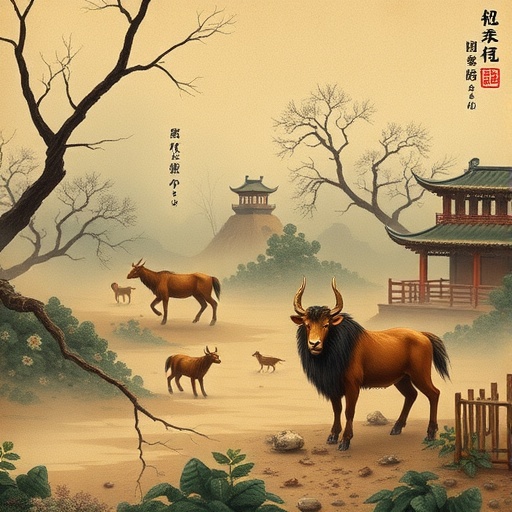
Recent archaeological findings from the Wawuying site in the Jianghuai Region provide invaluable insights into the Late Western Zhou period, particularly in terms of animal resource utilization from approximately 877 to 770 BC. This era marks significant advancements in agricultural practices, trade, and social organization within ancient Chinese civilizations. The study conducted by Liu, Yu, and Wang brings forth a wealth of information regarding the subsistence strategies of the communities inhabiting this area, revealing a dynamic relationship with the surrounding environment.
The Wawuying site, an integral archaeological location, has become the focal point for investigating the economic and cultural practices of the Late Western Zhou. With artifacts unearthed that range from pottery to animal remains, the site serves as a crucible of experimentation and adaptation to changing climatic and social landscapes. The researchers meticulously analyzed the remains, which included bones from various animals, providing key insights into dietary preferences and ceremonial practices of the time.
In understanding animal resource exploitation, the study highlights the diversity of animal species used by the Zhou people, which included domesticated animals such as pigs and sheep, as well as wild species like deer. This mixture of domestic and wild fauna is indicative of a complex subsistence economy that prioritized both agriculture and hunting. Such practices reflect not only survival strategies but also cultural and ritualistic dimensions, emphasizing that animal use was likely tied to social status and communal activities.
The findings indicate that the exploitation of animal resources was not a simple matter of procurement for sustenance. Instead, the authors suggest that the choices made regarding which animals to exploit were deeply intertwined with broader cultural values and beliefs. Animal remains found at the site demonstrate possible ceremonial uses, with certain species being more prevalent in contexts indicative of ritual significance. This intersection of the practical and the ceremonial sheds light on how the Zhou society viewed the relationships between humans, animals, and the spiritual realm.
Moreover, the research outlines the technological advancements in tools used for hunting and butchering animals, revealing a growing sophistication in the way the Zhou managed their resources. Implements crafted for specific purposes were pivotal in the efficient processing of animal remains. Insights into these tools not only illustrate a degree of specialization within the society but also indicate the knowledge passed down through generations regarding animal husbandry and hunting techniques.
The ecological context of the Jianghuai Region is also paramount in understanding the dynamics of animal resource exploitation. The study posits that environmental changes played a role in influencing animal populations and, consequently, the strategies employed by the Zhou peoples. Fluctuations in climate and vegetation would have had direct impacts on the availability of both wild and domesticated animals, necessitating adaptive strategies to ensure food security.
This research further emphasizes the role of trade in facilitating access to diverse animal resources. The Late Western Zhou period saw increased interaction between various regional polities, enabling the exchange of goods, including livestock and animal products. Such interactions illustrate the networks established through trade, which not only allowed for a varied diet but also enhanced social ties among different groups.
As the authors delve deeper into the economic implications of animal exploitation, they propose that such practices were instrumental in supporting political structures of the time. The acquisition and distribution of animal resources could have provided economic advantages, enabling leaders to assert power through the control of food supplies. This notion sheds light on the potential motivations behind the choices made by ancient societies in managing their animal resources.
Furthermore, the findings contribute to the broader understanding of the sociopolitical landscape of the Late Western Zhou period. The ability to efficiently harness animal resources could be seen as a marker of societal sophistication, influencing everything from rank within social hierarchies to the establishment of trade routes. The manipulation of animal resource management was thus not merely about subsistence; it was a crucial factor in the development of power dynamics within these ancient communities.
In synthesizing the data collected from the Wawuying site, Liu, Yu, and Wang open avenues for future research that could explore comparative analyses with other archaeological sites from similar periods. Such studies could further elucidate patterns of animal resource exploitation throughout China, enabling a more nuanced understanding of regional variances and shared practices among ancient civilizations.
In conclusion, the implications of this research extend beyond mere scholarly interest. The careful examination of animal remains and associated artifacts at the Wawuying site encapsulates the rich tapestry of life during the Late Western Zhou. Understanding these dynamics not only frames our knowledge of historical subsistence strategies but also fosters an appreciation for the profound ways in which ancient societies navigated their relationships with the natural world. As excavations and studies continue, the evolving narrative surrounding these ancient practices promises to shed light on the intricate relationship between humanity, environment, and culture throughout history.
The Wawuying site serves as a crucial reminder of the complexity of ancient societies and their ability to adapt to environmental and social changes. The findings underscore the significance of animal resource management in the historical context, providing a lens through which we can better comprehend the cultural and economic frameworks that shaped the Late Western Zhou period. As such, ongoing archaeological efforts will likely unveil further layers of understanding regarding the interplay of animal exploitation, social structure, and environmental adaptation in ancient China.
Cite Scienmag News
Courtney Benton. (January 20, 2026). Late Western Zhou: Animal Exploitation in Jianghuai Region. Scienmag. https://scienmag.com/late-western-zhou-animal-exploitation-in-jianghuai-region/
Courtney Benton. "Late Western Zhou: Animal Exploitation in Jianghuai Region." Scienmag, 20 January 2026, https://scienmag.com/late-western-zhou-animal-exploitation-in-jianghuai-region/. Accessed 6 September 2026.
Courtney Benton. "Late Western Zhou: Animal Exploitation in Jianghuai Region." Scienmag. January 20, 2026. https://scienmag.com/late-western-zhou-animal-exploitation-in-jianghuai-region/


