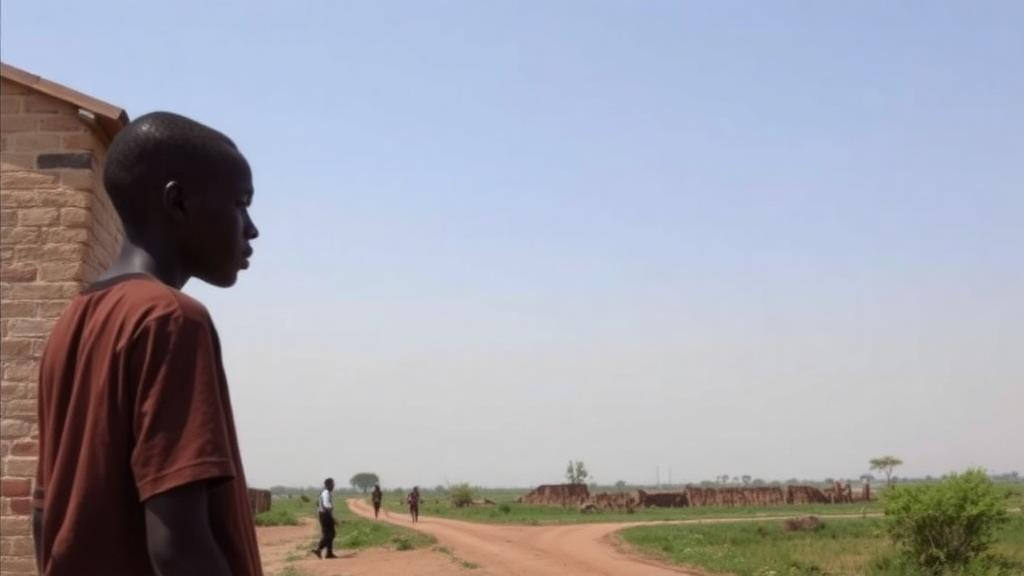
In the densely forested highlands of southwestern Ethiopia, a district called Yeki Woreda has become an unlikely laboratory for one of the most contested questions in political science: does ethnic federalism itself breed ethnic conflict, or does conflict fester where the system is poorly implemented? A new qualitative study from researchers at Haramaya University and partner institutions, published in SN Social Sciences, dissects three decades of recurrent violence in Yeki Woreda, in the Sheka Zone of the Southwest Peoples Regional State, and reaches a conclusion that challenges the loudest voices in Ethiopia’s federalism debate. The problem, the authors argue, is not the constitutional architecture of ethnic federalism but the widening gap between its promise and its practice.
Yeki Woreda is home to a remarkable mosaic of communities, including the indigenous Sheka, Sheko, and Majang groups alongside Amhara, Oromo, Gurage, and Kaffa settlers. Since 1991, when Ethiopia adopted its ethnic-federal constitution, the district has experienced repeated episodes of inter-ethnic violence. To understand why, the research team, led by Jemal Endris of Haramaya University’s Institute of Peace and Development Studies, conducted a qualitative case study grounded in the constructivist paradigm, the view that ethnic identities and grievances are actively constructed and negotiated rather than fixed biological facts. Data came from in-depth interviews, focus group discussions, and analysis of documents, and the team used thematic analysis, a systematic method for coding qualitative data into recurring patterns, to extract the causes, triggers, and dynamics of the conflict.
The study’s central analytical move is to separate root causes from immediate triggers, a distinction drawn from conflict theory. Root causes are the deep structural conditions that make violence possible; immediate triggers are the sparks that ignite it. In Yeki Woreda, the researchers identified three interlocking root causes: historical grievances dating back decades, socio-economic disparities in access to land and employment, and political exclusion of certain groups from local decision-making. These are examples of what scholars call horizontal inequalities, disadvantages that align with group identity rather than individual merit. A substantial body of comparative research, including work by Gudrun Østby on polarization and by Hillesund and colleagues, links such horizontal inequalities to armed conflict, and Yeki Woreda fits that pattern closely.
Land sits at the center of the grievance structure. Competition over farmland and natural resources between indigenous communities and settlers has repeatedly escalated into confrontation, a dynamic consistent with Catherine Boone’s research on sons-of-the-soil conflicts across Africa, where institutional design determines whether land disputes stay localized or turn violent. The study found that land administration in Yeki Woreda has been inconsistent and opaque, with unclear tenure rules feeding perceptions that the system favors some groups over others. Employment disparities compounded the problem, as perceived unequal access to jobs and public services reinforced the sense that political identity determines economic fate.
On top of these structural conditions, the researchers documented a set of immediate triggers that convert latent tension into open violence. Political competition for local office, in which candidates mobilize supporters along ethnic lines, emerged as a recurring accelerant. So did misinformation: rumors and false claims circulating through communities that inflamed suspicion before facts could catch up. This finding connects to an emerging literature on conflict in the information age, including doctoral research at MIT on how political communication and misinformation act as precursors and amplifiers of violence. In a district where formal institutions are weak and trust is scarce, a single rumor can do the work of a mobilizing manifesto.
The consequences of the recurring violence are severe and self-reinforcing. The study documents disrupted livelihoods, community displacement, and a steady erosion of social cohesion, the informal trust networks that normally allow diverse groups to coexist. Displacement creates its own grievances, as returnees and hosts compete anew for land and services, feeding a feedback loop in which each round of conflict deepens the conditions for the next. The researchers also highlight the psychological dimension: intergenerational trauma, in which the wounds of past violence are transmitted across generations, hardens identity boundaries and makes reconciliation harder with each passing year.
One of the study’s most striking findings concerns the collapse of traditional conflict-resolution mechanisms. In much of rural Ethiopia, customary institutions, councils of elders, ritual reconciliation practices, and community-mediated settlements, have historically managed disputes before they escalated. The researchers found that these indigenous systems have been weakened, in part because formal state structures displaced or marginalized them without replacing their function. Both formal and traditional mechanisms now face serious constraints: limited resources, limited institutional capacity, and, critically, biased attitudes, where participants perceive mediators as favoring one side. When neither the state’s courts and committees nor the elders’ assemblies are trusted, grievances have nowhere to go but downward into resentment or outward into violence.
The political interpretation is where the study makes its most consequential claim. Ethiopia’s ethnic federalism, which organizes the federation into units defined by ethnicity and grants nations and nationalities self-determination rights, is often blamed for the country’s ethnic conflicts. Critics argue that institutionalizing ethnicity gives groups both the motive and the mandate to mobilize against neighbors. But the Yeki Woreda evidence points elsewhere. The persistence of conflict there, the authors conclude, is less associated with the constitutional principle itself than with perceived weaknesses in its implementation: unequal political representation, inconsistent land administration, limited institutional capacity, and the absence of adequate mechanisms for managing inter-ethnic grievances. This aligns with scholarship arguing that federalism’s problems in Ethiopia lie in execution, not design, though it stops short of endorsing any particular alternative such as the consociational models some scholars have proposed.
The policy implications follow directly from the diagnosis. The study calls for strengthening equitable local governance so that representation does not track ethnic arithmetic alone. It urges transparent administration of land and natural resources, addressing the single most explosive grievance in the district. It recommends enhanced coordination between indigenous and formal conflict-resolution institutions, pairing the legitimacy of customary systems with the resources and enforceability of the state. And it proposes community-based mechanisms to counter misinformation, an acknowledgment that in modern conflicts the information environment is a battlefield in its own right. Each recommendation targets a specific link in the causal chain the researchers mapped, from structural inequality through trigger events to escalation.
What makes the Yeki Woreda case valuable beyond Ethiopia is its methodological clarity. By distinguishing root causes from triggers, by treating identity as constructed rather than primordial, and by documenting the interaction between formal and informal institutions, the study offers a template for analyzing multi-ethnic conflict in other fragile settings, from the resource disputes of Kenya’s Nakuru County to the communal tensions of West Africa. The broader lesson is sobering but actionable: constitutions do not cause or cure conflict on their own. Violence takes root where historical grievances, horizontal inequalities, and political exclusion persist, and where the institutions meant to manage disagreement, whether state courts or village elders, are too weak, too biased, or too underfunded to do their job. In Yeki Woreda, peace will come not from rewriting the federal compact but from finally making it work on the ground.
Subject of Research: Causes, effects, and resolution mechanisms of inter-ethnic conflict in Yeki Woreda, Ethiopia
Article Title: Dynamics of inter-ethnic conflict: causes, effects, and resolution mechanisms in Yeki Woreda, Sheka Zone, Southwest Peoples Regional State, Ethiopia
Article References: Endris, J., Hassen, M., Alam, M., Cheka, Y., & Ali, M. (2026). Dynamics of inter-ethnic conflict: causes, effects, and resolution mechanisms in Yeki Woreda, Sheka Zone, Southwest Peoples Regional State, Ethiopia. SN Social Sciences, 6(9), Article 369. https://doi.org/10.1007/s43545-026-01662-8
Image Credits: AI Generated
DOI: 10.1007/s43545-026-01662-8
Keywords: Ethiopia, ethnic federalism, inter-ethnic conflict, conflict resolution, land disputes, horizontal inequality, misinformation, traditional institutions, Yeki Woreda, Sheka Zone, peacebuilding, governance
Cite Scienmag News
Courtney Benton. (October 16, 2026). Land, Grievance, and Misinformation: What a Decades-Long Ethiopian Conflict Reveals About Ethnic Federalism. Scienmag. https://scienmag.com/land-grievance-and-misinformation-what-a-decades-long-ethiopian-conflict-reveals-about-ethnic-federalism/
Courtney Benton. "Land, Grievance, and Misinformation: What a Decades-Long Ethiopian Conflict Reveals About Ethnic Federalism." Scienmag, 16 October 2026, https://scienmag.com/land-grievance-and-misinformation-what-a-decades-long-ethiopian-conflict-reveals-about-ethnic-federalism/. Accessed 16 October 2026.
Courtney Benton. "Land, Grievance, and Misinformation: What a Decades-Long Ethiopian Conflict Reveals About Ethnic Federalism." Scienmag. October 16, 2026. https://scienmag.com/land-grievance-and-misinformation-what-a-decades-long-ethiopian-conflict-reveals-about-ethnic-federalism/