


Kolkata has long been celebrated as one of India’s great culinary crossroads, a city where colonial ballrooms, Chinese tandoors and Awadhi kitchens left indelible marks on the Bengali plate. Yet a new qualitative study argues that the city’s most influential food stories remain its least documented ones. Researchers from Mizoram University traced the culinary journeys of four foreign communities—Afghans, Parsis, Tibetans and, more recently, Koreans—and found that food, more than any other cultural practice, served as the bridge between these newcomers and the Bengali residents who eventually embraced their cuisines as their own. The findings, published in Discover Global Society, suggest that the city’s celebrated cosmopolitanism is written as much in its street-side momo stalls and Parsi dhansak pots as in its grand colonial-era restaurants.
The research team, led by Alolika Mangal with Vishwambhar Prasad Sati and Surajit Banerjee, conducted fieldwork between January and June 2025 across eighteen restaurants selected on the basis of popularity, ownership by community members, and location within or near settlement pockets. The method combined participant observation with unstructured interviews lasting roughly twenty to thirty minutes each, held with restaurant owners and forty regular customers inside the establishments. Separately, sixty Bengali respondents who frequently consume these cuisines were recruited through snowball sampling and interviewed about their preferences and perceptions. Interviews were audio- and video-recorded with consent, transcribed verbatim, and analysed through manual thematic coding, while the survey responses were organised into a food preference matrix using the Python libraries NumPy and Pandas for data cleaning and descriptive statistics. Respondents could select more than one preferred cuisine, so cumulative frequencies exceeded the sample size, and the resulting matrix was visualised as a heatmap in which colour intensity represented the number of respondents in each age group choosing each cuisine.
The Afghan story is the oldest and perhaps the most deeply woven into Bengali daily cooking. Pashto-speaking Afghan communities have settled in Bengal since the sixteenth century, but the Kolkata Afghans—mainly Kabuliwalas, immortalised in Rabindranath Tagore’s short story—arrived as traders of dry fruits, attar perfumes and hing, the pungent asafetida native to the Afghan mountains. When closed borders prevented their return, they settled around Madan Street, Chandni Chowk and Bentinck Street, and their goods entered middle-class Bengali kitchens. The study documents how hing transformed a classic Bengali preparation, the deep-fried kachuri, into the now-iconic hing er kachuri, while Afghan kebabs were reimagined as fillings wrapped in fried parathas with raw onions, echoing the city’s Mughlai rolls. More than five thousand Afghan families are estimated to live in Kolkata today, many of them second- or third-generation migrants for whom the city is home.
Field visits to eateries such as Islamia Darbar near the Nakhoda Masjid, Kabul Kolkata Restaurant in Park Circus, and Kachhi 1847 revealed a cuisine that thrives on authenticity rather than glamour. Islamia Darbar serves keema, kaliya, kaleji, kebab and nihari in a setting the researchers describe as reminiscent of a Kabul market, drawing mainly traders and business owners. At Kachhi 1847, the owner explained that the Peshawari chicken chapli kebab, the Sunday-only kacchi biryani made to order, and the Lab-e-Shireen dessert are in constant demand, ordered even for celebrations. Yet the study also notes a precarious side: many Afghan food joints struggle to survive, and the rustic spaces that remain function as cultural enclaves where sitting style, menu and clientele preserve a community identity that few literary works have recorded.
The Parsi presence presents a starker contrast between historical depth and present vulnerability. Parsi merchants arrived in the late eighteenth century as Kolkata became the political and economic centre of British Bengal, and the community has maintained one of the longest documented continuous presences of any trading group in the city. Their cuisine, however, was guarded—recipes rarely shared beyond the community—and adapted ingeniously to local ingredients. The study traces how the Persian khoresh, a slow-cooked meat dish with herbs, dried fruits and mild spices such as turmeric and saffron, became the Indian dhansak when merchants unfamiliar with lentils began adding three to nine types of pulses, spinach and hot Indian spices to stretch expensive mutton, transforming a mild sweet-and-sour stew into a fiery curry. Patrani macchi, steamed fish wrapped in banana leaves, mirrors the Bengali maccher paturi so closely that the two dishes are often confused.
Today that two-century-old migratory cuisine is in a critical state. The Parsi population of Kolkata is shrinking as younger generations migrate, the community ages, and economic growth slows, which means fewer cooks, lower demand and shrinking visibility. Small establishments such as Mancherji’s in Taltala, open six days a week and sustained by loyal regulars, survive partly on customised orders from Parsi households and Bengali wedding ceremonies. The owner, Supriya Mancherji, told the researchers that the trust of regular customers is what keeps the place running in a competitive market. Even community institutions like the Kolkata Parsi Club and the Kolkata Zoroastrian Community’s Religious and Charity Fund are struggling to preserve a culture that once shaped the city’s heritage buildings and religious sites. The 113-year-old Manackjee Rustomjee Parsi Dharamsala on Bow Street remains a rare gathering point, its open dining hall still serving home-cooked Parsi meals to travellers and food lovers alike.
The Tibetan culinary story began with displacement. When the Dalai Lama fled Tibet in 1959, thousands followed him into Indian exile, and government-designated settlements were established across the country, including in Darjeeling, where the Tibetan Refugee Self-Help Centre provided livelihood support. Seasonal traders of woollen garments, handicrafts and agricultural products travelled down historic trade routes through the duars—gateway passes active during the nineteenth century—to Kolkata, forming a settlement around Wellington Square in the city’s centre. The elderly migrant couple known as the Sundans are credited with introducing Tibetan food to the city, leading to the founding of Hamro Momo in 1985 and later institutions such as Tibetan Delight, Momo Plaza and Orchid. The researchers observed queues of college students outside Tibetan Delight, located near schools, medical colleges and cultural landmarks like Nandan and the Victoria Memorial Hall, with one young customer explaining that he had heard of the place from an uncle who once studied nearby.
Adaptation has been the key to Tibetan food’s success. The mild, yak-meat-filled momos of the Himalayas became chicken, onion and garlic versions for Bengali palates; inspired by traditional Bengali fried chops, vendors developed crispy fried and pan-fried kothey styles; and a recent variant infuses the momo with gondhoraj lemon, a fragrance deeply associated with Bengali vegetarian cooking. Thukpa, the hearty noodle soup, completed the trio of dishes that now dominate the city’s street-food landscape, appearing at weddings, rainy-day tables and roadside stalls alike. At the same time, fine-dining venues such as Yeti-The Himalayan Kitchen on Park Street and Denzong Kitchen in Lake Town have packaged Tibetan food within a Zen-inspired aesthetic for affluent diners seeking a Himalayan experience, demonstrating how a single cuisine can occupy both the cheapest and the most expensive ends of the urban food market.
Korean food arrived by an entirely different route: not through migration or trade, but through screens. The Hallyu, or Korean Wave, spread across East and Southeast Asia in the 1990s and then globally through digital platforms, amplified by the Korean government’s strategic cultural export plans and by phenomena such as Squid Game, Parasite, BTS and Blackpink. In Kolkata, the wave reached its peak during the COVID-19 pandemic, when locked-down young people turned to online entertainment and emerged with an appetite for bibimbap, Korean fried chicken and kimbap rice rolls. The study’s preference matrix quantifies this generational divide sharply: Korean cuisine drew sixteen respondents aged 18 to 25 and twelve aged 26 to 35, while Afghan cuisine peaked among those over sixty, with eleven respondents, many of whom associate it with nostalgia and the city’s Mughlai heritage. Young interviewees told the researchers that they loved Korean pop culture and therefore Korean food, and that many were unaware of the Afghan and Parsi establishments that had shaped Bengali tables for generations.
The researchers frame this as gastrodiplomacy in action—soft power, in the sense coined by Joseph Nye, translating cultural diplomacy from the state to the public through cuisine. Korean cafes such as Mise En Place, the BTS Army café and Seoul Café now compete directly with the city’s beloved Chinese and Mughlai food, propelled by social media marketing and the purchasing power of an affluent urban middle class. The contrast with the older communities is instructive: Tibetan food remains accessible across socioeconomic groups at street prices, Afghan food sits in an affordable mid-range of roughly 400 to 800 rupees for two, Korean food commands 1000 to 1500 rupees as a marker of global connection, and Parsi food, at 1500 to 1800 rupees with limited commercial presence, is confined largely to devoted patrons and elite enthusiasts. The study concludes that the visibility and survival of culinary traditions depend not only on taste but on economic accessibility, media influence, demographic strength and cultural power. As Parsi cuisine teeters on the edge of disappearance and Korean food surges on digital momentum, Kolkata’s rolling platter continues to prove that a city’s identity is negotiated one meal at a time.
Subject of Research: The influence of Afghan, Parsi, Tibetan and Korean communities on Kolkata's food culture and urban foodscape
Article Title: Underrepresented food culture and culinary journey of selected foreign communities of Kolkata
Article References: Mangal, A., Sati, V. P., & Banerjee, S. (2026). Underrepresented food culture and culinary journey of selected foreign communities of Kolkata. Discover Global Society, 4(1), Article 263. https://doi.org/10.1007/s44282-026-00595-0
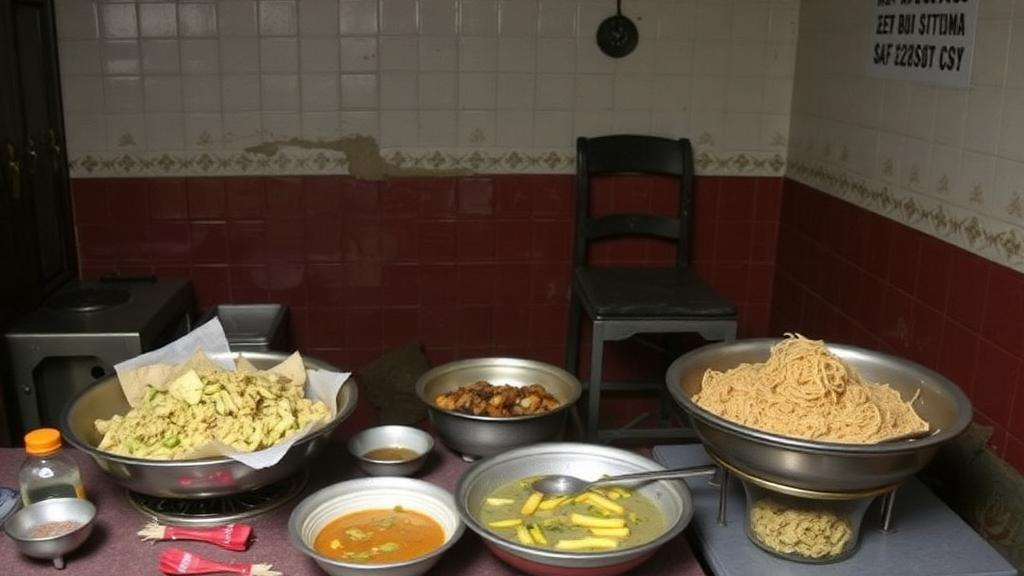
Image Credits: AI Generated
DOI: 10.1007/s44282-026-00595-0
Keywords: Kolkata, food culture, Afghan cuisine, Parsi cuisine, Tibetan cuisine, Korean Wave, Hallyu, foodscape, migration, culinary heritage, soft power, street food
Cite Scienmag News
Courtney Benton. (October 5, 2026). Kolkata’s Hidden Kitchens: How Afghan, Parsi, Tibetan and Korean Foods Shaped a City. Scienmag. https://scienmag.com/kolkatas-hidden-kitchens-how-afghan-parsi-tibetan-and-korean-foods-shaped-a-city/
Courtney Benton. "Kolkata’s Hidden Kitchens: How Afghan, Parsi, Tibetan and Korean Foods Shaped a City." Scienmag, 5 October 2026, https://scienmag.com/kolkatas-hidden-kitchens-how-afghan-parsi-tibetan-and-korean-foods-shaped-a-city/. Accessed 5 October 2026.
Courtney Benton. "Kolkata’s Hidden Kitchens: How Afghan, Parsi, Tibetan and Korean Foods Shaped a City." Scienmag. October 5, 2026. https://scienmag.com/kolkatas-hidden-kitchens-how-afghan-parsi-tibetan-and-korean-foods-shaped-a-city/


