


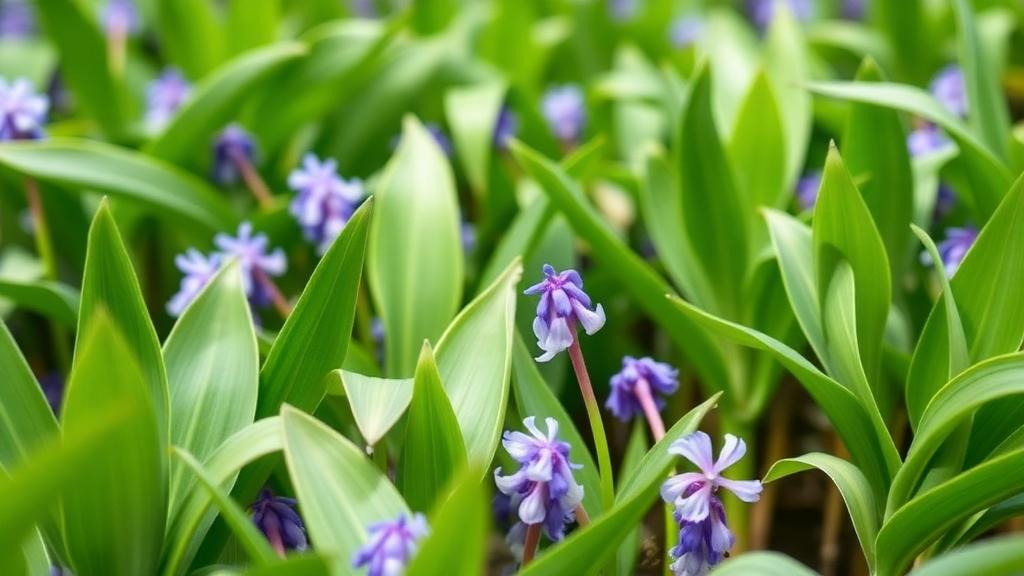
Water hyacinth is one of the world’s most notorious aquatic invaders, choking lakes and rivers across Asia, Africa and the Americas while costing governments millions in control efforts. A new study published in Environmental Science and Pollution Research by Dhanashri S. Pendse and Minal Deshmukh of Dr. Vishwanath Karad MIT World Peace University in Pune, India, argues that this floating menace could instead become a raw material for cleaner motor fuel. The researchers present an integrated pipeline that takes fresh water hyacinth biomass through chemical pretreatment, enzymatic hydrolysis and yeast fermentation, and then burns the resulting bioethanol in a real spark-ignition engine to measure how it performs against pure gasoline. The combination of process optimization and tailpipe emissions testing is what makes the work notable, because most studies of second-generation bioethanol stop at the fermentation flask and never ask whether the fuel actually behaves well in an engine.
The starting point for the study is the composition of the plant itself. Water hyacinth, Eichhornia crassipes, is a lignocellulosic biomass, meaning its structure is built from cellulose, hemicellulose and lignin, the same fibrous architecture that makes wood and crop residues difficult to convert into fermentable sugars. Compositional analysis carried out by the team revealed a carbohydrate content of 52.67 percent, a figure that immediately marks the weed as a credible candidate feedstock. Unlike first-generation bioethanol crops such as sugarcane or corn, water hyacinth competes with no food production, grows explosively on nutrient-rich wastewater without cultivation, irrigation or fertilizer, and harvesting it actually restores the health of infested waterways. In principle, the plant offers a double dividend: removing an ecological nuisance while displacing a fraction of fossil petrol.
Converting that carbohydrate store into ethanol, however, requires unlocking a structure that evolved to resist microbial attack. The Pune team began by optimizing particle size, settling on a standard sieve designation of BSS 30 as the best compromise between surface area and processability. Smaller particles expose more cellulose to chemical and enzymatic attack, but grinding biomass too finely wastes energy and can create handling problems. With the right grind in hand, the researchers turned to pretreatment, the step that chemically disrupts lignin and hemicellulose so that hydrolytic enzymes can reach the cellulose fibers. They optimized four parameters simultaneously: the concentration of thionyl chloride, the reaction time, the reaction temperature and the solid-to-liquid ratio of the slurry. This systematic tuning paid off with a maximum sugar yield of 43 percent from the pretreated material, a benchmark the authors identify as the critical foundation for everything that follows.
Pretreatment alone does not make ethanol; the liberated carbohydrates must still be broken down into simple fermentable sugars. For this the team deployed enzymatic hydrolysis using cellulase enzymes derived from Trichoderma viride, a filamentous fungus widely used in the biorefinery industry for its aggressive cellulose-degrading enzyme cocktail. Over a 72-hour hydrolysis, the enzymes converted the pretreated biomass into sugars with an efficiency of 77 percent, a substantial recovery that reflects how effectively the thionyl chloride pretreatment had opened up the plant’s internal structure. The sugar-rich hydrolysate then went straight to fermentation with Saccharomyces cerevisiae, the brewer’s yeast that has anchored industrial ethanol production for a century. The final fermentation broth reached a bioethanol concentration of 39.3 grams per liter, a titer that gives the process practical credibility for scale-up discussions.
A distinctive strength of the paper is that the authors did not simply report yields; they validated the structural and chemical transformations at each stage of the pipeline. Scanning electron microscopy, performed with the field-emission instrument at MIT-WPU, showed the physical disruption of the biomass surface, revealing the increased porosity and exposed fibers that explain the improved enzyme access. Fourier-transform infrared spectroscopy tracked the chemical signature of pretreatment, documenting the loss and modification of functional groups associated with lignin and hemicellulose. Elemental analysis complemented these techniques by confirming changes in the biomass composition. Together, this trio of characterization methods provides the structural validation promised in the study’s title, linking the observed sugar and ethanol yields to measurable changes in the material rather than leaving the mechanism as an assumption.
The second half of the study moves from the bioreactor to the engine test bed. The researchers blended their bioethanol with gasoline at volumetric fractions ranging from 10 to 25 percent and ran the blends in a spark-ignition engine under wide-open throttle conditions, the demanding operating point where fuel differences show themselves most clearly. Ethanol’s higher octane rating and oxygen content change the combustion chemistry relative to pure hydrocarbon gasoline, and the team quantified exactly how. Compared with neat gasoline, the ethanol blends produced lower emissions of unburned hydrocarbons and carbon monoxide, the two pollutants most directly tied to incomplete combustion. The oxygen built into the ethanol molecule effectively acts as an internal oxidizer, promoting more complete burning of the fuel and leaving less carbon monoxide and fewer volatile hydrocarbon fragments in the exhaust.
The emission picture was not uniformly rosy, and the authors are candid about the trade-off. Nitrogen oxide emissions increased with the ethanol blends, a consequence of higher combustion temperatures. Ethanol’s elevated heat of vaporization and its oxygen content can accelerate flame front speeds and push peak in-cylinder temperatures upward, and at those temperatures atmospheric nitrogen and oxygen combine more readily. This NOx penalty is a well-known feature of ethanol-gasoline blending and underscores why the authors argue that emission analysis must be coupled to fuel production studies rather than treated as an afterthought. A biofuel that trades carbon monoxide for nitrogen oxides still requires careful blend-ratio selection and possibly engine calibration to deliver a net environmental benefit, and the 10 to 25 percent range tested here maps out that decision space.
Placed in the wider research landscape, the study joins a growing body of work treating water hyacinth as a biorefinery feedstock. Previous investigations have explored steam explosion, wet oxidation and deep eutectic solvent pretreatments for the same biomass, and other groups have screened alternative fermenting organisms such as Candida tropicalis. Economic feasibility analyses have suggested that valorizing harvested hyacinth could offset the considerable costs of mechanical removal from infested water bodies. What distinguishes the Pune work is the completeness of its chain: feedstock characterization, parameter-by-parameter optimization, structural confirmation and engine-level emissions testing assembled into a single narrative. The authors also frame the process within India’s broader waste management and environmental sustainability agenda, where water hyacinth infestations degrade lakes and reservoirs that communities depend on.
Challenges remain before weed-to-wheels ethanol becomes routine. Thionyl chloride is an aggressive and corrosive reagent, and industrial adoption would demand careful handling, recovery and safety protocols, or the substitution of greener pretreatment chemistry. Enzyme costs, fermentation scale-up and the logistics of collecting a wet, low-density aquatic weed all weigh on the economics. The 39.3 grams per liter titer, while respectable for a lignocellulosic hydrolysate, would need to rise further in a commercial plant to keep distillation energy in check. And the NOx increase observed in the engine tests means that real-world deployment would likely pair ethanol blending with after-treatment systems or calibrated engine mapping. None of these obstacles is unique to water hyacinth; they are the standard growing pains of every second-generation biofuel pathway.
Even so, the study offers a compelling reframing of a familiar ecological villain. Every tonne of water hyacinth harvested from a choked lake is simultaneously a remediation service and, if the Pune team’s pipeline holds up at scale, a shipment of fuel. By grounding their claims in hard numbers, a 52.67 percent carbohydrate content, a 43 percent sugar yield after optimized pretreatment, 77 percent enzymatic hydrolysis efficiency, 39.3 grams per liter of ethanol and measurable reductions in hydrocarbon and carbon monoxide emissions from blended fuel, Pendse and Deshmukh have moved the conversation from possibility to evidence. The invasive weed that clogs waterways from Lake Victoria to Kerala’s backwaters may yet find its most useful role not as a nuisance to be burned on the shore, but as a feedstock converted, molecule by molecule, into a cleaner drop of fuel.
Subject of Research: Bioethanol production from invasive water hyacinth biomass and its engine blend emission performance
Article Title: Sustainable bioethanol production from water hyacinth: structural validation and fuel blend emission studies
Article References: Pendse, D. S., & Deshmukh, M. (2026). Sustainable bioethanol production from water hyacinth: structural validation and fuel blend emission studies. Environmental Science and Pollution Research, 33(27), 13953-13966. https://doi.org/10.1007/s11356-026-38182-0
Image Credits: AI Generated
DOI: 10.1007/s11356-026-38182-0
Keywords: water hyacinth, bioethanol, lignocellulosic biomass, pretreatment, enzymatic hydrolysis, fermentation, Saccharomyces cerevisiae, ethanol-gasoline blends, spark-ignition engine, emissions, second-generation biofuel, invasive species
Cite Scienmag News
Violet Maxwell. (October 12, 2026). Invasive Water Hyacinth Turned Into Engine-Ready Bioethanol in New Study. Scienmag. https://scienmag.com/invasive-water-hyacinth-turned-into-engine-ready-bioethanol-in-new-study/
Violet Maxwell. "Invasive Water Hyacinth Turned Into Engine-Ready Bioethanol in New Study." Scienmag, 12 October 2026, https://scienmag.com/invasive-water-hyacinth-turned-into-engine-ready-bioethanol-in-new-study/. Accessed 12 October 2026.
Violet Maxwell. "Invasive Water Hyacinth Turned Into Engine-Ready Bioethanol in New Study." Scienmag. October 12, 2026. https://scienmag.com/invasive-water-hyacinth-turned-into-engine-ready-bioethanol-in-new-study/


