


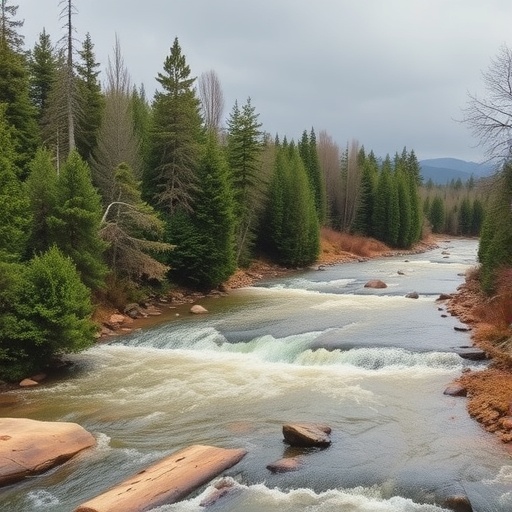
In recent years, the relentless escalation of extreme weather phenomena has wrought profound and often irreversible transformations on riverine ecosystems globally. A comprehensive review published in Nature Reviews Biodiversity sheds light on the increasing incapacity of these freshwater systems to rebound from successive climate-induced stresses. Unlike transient disturbances that ecosystems typically absorb, these accumulating shocks—ranging from severe droughts to compound extreme events—precipitate cascading effects, fundamentally altering ecological structures and the essential services rivers render to human society.
Rivers, complex networks intrinsically linked to their catchments and surrounding environments, are particularly vulnerable because perturbations rarely remain localized. As Professor Tadeu Siqueira of São Paulo State University elucidates, the impacts of an extreme event propagate throughout the entire watershed, undermining biological diversity and system functionality on a vast scale. This interconnectedness makes resilience strategies more challenging, as isolated, site-specific conservation efforts fail to address watershed-wide disruptions.
One of the most alarming features of these extreme events is the intensification and increasing frequency of compound scenarios. For instance, the confluence of drought, heatwaves, and wildfires followed by heavy rainfall produces ecosystem stresses far exceeding the sum of their parts. The Yangtze River experienced a catastrophic plankton collapse in 2022, while California’s Klamath River witnessed mass fish die-offs after sequences of fire and storm events. These exemplars underscore a grim reality: riverine life is confronting stressors that surpass evolutionary adaptive capacities.
Severe droughts at river headwaters represent a critical stress pathway. During prolonged dry spells, sediment-bound organic matter accumulates in exposed riverbeds, only to be abruptly mobilized upon the return of flow. This sudden influx provokes drastic biochemical shifts, including water deoxygenation, which precipitates extensive fish mortality and disrupts hydroelectric power generation. Such disruptions convey direct socio-economic repercussions alongside ecological degradation, highlighting the multifaceted consequences of climatic extremes.
The Amazon basin epitomizes the precarious balance rivers maintain amid intensifying climatic pressures. In 2023, an unprecedented combination of drought and heatwave pushed water temperatures in key Amazonian rivers and lakes beyond known thermotolerance thresholds for aquatic organisms, exceeding 37 °C in many regions, with peak temperatures reaching 41 °C in some water columns. These thermal insults have precipitated mass mortality events among fish and invertebrates, signaling alarm for tropical freshwater biodiversity.
Longitudinal satellite datasets affirm a persistent warming trend in Amazonian waters, averaging an increase of approximately 0.6 °C per decade since the 1990s. This warming trajectory is not solely attributable to atmospheric temperature rises but is also driven by synergistic physical factors. Elevated solar irradiance, diminished water depths, reduced wind-driven mixing, and heightened turbidity aggregate to create microclimates conducive to overheating, thereby accelerating thermal stress on aquatic communities.
Traditional conservation paradigms, centered on protected areas and climate refugia, face limitations under this evolving climatic regime. The protracted and intensifying heatwaves challenge the efficacy of localized strategies, as thermal refuges become increasingly rare or are themselves compromised. As Professor Siqueira advocates, addressing these pressures necessitates a paradigm shift towards proactive, ecosystem-scale management approaches that emphasize resilience and adaptive capacity at the watershed level.
Key proposals involve extensive habitat restoration initiatives aimed at enhancing structural complexity and connectivity within river networks. Maintaining or restoring hydrological connectivity allows for species migration and genetic exchange, buffering populations against localized extinctions. Additionally, safeguarding recharge zones of aquifers is critical for sustaining baseflows during dry periods, mitigating the severity of drought-induced interruptions.
Nature-based solutions constitute another cornerstone of adaptive strategies under consideration. Such approaches utilize ecosystem functions—like riparian vegetation buffers and wetland restoration—to moderate temperature extremes, improve water retention, and enhance overall system resilience. These solutions dovetail with large-scale watershed management goals by integrating ecological principles within human planning frameworks.
Crucially, advancing understanding of extreme weather impacts necessitates enhanced monitoring infrastructure. High-resolution, high-frequency observational programs can capture real-time dynamics during extreme events, offering unprecedented insights into disturbance processes and recovery trajectories. Combining satellite remote sensing with in situ measurements provides a holistic perspective essential for adaptive management.
Long-term ecological research remains indispensable for discerning legacy effects that linger well beyond the initial disturbance. Chronic alterations to community composition, biogeochemical cycling, and ecosystem services underscore that extreme events are not isolated perturbations but drivers of enduring ecological transformation. Investment in sustained research efforts will inform evidence-based policies crucial for safeguarding biodiversity and human well-being.
Collectively, these findings send a clarion call: river ecosystems worldwide stand at a tipping point. Without concerted efforts embracing integrated watershed-scale strategies, the delivery of vital ecosystem services—including potable water provision, fisheries productivity, and flood regulation—faces unprecedented jeopardy. The scientific community urges immediate action to redefine conservation and management paradigms in the face of escalating climatic extremities.
News Publication Date:
19-Feb-2026
Web References:
https://nature.com/articles/s44358-026-00131-7
References:
Tadeu Siqueira et al., Nature Reviews Biodiversity, 2026; DOI: 10.1038/s44358-026-00131-7
Cite Scienmag News
Margaret Porter. (May 20, 2026). Intense Weather Events Endanger River Ecosystems. Scienmag. https://scienmag.com/intense-weather-events-endanger-river-ecosystems/
Margaret Porter. "Intense Weather Events Endanger River Ecosystems." Scienmag, 20 May 2026, https://scienmag.com/intense-weather-events-endanger-river-ecosystems/. Accessed 3 September 2026.
Margaret Porter. "Intense Weather Events Endanger River Ecosystems." Scienmag. May 20, 2026. https://scienmag.com/intense-weather-events-endanger-river-ecosystems/


