


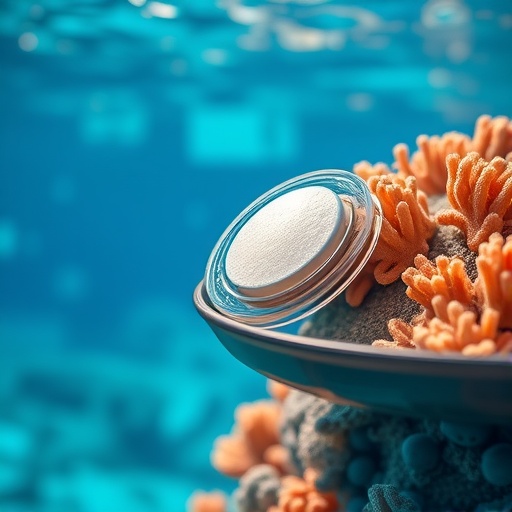
Milan and Genoa, Italy – July 30, 2025 – In a groundbreaking collaboration, scientists from the University of Milano-Bicocca, the Istituto Italiano di Tecnologia (IIT), and the Aquarium of Genoa have unveiled two innovative technologies designed to protect and revitalize our planet’s fragile coral reefs. These innovations—a biodegradable biopaste and an eco-compatible drug-delivery patch—have been successfully tested on live corals, marking a remarkable advance in marine conservation efforts.
Coral reefs, crucibles of marine biodiversity and essential pillars of coastal economies, are under relentless threat from climate change and environmental degradation. These ecosystems not only sustain a myriad of aquatic species but also provide critical resources for fishing industries and tourism. Their ongoing decline poses an urgent challenge to global ecological stability. Against this backdrop, the scientific community is developing advanced, environmentally sensitive solutions that can stimulate reef recovery with precision and sustainability.
The first breakthrough, called “Active Biopaste,” is a biocompatible, fully biodegradable material engineered from modified soybean oil and graphene, blending natural and nanomaterial science. What distinguishes this biopaste is its dual function: it acts as a reliable adhesive substrate for coral fragments and concurrently accelerates coral growth using electrochemical mineralization. Published in Advanced Materials, the research details how this conductive paste anchors coral while supporting Mineral Accretion Technology (MAT) — a process that uses low-intensity electric currents to deposit calcium carbonate, the fundamental mineral of coral skeletons.
During underwater trials, the Active Biopaste remained stable for over 40 days, providing a consistent scaffold for coral adherence. MAT experiments revealed that corals treated with this biopaste exhibited growth rates doubling those of untreated controls within just two weeks. The inclusion of graphene, renowned for its electrical conductivity and mechanical strength, facilitates efficient current passage, driving the mineral deposition that underpins structural coral growth without introducing permanent, pollutive frameworks to the reef environment.
PhD researcher Gabriele Corigliano emphasized the biopaste’s transformative potential: “This material synthesizes two critical needs—secure coral attachment and bioelectric stimulation—into a single, eco-friendly product. Unlike traditional methods relying on metal structures prone to corrosion, our biopaste is inherently biodegradable and safe for marine ecosystems, offering an environmentally responsible tool for rapid reef restoration.”
The multidisciplinary team’s approach aligns closely with the United Nations Sustainable Development Goals, as scaffolded by researcher Marco Contardi, who highlighted their commitment to materials designed specifically for marine applications. “Understanding how such materials behave during use and through degradation stages is pivotal. Our goal is to merge scientific innovation with environmental stewardship,” Contardi affirmed.
Complementing the Active Biopaste, the same collaborative team introduced a sophisticated drug-delivery patch detailed in One Earth. Led by PhD candidate Vincenzo Scribano, this patch targets diseased corals suffering from aggressive tissue necrosis, which severely compromises reef vitality. The patch consists of a hydrophilic film loaded with antibiotics derived from chitosan—a polymer extracted sustainably from shellfish—sealed within a natural hydrophobic coating made from beeswax and plant oils. This dual-layer arrangement ensures localized antibiotic delivery precisely where infection occurs, minimizing drug dispersion in marine waters and mitigating ecological side effects commonly associated with underwater treatments.
In controlled aquarium conditions, this drug-delivery system successfully halted disease progression in over 90% of treated coral specimens. Scribano underscores the patch’s precision and eco-compatibility: “By limiting antibiotic release exclusively to afflicted areas while forming a protective natural barrier, we curb the proliferation of harmful pathogens and protect marine life from unnecessary exposure.”
Principal Investigator Athanassia Athanassiou reflects on the broader implications of this research: “Our work exemplifies a responsible design ethos, emphasizing the use of natural, biodegradable materials that actively support coral health and biodiversity. It is imperative that solutions developed for marine environments account for their full lifecycle impacts, ensuring sustainability at every phase.”
These technologies build upon a history of innovative marine conservation at the University of Milano-Bicocca and IIT, including prior successes with curcumin—an antioxidant from turmeric—used to alleviate coral bleaching. Such advances are nurtured within the MaRHE Center at the Aquarium of Genoa, an institution uniquely equipped to conduct rigorous testing while maintaining exemplary animal welfare and environmental conditions.
The synergy of material science, marine biology, and ecology showcased in this research heralds a new era of intervention strategies that move beyond mere protection to active restoration. By harmonizing cutting-edge materials engineering with ecological principles, this work offers hope for coral reefs worldwide—fragile ecosystems that act as sentinels of ocean health.
As climate change continues to impose severe stress on marine environments, solutions like Active Biopaste and targeted antibiotic patches embody the blend of innovation and responsibility needed to combat ecological crises. This interdisciplinary research provides a scalable, sustainable blueprint for future coral reef conservation that respects the intricacies of marine ecosystems.
In the face of mounting environmental pressures, the Italian team’s pioneering technologies signify a critical advancement. The integration of bioelectric stimulation with biodegradable adhesives, alongside targeted drug delivery through natural films and sealants, represents a promising pathway to safeguard marine biodiversity and support the restoration of these invaluable underwater habitats.
- Advanced Materials article on Active Biopaste
- One Earth article on drug-delivery patch
Image Credits: IIT-University Milano-Bicocca-Acquario di Genova
Keywords: Marine ecology, Ecosystems, Climate change, Climate change mitigation, Aquatic ecosystems, Materials
Cite Scienmag News
Margaret Porter. (August 2, 2025). Innovative Coral Protection from Italy: Conductive Biopaste and Natural Healing Patch Unveiled. Scienmag. https://scienmag.com/innovative-coral-protection-from-italy-conductive-biopaste-and-natural-healing-patch-unveiled/
Margaret Porter. "Innovative Coral Protection from Italy: Conductive Biopaste and Natural Healing Patch Unveiled." Scienmag, 2 August 2025, https://scienmag.com/innovative-coral-protection-from-italy-conductive-biopaste-and-natural-healing-patch-unveiled/. Accessed 4 September 2026.
Margaret Porter. "Innovative Coral Protection from Italy: Conductive Biopaste and Natural Healing Patch Unveiled." Scienmag. August 2, 2025. https://scienmag.com/innovative-coral-protection-from-italy-conductive-biopaste-and-natural-healing-patch-unveiled/


