


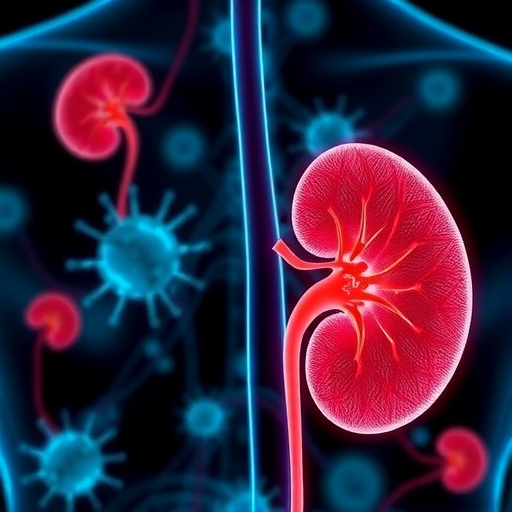
In a groundbreaking advancement set to revolutionize the field of organ transplantation, researchers at the University of Pennsylvania have successfully leveraged chimeric antigen receptor (CAR) T-cell therapy to enable kidney transplants in patients previously deemed impossible to match with donor organs. This pioneering clinical trial focuses on patients with end-stage kidney disease who are highly sensitized, a condition where their immune systems contain high levels of antibodies against potential donor kidneys, effectively barring them from transplantation.
Highly sensitized patients pose one of the most significant challenges in kidney transplantation today. Their immune systems are primed to reject most donor kidneys due to the presence of harmful alloantibodies, which are produced in response to prior transplants, blood transfusions, or pregnancies. This heightened immune response is quantified using a measure called the Calculated Panel Reactive Antibody (cPRA) score. Patients scoring above 99.9% on this scale have compatibility with fewer than one in one thousand donor kidneys, often languishing for years on transplant waiting lists without viable options.
Traditionally, attempts to desensitize these patients have involved plasma exchange therapies or immunosuppressive drugs aimed at reducing circulating antibodies. However, such approaches frequently fail to provide durable antibody suppression in the most sensitized individuals, leaving their transplant prospects bleak. The innovative approach developed by Penn Medicine researchers offers a promising new pathway by directly targeting and eliminating the immune cells responsible for antibody production.
The breakthrough hinges on the repurposing of CAR T-cell therapy, a method originally developed to combat certain blood cancers by engineering patients’ T cells to seek out and destroy malignant cells. In this trial, two distinct CAR T-cell populations were created: CD19-targeted CAR T cells, which obliterate B cells that form immune memory, and BCMA-targeted CAR T cells, which deplete plasma cells responsible for producing antibodies. This dual targeting effectively removes both the cellular sources of harmful kidney-targeting antibodies and offers a form of immune system “reset.”
The Phase I clinical trial, coordinated among Penn Medicine, NYU Langone, and Mass General, reports on two patients with cPRA scores near 100 percent, both of whom had been on waiting lists for several years without a single viable match. Post-treatment, these patients experienced profound reductions in deleterious antibody levels, opening the door to successful kidney transplantation. Not only did the antibody levels drop, but both patients maintained these improvements over time, with no evidence of antibody resurgence or rejection of the newly transplanted organs—outcomes previously unattainable in this demographic.
Safety profiles from the trial were encouraging. Unlike cancer patients undergoing CAR T-cell therapies who sometimes experience severe adverse effects such as cytokine release syndrome or neurotoxicity, these kidney disease patients tolerated the treatments well. The depletion of B cells and plasma cells was transient, and the immune system began to recover as anticipated, highlighting a careful balance between effective desensitization and overall immune competence.
One of the patients benefiting from this novel approach, Andrew Boyd from Philadelphia, encapsulates the transformative potential of this therapy. Living with focal segmental glomerulosclerosis since age 14, Boyd endured two failed kidney transplants and faced the grim certainty of a third transplant being out of reach due to his extreme sensitization. Upon receiving the dual CAR T-cell therapy, his antibody levels dropped sufficiently to receive a compatible kidney, restoring hope and marking a new chapter in his lifelong battle with kidney disease.
This achievement underscores the power of interdisciplinary collaboration, drawing expertise from transplant surgery, nephrology, hematology, oncology, and immunology. The seamless integration of these fields enables a new frontier in transplant medicine, where cellular immunotherapies can be tailored beyond oncology to solve historically intractable problems such as sensitization.
Looking ahead, subsequent phases of the trial aim to refine dosage, enroll more patients, and evaluate long-term safety and effectiveness. The prospect of expanding this therapy could dramatically increase the pool of eligible kidney transplant recipients, potentially saving thousands of lives annually and alleviating the immense pressure on organ donation systems.
The success of this trial also aligns with a broader trajectory of medical innovation at Penn Medicine, renowned for its leadership in CAR T-cell cancer therapies and its contributions to mRNA vaccine technology. By translating such cutting-edge cellular therapies to transplant immunology, the institution continues to push the boundaries of how immune modulation can restore health in previously untreatable conditions.
Funding from the National Institute of Allergy and Infectious Diseases and partnerships such as Blood Cancer United have been instrumental in making this transformative research possible, underscoring the essential role of sustained investment and collaboration in delivering breakthroughs to patients.
This story of scientific ingenuity and patient resilience offers a compelling glimpse into a future where immune-engineered therapies redefine the limits of organ transplantation, promising hope for countless patients who have long awaited a lifeline.
News Publication Date:
2025
Web References:
https://www.hrsa.gov/optn/data/allocation-calculators/cpra-calculator
https://www.pennmedicine.org/news/fda-approves-personalized-cellular-therapy-for-advanced-leukemia
References:
Published findings in the New England Journal of Medicine; Clinical trial registration NCT06056102.
Cite Scienmag News
Nathaniel Bowman. (June 3, 2026). Innovative CAR T Therapy Offers New Hope for Kidney Transplant Candidates. Scienmag. https://scienmag.com/innovative-car-t-therapy-offers-new-hope-for-kidney-transplant-candidates/
Nathaniel Bowman. "Innovative CAR T Therapy Offers New Hope for Kidney Transplant Candidates." Scienmag, 3 June 2026, https://scienmag.com/innovative-car-t-therapy-offers-new-hope-for-kidney-transplant-candidates/. Accessed 4 September 2026.
Nathaniel Bowman. "Innovative CAR T Therapy Offers New Hope for Kidney Transplant Candidates." Scienmag. June 3, 2026. https://scienmag.com/innovative-car-t-therapy-offers-new-hope-for-kidney-transplant-candidates/


