


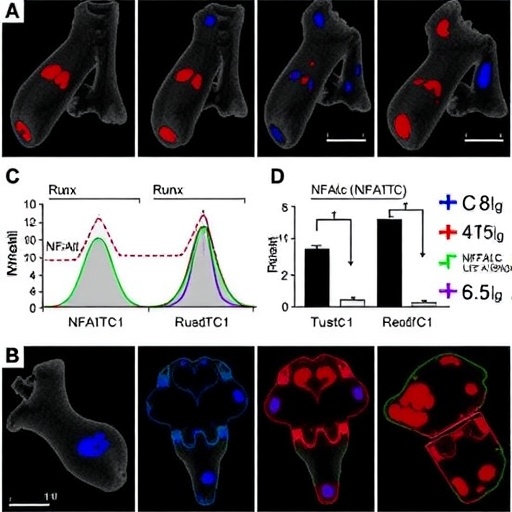
A molecular switch that controls both bone destruction and bone formation may offer a new way to treat postmenopausal osteoporosis, according to a study published in Experimental & Molecular Medicine. Researchers Lee, Lee, Kim and colleagues report that a process known as neddylation regulates two powerful transcription factors, NFATc1 and Runx2, which govern the opposing activities of osteoclasts and osteoblasts. Their findings point toward a dual-action therapeutic strategy designed not only to slow the loss of bone but also to support the cells responsible for rebuilding it.
Postmenopausal osteoporosis develops largely because the decline in estrogen disrupts the normal balance of bone remodeling. Throughout life, old or damaged bone is removed by osteoclasts and replaced by new tissue produced by osteoblasts. Estrogen deficiency can shift this equilibrium toward excessive resorption, weakening the skeleton and increasing the risk of fractures. Existing treatments can reduce osteoclast activity or stimulate bone formation, but therapies that coordinate both sides of the remodeling cycle remain an important scientific goal.
The new study focuses on neddylation, a biochemical modification in which the small protein NEDD8 is attached to target proteins. Similar to ubiquitination, neddylation can alter a protein’s stability, location, activity or interactions with other molecules. It is controlled by an enzyme system that includes NEDD8-activating, conjugating and ligating enzymes. Because this pathway influences the behavior of many regulatory proteins, abnormal neddylation has been linked to several diseases, including cancer, inflammatory disorders and abnormalities of cellular differentiation.
In bone biology, the researchers examined how neddylation affects NFATc1, a central regulator of osteoclast development. Osteoclasts arise from precursor cells in the monocyte–macrophage family and become specialized, multinucleated cells capable of dissolving mineralized bone. Signals such as receptor activator of nuclear factor κB ligand, or RANKL, activate transcriptional programs that drive this transformation. NFATc1 is widely regarded as a master transcription factor in that process because it turns on genes required for osteoclast formation, maturation and bone-resorbing function.
The study also investigated Runx2, a transcription factor essential for osteoblast differentiation. Osteoblasts originate from mesenchymal stem and progenitor cells and produce the collagen-rich matrix that later becomes mineralized. Runx2 activates genes associated with the osteoblast identity and is necessary for the progression of bone-forming cells. The opposing roles of NFATc1 and Runx2 make them attractive molecular landmarks for studying how the skeleton decides whether to remove existing tissue or build new tissue.
According to the researchers, neddylation functions as a regulatory layer for both factors, linking a shared biochemical pathway to the contrasting activities of osteoclasts and osteoblasts. By influencing NFATc1, the pathway can affect the genetic program that enables osteoclasts to resorb bone. Through Runx2, it can also influence the differentiation and activity of osteoblasts. This connection is significant because a treatment aimed at only one cell type may leave the underlying imbalance unresolved: suppressing resorption without restoring formation can limit recovery, while stimulating formation without controlling excessive resorption may produce an incomplete response.
The concept of targeting neddylation therefore offers a potential “two-for-one” approach to osteoporosis. Rather than treating NFATc1 and Runx2 as isolated targets, researchers propose manipulating the upstream modification system that helps regulate both. In principle, carefully calibrated intervention could restrain the molecular signals that generate overly active osteoclasts while preserving or enhancing the Runx2-dependent program of osteoblast development. Such an approach could be particularly valuable in postmenopausal disease, where accelerated resorption and inadequate replacement occur simultaneously.
However, neddylation is not exclusive to bone cells. The same pathway participates in fundamental processes such as protein turnover, cell-cycle control, stress responses and gene regulation across many tissues. That broad biological reach means that any drug designed to alter neddylation would need to achieve sufficient selectivity, dose control and tissue safety. A systemic inhibitor could potentially affect healthy cells, while a bone-directed therapy might need to exploit differences in enzyme expression, cellular uptake or disease-associated signaling between skeletal and non-skeletal tissues.
The findings establish a mechanistic rationale for further research rather than an immediately available treatment. Future studies will need to determine how neddylation changes in human postmenopausal bone, identify the precise molecular sites modified on NFATc1 and Runx2, and test whether manipulating the pathway improves bone density and strength in relevant disease models. Researchers will also need to establish whether the effects differ between cortical and trabecular bone, how the pathway interacts with current osteoporosis medications, and whether long-term modulation can avoid unwanted effects elsewhere in the body. If those challenges can be addressed, neddylation may become a promising dual-action target for restoring the balance between bone removal and bone formation.
Cite Scienmag News
Nathaniel Bowman. (August 3, 2026). Neddylation of NFATc1/Runx2 balances bone remodeling, offering dual-action therapy for postmenopausal osteoporosis. Scienmag. https://scienmag.com/neddylation-of-nfatc1-runx2-balances-bone-remodeling-offering-dual-action-therapy-for-postmenopausal-osteoporosis/
Nathaniel Bowman. "Neddylation of NFATc1/Runx2 balances bone remodeling, offering dual-action therapy for postmenopausal osteoporosis." Scienmag, 3 August 2026, https://scienmag.com/neddylation-of-nfatc1-runx2-balances-bone-remodeling-offering-dual-action-therapy-for-postmenopausal-osteoporosis/. Accessed 3 September 2026.
Nathaniel Bowman. "Neddylation of NFATc1/Runx2 balances bone remodeling, offering dual-action therapy for postmenopausal osteoporosis." Scienmag. August 3, 2026. https://scienmag.com/neddylation-of-nfatc1-runx2-balances-bone-remodeling-offering-dual-action-therapy-for-postmenopausal-osteoporosis/


