


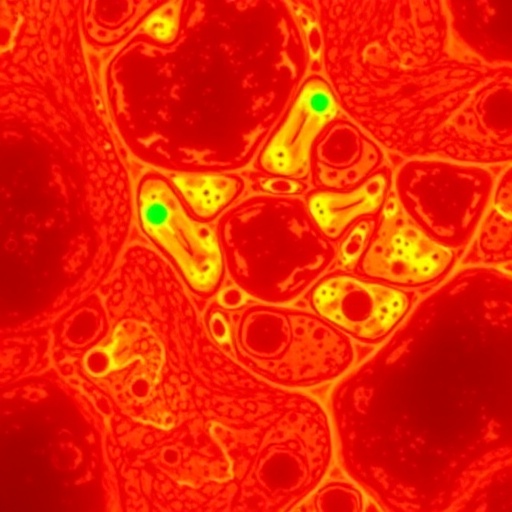
Retinoblastoma, the most common malignant eye tumour in children, has become a new focus of research into the regulatory DNA elements that can make cancer cells unusually aggressive. A study by Guo, Dai, Li and colleagues, published in the British Journal of Cancer, identifies a connection between the kinase CDK12 and the “super-enhancer” landscape of retinoblastoma. The findings place gene regulation—rather than changes in protein-coding genes alone—at the centre of an important question: how do tumour cells activate the programmes that allow them to grow, survive and progress?
Super-enhancers are unusually large and highly active clusters of regulatory DNA. Unlike conventional enhancers, which generally influence the expression of individual genes, super-enhancers can coordinate the activity of gene networks that define a cell’s identity or behaviour. They are occupied by large assemblies of transcription factors, co-activators and chromatin regulators, creating powerful control hubs around genes involved in development, proliferation and disease. In cancer, these regulatory regions can be rewired so that oncogenic programmes remain continuously switched on.
CDK12, or cyclin-dependent kinase 12, is an enzyme that modifies proteins involved in transcription. It is best known for supporting the production and processing of long RNA molecules, including transcripts from genes that help repair damaged DNA. Because CDK12 influences how transcription proceeds across the genome, changes in its activity could affect more than a small set of targets. The study’s central proposition is that CDK12 also helps shape the regulatory environment surrounding super-enhancers in retinoblastoma, thereby influencing the expression of genes that promote tumour progression.
This is a significant shift in perspective. Retinoblastoma is strongly associated with disruption of the RB1 tumour-suppressor pathway, but the loss of a tumour-suppressor gene does not by itself explain every feature of tumour behaviour. Cancer cells must also activate developmental and survival circuits, adapt to stress and acquire the capacity to invade surrounding tissue or spread beyond the eye. Super-enhancers offer a plausible mechanism for this coordination because they can bring multiple regulatory signals together and maintain high levels of transcription across entire biological programmes.
By examining the relationship between CDK12 and these regulatory regions, the researchers provide a framework for understanding how transcriptional control may reinforce retinoblastoma progression. The work is not simply about whether a particular gene is switched on or off. It concerns the organisation of the genome itself: which stretches of DNA are accessible, which proteins occupy them, how strongly nearby genes are transcribed and how these elements change as tumour cells become more advanced. This type of regulatory mapping can reveal vulnerabilities that may remain invisible in conventional analyses of DNA mutations.
The focus on CDK12 is also relevant to the broader field of precision oncology. Enzymes that regulate transcription are potentially druggable, and CDK12 has attracted interest because cancer cells may depend on it to sustain the expression of genes needed for continued growth or genome maintenance. However, blocking such an enzyme could affect healthy tissues as well as malignant cells. Any treatment strategy would therefore require careful attention to dose, tumour selectivity and the developmental sensitivity of children, whose organs and visual systems are still maturing.
The study may ultimately help explain why tumours with similar initiating genetic lesions can behave differently. Two retinoblastoma cells may carry comparable defects in a core tumour-suppressor pathway yet display distinct patterns of enhancer activity and gene expression. Those differences could influence proliferation, resistance to therapy and the likelihood of disease spreading along the optic nerve or elsewhere. A CDK12-controlled super-enhancer network could serve as a molecular signature of aggressive disease, although such a possibility would need to be tested in larger patient cohorts and independently validated.
The findings also highlight the importance of treating the genome as a dynamic regulatory system. Cancer progression is driven not only by mutations but also by epigenetic and transcriptional changes that determine which genetic instructions are read. Super-enhancers can be particularly sensitive to perturbations in transcriptional machinery, making them attractive targets for therapies designed to collapse abnormal gene-expression programmes. Yet the same sensitivity creates challenges: regulatory regions may be shared by tumour cells and normal developmental tissues, and disrupting them could produce serious side effects.
For now, the work establishes CDK12-regulated super-enhancer activity as an important direction in retinoblastoma research rather than an immediate clinical treatment. The next steps will include defining the precise genes controlled by these regulatory domains, determining whether CDK12 inhibition selectively weakens tumour cells and testing combinations with existing therapies. If those studies confirm that the pathway is both essential and therapeutically accessible, the super-enhancer landscape could become a source of biomarkers and new drug targets. More broadly, the research illustrates how understanding the architecture of gene regulation may reveal new ways to confront childhood cancers that cannot be explained by mutations alone.
Cite Scienmag News
Nathaniel Bowman. (August 3, 2026). CDK12-Regulated Super-Enhancers Drive Retinoblastoma Progression. Scienmag. https://scienmag.com/cdk12-regulated-super-enhancers-drive-retinoblastoma-progression/
Nathaniel Bowman. "CDK12-Regulated Super-Enhancers Drive Retinoblastoma Progression." Scienmag, 3 August 2026, https://scienmag.com/cdk12-regulated-super-enhancers-drive-retinoblastoma-progression/. Accessed 3 September 2026.
Nathaniel Bowman. "CDK12-Regulated Super-Enhancers Drive Retinoblastoma Progression." Scienmag. August 3, 2026. https://scienmag.com/cdk12-regulated-super-enhancers-drive-retinoblastoma-progression/


