


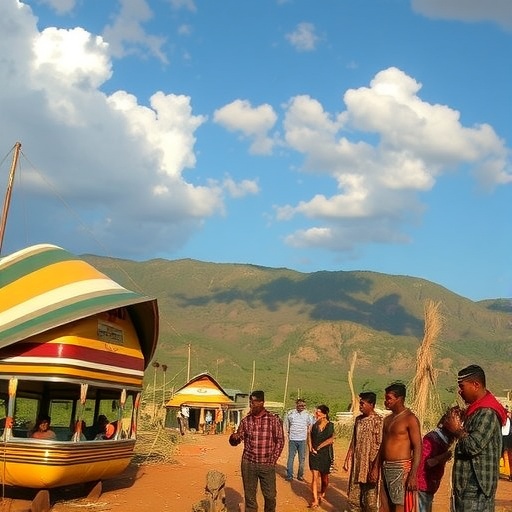
In Chile, returning historically seized land to Indigenous communities has changed how that land is used—but not in the uniformly “green” way that many environmental narratives predict. A new study of more than 510,000 acres restored to the Mapuche, Chile’s largest Indigenous group, finds that restitution increased pastureland and reduced non-native tree plantations, while leaving native forest cover, biodiversity, carbon storage and erosion control largely unchanged. The results offer one of the clearest tests yet of what happens when land moves from outside ownership back into the hands of its traditional stewards. They also challenge the assumption that Indigenous land restitution automatically produces environmental gains. Instead, the research shows that returning land primarily empowers communities to make decisions according to their own cultural, economic and social priorities.
The Mapuche controlled large areas of what is now southern Chile and remained independent from the Spanish Empire for centuries. Their sovereignty ended after military campaigns by Chile and Argentina between 1860 and 1881. Following their defeat, Mapuche territory was annexed, communities were forcibly relocated and their remaining lands were confined to nearly 3,000 reservations. Over the following century, Mapuche communities pursued legal, political and sometimes confrontational efforts to recover their ancestral territories. Chile’s 1993 Indigenous Law created a formal framework for addressing historical land claims and supporting Indigenous development. One component of that law established a land acquisition and restitution program through which properties could be purchased and transferred into collective Indigenous ownership.
Between 1994 and 2023, the program returned approximately 510,000 acres to Mapuche communities. The scale and timing of the transfers created an unusual opportunity for researchers to measure their consequences. The central challenge was causal: once land has been returned, researchers cannot directly observe what would have happened if the transfer had never taken place. This missing alternative is known as the counterfactual. To approximate it, the research team organized parcels into cohorts according to when restitution occurred and compared land that had already been returned with similar parcels still awaiting transfer. The analysis covered 1,577 parcels and combined administrative records with satellite observations of land cover, productivity and environmental conditions.
Satellite imagery allowed the researchers to track changes across large and sometimes remote landscapes over time. Rather than relying only on interviews or property records, the team could measure whether areas were covered by pasture, native forest or commercial plantations and determine how those categories shifted after restitution. The researchers also incorporated estimates of carbon sequestration, biodiversity and erosion control developed through earlier work. These measures are technically different but interconnected. Carbon sequestration reflects how much atmospheric carbon vegetation and soils can retain. Biodiversity estimates capture the habitat value and ecological composition of the landscape, while erosion-control indicators assess how effectively vegetation and land cover reduce the loss of soil through wind and water. Together, they provided a broader test of whether restitution altered ecosystem function.
The most visible changes were linked to land uses with direct economic and cultural importance to Mapuche communities. After restitution, the extent of pasture increased by about 4.5 percent, while non-native forest plantations declined by 18 percent. In southern Chile, plantations of introduced trees such as eucalyptus and pine support a major commercial forestry industry. Mapuche communities have frequently protested these plantations, citing concerns about land dispossession, water use, ecological damage and the replacement of native landscapes with industrial monocultures. The reduction in plantation cover therefore represents more than a change in vegetation visible from space. It indicates that returning land gave communities greater power to reject or reverse a land-use model imposed during periods when they lacked control over their territories.
At the same time, native forests did not expand significantly after restitution. That result surprised the researchers because native forests hold deep cultural importance for the Mapuche and are often associated with stronger ecological outcomes. The study also found no statistically significant improvement in the expected carbon storage, biodiversity or erosion control of returned parcels. These findings do not mean that Mapuche communities are indifferent to conservation or that native forests have no value. Instead, they show that restitution and ecological restoration are not identical processes. Much of the returned land had already been transformed by generations of non-Indigenous ownership and commercial use. Some parcels were also located far from the communities that received them, making intensive management or restoration difficult.
The increase in pasture reflects the long-standing importance of livestock to Mapuche livelihoods. Mapuche communities rapidly adopted horses, firearms and cattle ranching during the colonial period, and these technologies helped them maintain independence from Spanish power. Livestock raising has remained central to many communities’ economies and cultural practices. From this perspective, expanding pasture is not evidence that restitution failed environmentally; it is evidence that communities used restored land for purposes they considered valuable. Environmental assessments based only on forest expansion or carbon gains can overlook the importance of food production, income, autonomy and cultural continuity. Land restitution is fundamentally a political and historical intervention before it is an environmental one.
The study’s findings distinguish restitution from another widely studied form of Indigenous land governance: the formal titling of territories that have remained under continuous Indigenous use. In those cases, communities may retain established institutions, ecological knowledge and patterns of stewardship across landscapes they have never lost. Restituted land presents a different challenge. It may have been heavily modified, fragmented or planted with commercial trees, and the people receiving it may now live elsewhere or lack the financial resources needed to restore it. As a result, research showing positive environmental outcomes on continuously Indigenous-managed territories cannot automatically be applied to lands recovered after generations of dispossession.
The researchers argue that countries seeking both justice and environmental protection should pair restitution with additional policies rather than treating ownership transfer as a complete solution. Payments for ecosystem services, restoration grants, technical assistance and long-term conservation partnerships could help communities undertake projects that are expensive but environmentally beneficial. Replanting native forests, rehabilitating degraded soils, protecting watersheds and managing invasive species can require labor, equipment and years of investment. Without direct support, communities may understandably prioritize activities that generate immediate livelihood benefits. Complementary programs would need to respect Indigenous decision-making rather than imposing outside conservation goals, ensuring that environmental funding strengthens self-determination instead of recreating the control that restitution was intended to undo.
The Chilean case also raises questions about the rules governing Indigenous properties after they are returned. Chile’s Indigenous Law restricts the sale, leasing and mortgaging of these lands, helping preserve collective ownership but potentially limiting access to credit, investment and alternative economic opportunities. The research team is now examining how these restrictions affect economic development, environmental management and the degree of control communities can exercise over their territories. For governments around the world responding to historical dispossession and international commitments such as the United Nations Declaration on the Rights of Indigenous Peoples, the message is clear: land restitution can repair injustice and expand Indigenous authority, but its environmental consequences will depend on what communities inherit, what choices they make and whether they receive the resources needed to shape the future of damaged landscapes.
Web References: https://www.nature.com/articles/s41893-026-01876-x; https://news.ucsb.edu/2020/019951/forgetting-forest-trees
References: Nature Sustainability study, “Environmental impacts of Indigenous land restitution in Chile,” published 16-Jul-2026
Cite Scienmag News
Margaret Porter. (August 12, 2026). Indigenous land restitution empowers communities, but environmental gains need additional support. Scienmag. https://scienmag.com/indigenous-land-restitution-empowers-communities-but-environmental-gains-need-additional-support/
Margaret Porter. "Indigenous land restitution empowers communities, but environmental gains need additional support." Scienmag, 12 August 2026, https://scienmag.com/indigenous-land-restitution-empowers-communities-but-environmental-gains-need-additional-support/. Accessed 3 September 2026.
Margaret Porter. "Indigenous land restitution empowers communities, but environmental gains need additional support." Scienmag. August 12, 2026. https://scienmag.com/indigenous-land-restitution-empowers-communities-but-environmental-gains-need-additional-support/


