


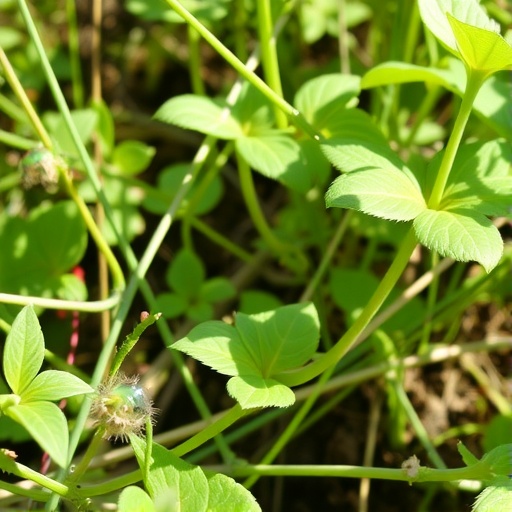
In a recent study published in the journal “Environmental Monitoring and Assessment,” researchers led by Gruss et al. have unveiled startling insights regarding the ecotoxicological repercussions of pesticides on non-target plant species. This crucial research highlights an often-overlooked aspect of pesticide application and its broader implications on biodiversity, primarily focusing on non-target flora that play a significant role in maintaining ecological balance. As agricultural practices ramp up worldwide, the consequences of chemical exposure to these plants are more pressing than ever.
The investigation utilized a range of non-target plant species, chosen for their commonality in diverse ecosystems, to assess the negative impacts of various pesticides. The methodology involved exposing these plants to several pesticide formulations to ascertain the biochemical and physiological consequences. The implications of such exposure include not just immediate harm, but also long-term effects that could dramatically alter plant health and viability.
One of the primary objectives of the study was to establish a correlation between pesticide exposure and observable changes in plant vitality. This encompassed a variety of parameters including growth metrics, photosynthetic activity, and overall biomass accumulation. The researchers employed intricate experimental setups to ensure that their data would adequately reflect the real-world conditions under which these non-target plants would typically thrive, thus bridging lab results with field applications.
Interestingly, the findings revealed that different classes of pesticides exhibited markedly different levels of toxicity toward non-target plant species. For instance, herbicides, which are designed to eliminate unwanted flora, were shown to have particularly severe effects on specific plant families, leading to stunted growth and diminished reproductive success. Conversely, other pesticide types had more subdued effects, suggesting that not all chemical agents carry the same ecological risks.
Furthermore, Gruss and her team examined the biochemical pathways affected by pesticide exposure, identifying shifts in important metabolic processes. Alterations in photosynthetic efficiency, for instance, could lead to a cascade of detrimental effects, not just for the plant itself but also for the animal species relying on them for food and habitat. Such disruptions could lead to a reduction in overall plant community biodiversity, with far-reaching implications for the entire ecosystem.
In addition to growth and metabolic assessments, the researchers conducted molecular analyses to gauge the oxidative stress levels in the plants. They measured the accumulation of reactive oxygen species (ROS), which serve as indicators of cellular damage. The results indicated that certain pesticides can induce significant oxidative stress, resulting in compromised cellular function and potential cell death.
The relevance of this research extends beyond the laboratory and into the field, as agricultural practices often prioritize crop yield over ecological health. The study posits that by understanding the specific vulnerabilities of non-target plants, farmers and policymakers might develop strategies to mitigate these effects. This could involve integrated pest management practices that balance pest control needs with ecological health considerations.
Moreover, the researchers recommend an urgent need for policy reform in pesticide regulation, emphasizing the importance of comprehensive assessments that consider not just target organisms but the entire ecosystem. This could foster an agricultural paradigm that is more mindful of biodiversity and the critical roles various plants play in ecological resilience.
With statistics indicating that pesticide usage globally is on the rise, the urgency of this research cannot be overstated. Biodiverse ecosystems provide invaluable services including pollination, soil fertility, and climate regulation. Protecting non-target plant species is imperative for sustaining these ecosystem services, which are essential for human survival.
Additionally, the study opens avenues for further research into alternative pest control methods that are less harmful to non-target species. Biopesticides derived from natural organisms, for instance, could provide effective pest management without the ecological cost associated with synthetic pesticides. Moreover, ecological farming practices, including crop rotation and the use of cover crops, can significantly reduce dependency on chemical pesticides.
Given the complexity of ecological interactions, future research should continue to delve into not only the direct effects of pesticides on individual species but also their cascading impacts throughout food webs. This holistic perspective is crucial for understanding the broader ecological consequences of our agricultural choices.
As we move toward more sustainable agricultural practices, the insights provided by Gruss and her colleagues serve as vital guidelines for aligning pest management strategies with ecological health. The intertwining relationship between agriculture and the environment must be carefully navigated to ensure that neither is unduly compromised in pursuit of the other.
In conclusion, the groundbreaking findings from this ecotoxicological research underscore the critical necessity for a paradigm shift in our approach to pesticide usage. As we face the reality of global food production pressure, understanding and mitigating the effects of these chemicals on non-target plant species is paramount for safeguarding biodiversity and the essential functions that plants fulfill in our ecosystems.
Gruss, I., Bączek, P., Ćwieląg-Piasecka, I. et al. Assessing the ecotoxicological effects of pesticides on non-target plant species.
Environ Monit Assess 197, 1047 (2025). https://doi.org/10.1007/s10661-025-14532-2
Cite Scienmag News
Violet Maxwell. (August 27, 2025). Impact of Pesticides on Non-Target Plants Explored. Scienmag. https://scienmag.com/impact-of-pesticides-on-non-target-plants-explored/
Violet Maxwell. "Impact of Pesticides on Non-Target Plants Explored." Scienmag, 27 August 2025, https://scienmag.com/impact-of-pesticides-on-non-target-plants-explored/. Accessed 7 September 2026.
Violet Maxwell. "Impact of Pesticides on Non-Target Plants Explored." Scienmag. August 27, 2025. https://scienmag.com/impact-of-pesticides-on-non-target-plants-explored/


