


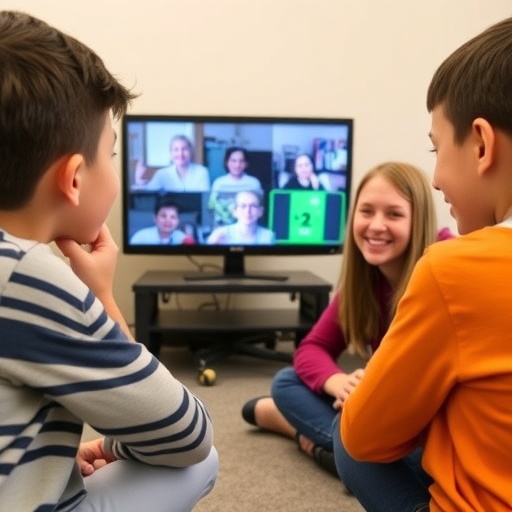
Teletherapy has become a fixture of child and adolescent mental healthcare since the COVID-19 pandemic, yet the young people who use it and their parents have rarely been asked what scientists should actually be studying about it. A new survey from Germany now fills that gap, revealing that families rate research on treatment effectiveness, the therapeutic relationship, side effects, and safety and privacy as highly important priorities for future studies of video-based psychotherapy. The findings, published in Child Psychiatry & Human Development, offer researchers a patient-centered roadmap for designing clinical trials of remote mental health treatment at a time when the technology is spreading faster than the evidence base supporting it.
An estimated ten to fifteen percent of children and adolescents have at least one diagnosable mental disorder requiring treatment, but even in high-income countries most of them never receive care. Logistical barriers and the limited availability of professional help are among the key obstacles. Real-time, interactive videoconferencing has been proposed as a way to reach young people in underserved areas, and its use increased dramatically after the pandemic made remote delivery a necessity. Surveys of child therapists suggest that nearly half either prefer video-based treatment or consider it equivalent to face-to-face services, and studies of clinicians’ experiences indicate that video delivery can enhance accessibility and be cost-effective. At the same time, therapists have flagged persistent challenges: difficulties establishing and maintaining the therapeutic relationship through a screen, the absence of toys and materials used in conventional psychotherapy, privacy concerns when children connect from home, and technological disruptions that interfere with communication.
The scientific evidence on whether video-based psychotherapy actually works for children and adolescents remains thin. A meta-analysis found that video-based interventions were as effective as traditional in-person interventions in reducing mental health symptoms and functional impairments, but the authors of the new study caution that this conclusion should be regarded as preliminary. Only twelve randomized controlled trials fed into that analysis, and just six of them directly compared video-based treatment with in-person care. Sample sizes ranged from eighteen to sixty participants, underscoring the need for large-scale, methodologically robust trials. Crucially, none of those trials involved patients or patient representatives in their design, an omission that matters because research questions chosen by investigators without lived experience may overlook the outcomes that matter most to the people receiving care.
To address this blind spot, a research team led by Elena von Wirth of Trier University, together with colleagues at the University of Cologne and several other German institutions, conducted a survey among young people aged eleven to eighteen who had experience with outpatient psychotherapy, and among their parents or caregivers. The study received ethical approval from the Medical Faculty at the University of Cologne and was pre-registered in the German Clinical Trials Register. Seven university outpatient clinics across Germany distributed paper surveys to at least forty eligible patients each, while posters and flyers with QR codes directed respondents to an online version hosted on REDCap. Between February and July 2024, thirty-three youths and thirty-four parents completed surveys that met the inclusion criteria. Roughly forty-two percent of the young respondents and forty-four percent of the parents reported direct experience with at least one videoconference-delivered psychotherapy session.
The survey presented respondents with seven pre-defined research questions, each rated on a five-point scale from “not at all important” to “extremely important,” with scores of three or higher interpreted as high perceived importance. The questions covered the quality of the therapeutic relationship—whether children can speak openly and feel well understood by their therapist during video sessions—treatment effectiveness, unwanted side effects, how sessions can be delivered in an engaging and varied way, and safety and privacy. An eighth, open-ended item invited respondents to propose additional topics. The items were formulated by the core research team based on their own clinical experience, recent research trends such as studies on the side effects of psychotherapy, and informal interviews with service users who had participated in a previous trial comparing face-to-face and video-based cognitive behavioral therapy.
The results were revealing. Youths rated the importance of research questions between a mean of 2.5 and 3.2, with items on effectiveness, the therapeutic relationship, side effects, and safety all exceeding the high-importance threshold. Parents rated the items between 2.6 and 3.5, with the question of whether children feel well understood by their therapist scoring highest of all. A repeated-measures analysis of variance with planned contrasts confirmed statistically significant differences among the items for both groups. For youths, the item on engaging and varied delivery scored significantly lower than the rest, with a mean difference of minus 0.71. For parents, the therapeutic understanding item scored significantly higher, with a mean difference of 0.34, while the engagement item again scored significantly lower, at minus 0.76. In plain terms: parents most want scientists to confirm that the therapist-child bond survives the screen, and both groups consider questions about making sessions entertaining to be the least urgent.
The open-ended responses added nuance. One youth suggested the videoconference software should include an interactive whiteboard, while another proposed research into which therapist behaviors ensure effective treatment. Among the five parents who wrote comments, one questioned whether a “true” relationship between child and therapist can be built through video at all, and another raised two additional topics: which delivery format children with experience of both would prefer, and whether video-based treatment functions as a low-threshold intervention that genuinely improves access to healthcare. Notably, ninety-seven percent of youths and ninety-four percent of parents did not propose additional research topics, which the authors interpret as a sign that the seven pre-defined questions covered most respondents’ concerns, though they acknowledge that qualitative interviews might have drawn out more.
Experience with video therapy shaped responses in instructive ways. Youths who had actually received video-based sessions rated the importance of research on treatment effectiveness substantially higher than those who had not, with means of 3.71 versus 2.89 and a large effect size of 0.95. They also rated the engagement question more highly, at 2.86 versus 2.22, suggesting that firsthand experience with remote sessions breeds awareness of the need to evaluate how they are delivered. Parent ratings, by contrast, showed no association with their child’s prior video-treatment experience. The researchers also examined age and gender effects: child age was largely unrelated to responses, except that parents of younger children rated effectiveness research as more important, and the skewed gender distribution of the youth sample—only five boys among thirty-three respondents—precluded a statistical analysis of gender differences in patient responses, though parents of girls and boys did not differ.
The authors are candid about the limitations. Response rates could not be precisely determined but appear to be no higher than 13.8 percent for patients and 14.2 percent for parents, raising the possibility of selection bias, since individuals with a strong interest in video-based treatment may have been overrepresented. More than half of the young respondents had never experienced video-based psychotherapy, which may have biased them toward simply agreeing with the proposed topics. The small sample size, the unequal gender distribution, and the fact that the survey items were written by the research team rather than co-developed with patient representatives all constrain generalizability. The exploratory nature of the analysis also meant no correction for multiple testing was applied. Still, the rarity of additional topics in the open responses suggests the item set captured the landscape of patient concerns reasonably well.
The implications stretch beyond this single survey. The study’s authors argue that future trials of video-based psychotherapy for young people should move beyond symptom checklists and assess whether children can discuss their problems openly and feel understood through the medium. Researchers could go further and design studies evaluating specific micro-interventions or clinical skills—such as validating the client or engaging in playful interactions—aimed at strengthening the therapeutic alliance on screen. Systematic monitoring of side effects, their impact, and ways of preventing them is also largely missing from the literature, as are investigations of how to deliver sessions in an engaging manner, how to guarantee safe and uninterrupted participation, what treatment formats patients actually prefer, and whether remote delivery truly widens access to care. Above all, the authors call for patients and their representatives to be embedded in the conceptualization, design, and execution of future trials, whether through focus groups, interviews, or seats on trial management groups. As teletherapy cements its place in pediatric mental healthcare, this study suggests that the questions most worth answering are the ones young patients and their parents have now clearly articulated.
Cite Scienmag News
Glenn Wilkins. (September 7, 2026). Young Patients Share Views on Video Therapy Research Priorities. Scienmag. https://scienmag.com/young-patients-share-views-on-video-therapy-research-priorities/
Glenn Wilkins. "Young Patients Share Views on Video Therapy Research Priorities." Scienmag, 7 September 2026, https://scienmag.com/young-patients-share-views-on-video-therapy-research-priorities/. Accessed 7 September 2026.
Glenn Wilkins. "Young Patients Share Views on Video Therapy Research Priorities." Scienmag. September 7, 2026. https://scienmag.com/young-patients-share-views-on-video-therapy-research-priorities/


