


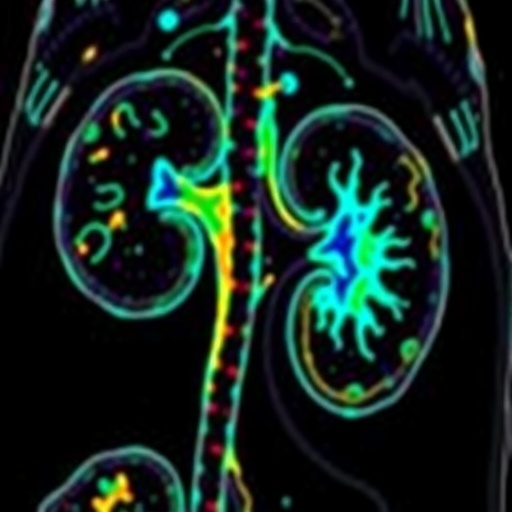
In a groundbreaking study published in Nature Communications, researchers have unveiled a dynamic immune profiling method that can accurately predict patient responses to combination radiation and anti-PD-1 immunotherapy in oligometastatic renal cell carcinoma (RCC). This advance promises to refine precision oncology approaches for this challenging subset of kidney cancers, where limited metastatic spread presents a unique therapeutic window.
Renal cell carcinoma accounts for the majority of kidney cancers and often develops resistance to conventional therapies. While immune checkpoint inhibitors targeting PD-1 have revolutionized treatment paradigms, response rates remain heterogeneous. Additionally, the integration of radiation therapy with immunotherapy has shown synergistic potential but also variable outcomes. To address this, To, Thio, Castle, and colleagues embarked on an in-depth analysis of how dynamic changes in the immune microenvironment correlate with treatment efficacy.
The team utilized longitudinal immune profiling techniques, integrating flow cytometry, multiplex immunohistochemistry, and transcriptomic analyses to monitor immune cell subsets and activation states before, during, and after therapeutic intervention. Their cohort consisted of oligometastatic RCC patients—defined by limited metastatic lesions—receiving stereotactic body radiation therapy alongside anti-PD-1 checkpoint blockade.
Findings revealed that early shifts in circulating and tumor-infiltrating immune cells serve as predictive biomarkers for treatment success. Notably, increased frequencies of activated CD8+ T cells coupled with reduced myeloid-derived suppressor cell populations were associated with durable responses. The dynamic nature of these immune changes underscored the inadequacy of single time-point biopsies to forecast outcomes accurately.
Mechanistically, radiation appeared to prime the tumor microenvironment by enhancing antigen presentation and promoting T cell infiltration. This immune remodeling synergized with PD-1 blockade, unleashing cytotoxic activity against tumor cells. However, certain immunosuppressive pathways, such as elevated regulatory T cell presence or checkpoint molecule upregulation, delineated non-responders, highlighting potential resistance mechanisms.
This study’s implications extend beyond RCC, providing a robust framework for employing real-time immune monitoring as a companion diagnostic tool in combined modality cancer therapies. The ability to stratify patients based on evolving immunological landscapes could facilitate personalized treatment adjustments, maximizing efficacy while minimizing unnecessary toxicity.
Future directions should focus on validating these biomarkers in larger, multi-institutional trials and exploring combinatorial strategies to overcome identified resistance pathways. Moreover, integrating other emerging technologies like single-cell sequencing and spatial transcriptomics may yield even finer resolution of immune dynamics.
In summary, the integration of radiation and anti-PD-1 therapy in oligometastatic RCC gains a powerful predictive component through dynamic immune profiling. This approach heralds a new era of adaptive cancer immunotherapy guided by the evolving host-tumor immune interplay.
Cite Scienmag News
Nathaniel Bowman. (July 8, 2026). Immune Profiling Predicts Response to Radiation and Anti-PD-1 in Kidney Cancer. Scienmag. https://scienmag.com/immune-profiling-predicts-response-to-radiation-and-anti-pd-1-in-kidney-cancer/
Nathaniel Bowman. "Immune Profiling Predicts Response to Radiation and Anti-PD-1 in Kidney Cancer." Scienmag, 8 July 2026, https://scienmag.com/immune-profiling-predicts-response-to-radiation-and-anti-pd-1-in-kidney-cancer/. Accessed 3 September 2026.
Nathaniel Bowman. "Immune Profiling Predicts Response to Radiation and Anti-PD-1 in Kidney Cancer." Scienmag. July 8, 2026. https://scienmag.com/immune-profiling-predicts-response-to-radiation-and-anti-pd-1-in-kidney-cancer/


