


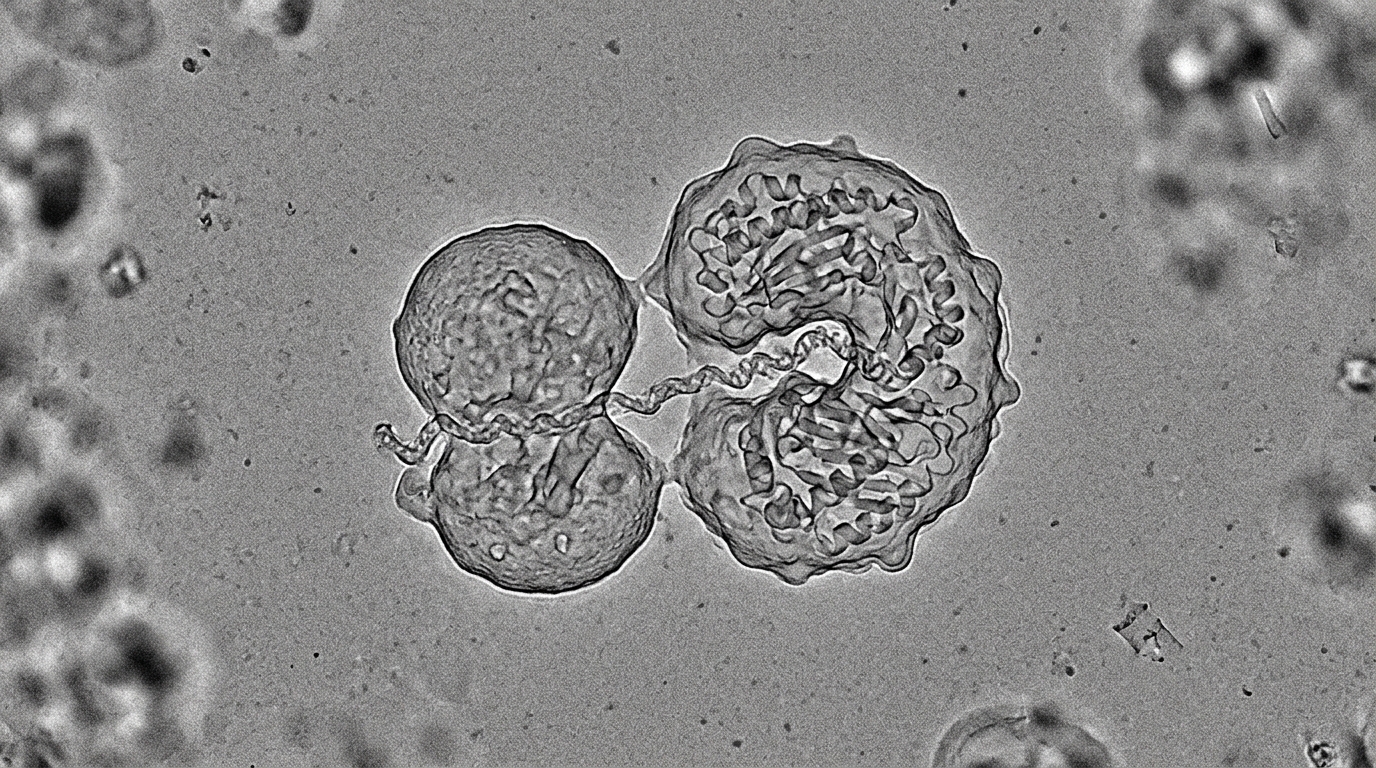
Scientists have rebuilt a core piece of the human RNA interference machinery into a programmable RNA editor, replacing bacterial CRISPR–Cas proteins with a protein that human cells already use to silence genes. The new system, called ALTER, short for AGO-led targeted editing of RNA, fuses the human protein Argonaute 2 to APOBEC3A, a human enzyme that chemically converts cytosine bases in RNA to uracil.
The motivation comes from a well-known bottleneck in RNA therapeutics. Small guide RNAs can program Cas variants for targeted DNA and RNA manipulation, and Cas-derived complexes could in principle address a variety of diseases. But these systems face challenges from delivery, efficacy and harmful immune responses, and the problems are compounded when the target is RNA itself. Because RNAs in cells are constantly turned over, RNA-targeting therapies are likely to require repeated dosing to maintain their effect, which raises the stakes on every one of those liabilities. Redirecting human proteins to achieve targeted RNA manipulation would reduce these liabilities and retain compatibility with, and function within, human cells.
The team’s starting point was Argonaute 2, the protein at the heart of the human RNA interference pathway, where it is programmed by small RNAs to degrade target transcripts. The researchers reasoned that AGO2 fusion proteins could recapitulate many functions of RNA-targeting dCas13-based technologies, provided they could identify guide RNAs that mitigate that degradation. The solution they arrived at lies in the design of the guides. Mismatches in the central region of AGO2 guide RNAs can ablate target cleavage and marginally increase binding affinity, and the dCas13-based editor CURE already uses guides that induce large single-stranded loops within the binding region to promote APOBEC3A activity. The Stanford group reasoned that remodeling a target RNA via AGO2 loop-inducing guides would simultaneously reduce downregulation of the target and facilitate A3A activity.
That reasoning proved correct. Loop-inducing guides retain effective target binding in cells while inhibiting the downregulation that generally results from AGO2 association, a finding that matters because it decouples the targeting function of AGO2 from its usual silencing function. This sets the stage, the authors write, for the concept to be expanded to effector modules beyond APOBEC3A.
The optimization did not stop at the guides. By rationally modifying both AGO2 and APOBEC3A, the team engineered a variant called ALTER-4 that improved editing activity sixfold while substantially reducing non-target guide-driven background editing. The wealth of known AGO2 modifications from foundational studies of AGO2 in RNA interference could be brought to bear on the engineering, turning decades of basic RNAi research into a resource for rational design. Surveying a panel of endogenous targets, the researchers showed that ALTER-4 had comparable or higher activity compared to the exemplar dCas13 C-to-U editing systems CURE and RESCUE, and it did not increase target knockdown.
Specificity is where the human-derived system showed its most striking advantage. Analyzed by transcriptome-wide mRNA sequencing, ALTER exhibited 20-fold fewer transcriptome-wide off-target edits normalized for editing activity.
The immunogenicity argument runs deeper than a single optimization step. As the editors of Nature Biotechnology note in their assessment, a key potential advantage of the approach is the use of a human-derived protein, which may reduce immunogenicity concerns relative to Cas-based systems that rely on bacterial proteins, and this human origin could represent an important translational benefit. Independent experts consulted by the journal, Artem Nemudryi and Anna Nemudraia of the University of Florida, Gainesville, described the strategy as a potentially less immunogenic alternative to existing Cas-based RNA editing tools, which could be advantageous in therapeutic contexts requiring repeated dosing, and noted that the authors rationally design and extensively optimize the system using previously reported mutations and machine-learning approaches to improve editing efficiency, reduce off-target activity and minimize predicted immunogenicity.
The path from concept to working editor was not straightforward. In a behind-the-paper account, the authors observe that given the high-level analogy between Argonaute and Cas proteins, one natural reaction to the work is to ask how it had not been done before. The answer, they explain, lies in the guides: AGO guides are substantially shorter than Cas guides, and guide design rules can be restrictive, with single-base variations in target pairing or guide positioning able to distinguish highly active and completely inactive ALTER guides. The breakthrough came about one year into Lusi’s postdoctoral fellowship, on the day before he left for winter holidays, when a last-minute experiment revealed the first high-activity ALTER hit that also suggested advantages over dCas13. That result kicked off two more years of work that culminated in the final article.
Significant challenges remain before the system can be judged as a therapeutic platform. Further development will bring technical questions regarding guide design and activity analogous to those encountered during initial ALTER development, and the authors note that although the study provides an initial test set, whether general rules for optimal guide design can be found, or whether the efficacy of editing each unique target will be a function of the guide, the target and the editor, remains an open question. Understanding how off-target edits impact therapeutic applications, and obtaining quantitative comparisons of immunogenic risk, will require rigorously controlled in vivo models.
Work to address these questions is already underway, according to the authors, including the use of AGO2 fusions to control splicing and RNA modifications, testing of ALTER in mouse models, and high-throughput experimentation to assess guide designs against multiple targets. If those efforts succeed, the significance of the result extends beyond a single editor. ALTER demonstrates that AGO2 can serve as a human-in-origin, programmable targeting module for engineered protein fusions targeting RNA, and because AGO2 has evolved for function in human cells and exhibits substantially lower immunogenic risks than dCas13, it unlocks access to complementary, non-downregulatory approaches for RNA manipulation.
Subject of Research: A programmable RNA base editor built from human Argonaute 2 and APOBEC3A as an alternative to CRISPR–Cas RNA editing
Article Title: Human Argonaute 2 is a programmable targeting domain for RNA editing
Article References: Human Argonaute 2 is a programmable targeting domain for RNA editing. (2026). Nature Biotechnology. https://doi.org/10.1038/s41587-026-03358-z (Author names are not included in the publisher’s citation export.)
Image Credits: AI Generated
DOI: 10.1038/s41587-026-03358-z
Keywords: RNA editing, Argonaute 2, APOBEC3A, guide RNA design, dCas13, immunogenicity, off-target editing, virus-like particles, adeno-associated virus, RNA interference, Nature Biotechnology, Stanford University
Cite Scienmag News
Gregory Coleman. (November 6, 2026). Human Argonaute 2 becomes a programmable RNA editing tool. Scienmag. https://scienmag.com/human-argonaute-2-becomes-a-programmable-rna-editing-tool/
Gregory Coleman. "Human Argonaute 2 becomes a programmable RNA editing tool." Scienmag, 6 November 2026, https://scienmag.com/human-argonaute-2-becomes-a-programmable-rna-editing-tool/. Accessed 6 November 2026.
Gregory Coleman. "Human Argonaute 2 becomes a programmable RNA editing tool." Scienmag. November 6, 2026. https://scienmag.com/human-argonaute-2-becomes-a-programmable-rna-editing-tool/




