

Friday, July 17, 2026
Science
No Result
View All Result
  • Login
  • HOME
  • SCIENCE NEWS
  • CONTACT US
  • HOME
  • SCIENCE NEWS
  • CONTACT US
No Result
View All Result
Scienmag
No Result
View All Result
Home Science News Marine

Human Activities Weaken Coral Health and Reduce Their Resilience

July 17, 2026
in Marine
Reading Time: 2 mins read
0
Human Activities Weaken Coral Health and Reduce Their Resilience

Human Activities Weaken Coral Health and Reduce Their Resilience

65
SHARES
587
VIEWS
Share on FacebookShare on Twitter
ADVERTISEMENT

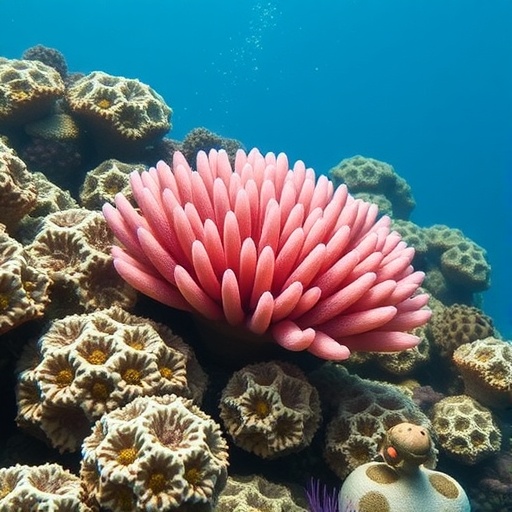
Human pressure is reshaping coral reefs at the chemical level, according to a new study led by the University of Hawai‘i at Mānoa and published in Nature Communications. Researchers report that a suite of 25 contaminants—sourced from agriculture, industry, and pharmaceuticals—accumulates in the soft tissues of corals near Maui, Hawai‘i. Alongside this chemical intrusion, the same coastal sites show a measurable decline in the coral’s internal nutrient and energy reserves. The result is a lower capacity to withstand environmental stressors such as heat and ocean acidification.

To uncover these hidden changes, the team used coral metabolomics, effectively reading the “metabolome” stored inside coral tissues. Lead author Zachary Quinlan, a researcher at the Hawai‘i Institute of Marine Biology, says metabolome monitoring could become a practical way to track anthropogenic damage before it is visible in traditional reef metrics.

The study analyzed metabolomes from 380 lobe corals (Porites lobata) and rice corals (Montipora capitata) across 16 locations off west and south Maui. Importantly, the researchers compared sites with different degrees of human influence, spanning both impacts originating from land-based watersheds and changes occurring within the marine ecosystem itself.

Across species, human activity altered the metabolic composition of coral tissues. In more disturbed areas, contaminants increased while nitrogen and energy-related compounds decreased, indicating that corals may be reallocating internal resources under chronic chemical and environmental pressure.

Quinlan highlights a striking pattern: despite the two coral species having distinct life strategies, both showed nearly identical metabolome trends. The consistency suggests that anthropogenic forcing may be strong enough to impose similar physiological signatures across different coral types.

The team also connected current chemistry to reef history. Using coral-cover trends from five sampling sites following the severe 2016 bleaching event, they found that locations with the greatest post-bleaching declines exhibited the most impacted metabolomes. There, nitrogen and energy reserves were reduced, while stress-associated chemicals were enriched.

Two mechanisms were proposed. First, accumulated anthropogenic molecules—including pharmaceuticals and industrial byproducts—may directly stress coral physiology. Second, increased human-driven environmental demands could force corals to spend nitrogen and energetic resources that would otherwise support recovery after heat and carbonate chemistry stress.

Overall, the findings position coral metabolomes as a sensitive diagnostic for ecosystem disturbance and contaminant escape into coastal environments. The study underscores the urgency of reducing human impacts to protect both marine resilience and human health, and it points toward controlled experiments aimed at boosting coral nitrogen and energy reserves.

Subject of Research: Coral metabolome changes and contaminant loads in relation to human land use
Article Title: Coral metabolome quality and contaminant loads track human land use
News Publication Date: 15-Jul-2026
Web References: https://www.nature.com/articles/s41467-026-74960-7
References: 10.1038/s41467-026-74960-7
Image Credits: UH Mānoa/ SOEST/ HIMB

Keywords: coral metabolomics, contaminants, pharmaceuticals, nutrient depletion, reef resilience, anthropogenic disturbance, metabolome tracking, bleaching aftermath, Maui, Porites lobata, Montipora capitata

Tags: anthropogenic damage detection in coral reefscoral metabolomics and stress resiliencecoral reef chemical contaminationcoral response to ocean acidification and heat stresscoral species vulnerability to pollutioncoral tissue metabolite analysis in environmental studieseffects of pollutants on coral energy reserveshuman impact on coral healthimpact of agriculture and pharmaceuticals on reef ecosystemsMaui coral reef environmental degradationnutrient depletion in corals due to human activityuse of metabolome monitoring for reef health assessment
Share26Tweet16
Previous Post

Experts Urge Europe to Recognize Wildlife as Individuals Able to Suffer

Next Post

Metabolomic Profiling Reveals Subtype-Specific Molecular Programs in Pediatric Ependymoma

Related Posts

Black Sea Flood Reshaped Eastern Mediterranean Currents 11,000 Years Ago
Marine

Black Sea Flood Reshaped Eastern Mediterranean Currents 11,000 Years Ago

July 16, 2026
Invertebrates Can Discriminate Specific Bacteria, Study Finds
Marine

Invertebrates Can Discriminate Specific Bacteria, Study Finds

July 16, 2026
Deep-Sea Creatures Undertake Epic Migrations Between Hydrothermal Vents
Marine

Deep-Sea Creatures Undertake Epic Migrations Between Hydrothermal Vents

July 15, 2026
USF Study Maps Hidden Feeding Grounds Fueling Iconic Ocean Sportfish
Marine

USF Study Maps Hidden Feeding Grounds Fueling Iconic Ocean Sportfish

July 15, 2026
Prey Access, Not Abundance, Drives Predator Behavior in Penguins
Marine

Prey Access, Not Abundance, Drives Predator Behavior in Penguins

July 14, 2026
Climate Change Forces Amphibians to Shift Diet, but Limits Adaptation
Marine

Climate Change Forces Amphibians to Shift Diet, but Limits Adaptation

July 14, 2026
Next Post
Metabolomic Profiling Reveals Subtype-Specific Molecular Programs in Pediatric Ependymoma

Metabolomic Profiling Reveals Subtype-Specific Molecular Programs in Pediatric Ependymoma

  • Mothers who receive childcare support from maternal grandparents show more

    Mothers who receive childcare support from maternal grandparents show more parental warmth, finds NTU Singapore study

    27656 shares
    Share 11059 Tweet 6912
  • University of Seville Breaks 120-Year-Old Mystery, Revises a Key Einstein Concept

    1061 shares
    Share 424 Tweet 265
  • Bee body mass, pathogens and local climate influence heat tolerance

    682 shares
    Share 273 Tweet 171
  • Researchers record first-ever images and data of a shark experiencing a boat strike

    546 shares
    Share 218 Tweet 137
  • Groundbreaking Clinical Trial Reveals Lubiprostone Enhances Kidney Function

    531 shares
    Share 212 Tweet 133
Science

Embark on a thrilling journey of discovery with Scienmag.com—your ultimate source for cutting-edge breakthroughs. Immerse yourself in a world where curiosity knows no limits and tomorrow’s possibilities become today’s reality!

RECENT NEWS

  • Quantum materials breakthrough may enable electronics in extreme environments
  • Association for Molecular Pathology Names 2026 Award Winners
  • Smart Ring Discretion Challenged by New Findings
  • Compact genetic switch offers new potential therapies for drug-resistant epilepsy

Categories

  • Agriculture
  • Anthropology
  • Archaeology
  • Athmospheric
  • Biology
  • Biotechnology
  • Blog
  • Bussines
  • Cancer
  • Chemistry
  • Climate
  • Earth Science
  • Editorial Policy
  • Marine
  • Mathematics
  • Medicine
  • Pediatry
  • Policy
  • Psychology & Psychiatry
  • Science Education
  • Social Science
  • Space
  • Technology and Engineering

Subscribe to Blog via Email

Enter your email address to subscribe to this blog and receive notifications of new posts by email.

Join 5,146 other subscribers

© 2025 Scienmag - Science Magazine

Welcome Back!

Login to your account below

Forgotten Password?

Retrieve your password

Please enter your username or email address to reset your password.

Log In
No Result
View All Result
  • HOME
  • SCIENCE NEWS
  • CONTACT US

© 2025 Scienmag - Science Magazine

Discover more from Science

Subscribe now to keep reading and get access to the full archive.

Continue reading
