

Friday, August 28, 2026
Science
No Result
View All Result
  • Login
  • HOME
  • SCIENCE NEWS
  • CONTACT US
  • HOME
  • SCIENCE NEWS
  • CONTACT US
No Result
View All Result
Scienmag
No Result
View All Result
Home Science News Technology and Engineering

Experts Urge Europe to Recognize Wildlife as Individuals Able to Suffer

July 16, 2026
in Technology and Engineering
Reading Time: 2 mins read
0
Experts Urge Europe to Recognize Wildlife as Individuals Able to Suffer

Experts Urge Europe to Recognize Wildlife as Individuals Able to Suffer

65
SHARES
587
VIEWS
Share on FacebookShare on Twitter
ADVERTISEMENT

Wildlife rules across the EU and the UK are falling short of their own promises, according to a new peer-reviewed comparative study that urges governments to treat animals not as “ecological assets,” but as individuals capable of experiencing suffering.

The research, published in the Journal of International Wildlife Law & Policy, argues that post-Brexit reforms and EU-wide legal architecture alike suffer from a structural mismatch: ambitious policy goals versus weak day-to-day delivery.

Legal scholars Dr Caroline Cox and Dr Meganne Natali of the University of Portsmouth compared the EU’s Habitats and Birds frameworks with the UK’s post-1980 wildlife protections, finding that both systems can look comprehensive on paper while remaining inconsistent in practice.

In the EU, protection is described as fragmented and exception-based. The team points to low performance indicators, including only 16% of habitat types in “favourable condition” under the Habitats Directive and 53% of assessed bird species showing “unfavourable conservation status” between 2013 and 2018.

The paper also highlights a core design feature: legal safeguards largely depend on whether species and habitats are listed in annexes. Species outside these lists receive limited recognition, allowing member states to comply formally while narrowing real-world conservation scope.

In the UK, Cox and Natali contend that older legislation and insufficient enforcement undermine outcomes. They cite persistent gaps in habitat condition, worrying species risk trends, and wildlife-crime conviction rates that lag behind performance in other crime categories.

Both jurisdictions, the authors say, reflect an “anthropocentric logic,” where wildlife is protected primarily for human benefit—ecosystem services, agriculture, and landscape aesthetics—rather than for animals themselves. They note that even where sentience is acknowledged in primary law or under the UK’s Animal Welfare (Sentience) Act 2022, biodiversity rules have not operationalised that ethical premise.

The study uses the EU’s 2024 wolf protection downgrade as a case study of how fragile enforcement can become. While wolf numbers have risen, the authors argue the benchmark for genuinely favourable conservation status has not been met, and they question the process, including limited consultation, limited data transparency, and political lobbying pressures.

To fix the mismatch, the researchers call for tighter derogation regimes, stronger monitoring and prosecution, and more cross-border cooperation—shifting from conflict-based wildlife management toward coexistence strategies that protect both conservation goals and animal interests.

wildlife law, animal sentience, biodiversity governance, EU regulations, UK enforcement, derogations, habitat protection, conservation policy, wolf management, ethical continuity


News Publication Date: 17-Jul-2026

Web References: https://tandfonline.com/doi/full/10.1080/13880292.2025.2619363

References: 10.1080/13880292.2025.2619363

Subject of Research: Wildlife protection frameworks in the EU and the UK; legislative effectiveness and sentience-based conservation integration.

Article Title: Protecting Wildlife in Europe: A Comprehensive Analysis of Legislative Frameworks and Their Shortcomings

Article References: Original research article

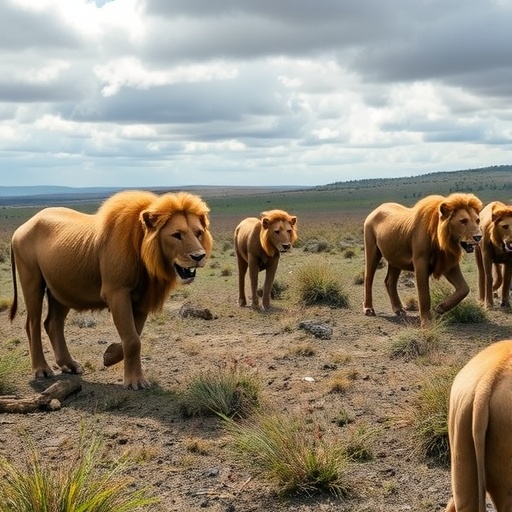
Image Credits: AI Generated

DOI: Not provided

Keywords: animal sentience recognition, animal welfare legislation, comparative analysis of wildlife law, ecological asset vs. individual animal rights, enforcement gaps in conservation policies, EU wildlife protection laws, habitat preservation effectiveness, international wildlife law and policy, legal recognition of animal suffering, species-specific legal protections, UK post-Brexit wildlife reforms, Wildlife conservation policies

Cite Scienmag News

SCIENMAG. (July 16, 2026). Experts Urge Europe to Recognize Wildlife as Individuals Able to Suffer. https://scienmag.com/experts-urge-europe-to-recognize-wildlife-as-individuals-able-to-suffer/

SCIENMAG. "Experts Urge Europe to Recognize Wildlife as Individuals Able to Suffer." Scienmag, 16 July 2026, https://scienmag.com/experts-urge-europe-to-recognize-wildlife-as-individuals-able-to-suffer/. Accessed 28 August 2026.

SCIENMAG. "Experts Urge Europe to Recognize Wildlife as Individuals Able to Suffer." Scienmag. July 16, 2026. https://scienmag.com/experts-urge-europe-to-recognize-wildlife-as-individuals-able-to-suffer/


Tags: animal sentience recognitionanimal welfare legislationcomparative analysis of wildlife lawecological asset vs. individual animal rightsenforcement gaps in conservation policiesEU wildlife protection lawshabitat preservation effectivenessinternational wildlife law and policylegal recognition of animal sufferingspecies-specific legal protectionsUK post-Brexit wildlife reformsWildlife conservation policies
Share26Tweet16
Previous Post

Safe vaccine triggers durable immune responses to prevent pancreatic cancer in high-risk people

Next Post

Human Activities Weaken Coral Health and Reduce Their Resilience

Related Posts

Kaolin-Supported Silver–Copper Nanocatalyst Efficiently, Repeatedly Removes Congo Red from Water
Technology and Engineering

Kaolin-Supported Silver–Copper Nanocatalyst Efficiently, Repeatedly Removes Congo Red from Water

August 28, 2026
Nasal CRISPR Lipid Nanoparticles Targeting MAPK9 Reduce Brain Inflammation After Traumatic Injury
Technology and Engineering

Nasal CRISPR Lipid Nanoparticles Targeting MAPK9 Reduce Brain Inflammation After Traumatic Injury

August 28, 2026
Breakthroughs in Cancer Immunotherapy Offer New Hope for Solid Tumor Patients
Technology and Engineering

Breakthroughs in Cancer Immunotherapy Offer New Hope for Solid Tumor Patients

August 28, 2026
Noninvasive Physical Stimulation Reprograms Tumor Macrophages for Cancer Immunotherapy
Technology and Engineering

Noninvasive Physical Stimulation Reprograms Tumor Macrophages for Cancer Immunotherapy

August 28, 2026
Pentachlorophenol Promotes Bladder Cancer Cell Invasion by Disrupting Protein Stability
Technology and Engineering

Pentachlorophenol Promotes Bladder Cancer Cell Invasion by Disrupting Protein Stability

August 28, 2026
4D Body Scans Enable Data-Driven Skin Modeling for Better Compression Leggings
Technology and Engineering

4D Body Scans Enable Data-Driven Skin Modeling for Better Compression Leggings

August 28, 2026
Next Post
Human Activities Weaken Coral Health and Reduce Their Resilience

Human Activities Weaken Coral Health and Reduce Their Resilience

  • Mothers who receive childcare support from maternal grandparents show more optimized

    Mothers who receive childcare support from maternal grandparents show more parental warmth, finds NTU Singapore study

    27656 shares
    Share 11059 Tweet 6912
  • University of Seville Breaks 120-Year-Old Mystery, Revises a Key Einstein Concept

    1061 shares
    Share 424 Tweet 265
  • Bee body mass, pathogens and local climate influence heat tolerance

    682 shares
    Share 273 Tweet 171
  • Researchers record first-ever images and data of a shark experiencing a boat strike

    546 shares
    Share 218 Tweet 137
  • Groundbreaking Clinical Trial Reveals Lubiprostone Enhances Kidney Function

    531 shares
    Share 212 Tweet 133
Science

Embark on a thrilling journey of discovery with Scienmag.com—your ultimate source for cutting-edge breakthroughs. Immerse yourself in a world where curiosity knows no limits and tomorrow’s possibilities become today’s reality!

RECENT NEWS

  • In Semi-Arid Ghana, Gender Shapes Knowledge in Community Pollinator Conservation
  • Study traces heavy metals across lakes and rivers in Qaidam Basin watershed
  • Canada’s Carbon Mineralization Technologies Face Barriers and Reveal New Opportunities
  • New study reveals how soil moisture drives worsening droughts in Brahmaputra Valley

Categories

  • Agriculture
  • Anthropology
  • Archaeology
  • Athmospheric
  • Biology
  • Biotechnology
  • Blog
  • Bussines
  • Cancer
  • Chemistry
  • Climate
  • Earth Science
  • Editorial Policy
  • Marine
  • Mathematics
  • Medicine
  • Pediatry
  • Policy
  • Psychology & Psychiatry
  • Science Education
  • Social Science
  • Space
  • Technology and Engineering

Subscribe to Blog via Email

Enter your email address to subscribe to this blog and receive notifications of new posts by email.

Join 5,150 other subscribers

© 2025 Scienmag - Science Magazine

Welcome Back!

Login to your account below

Forgotten Password?

Retrieve your password

Please enter your username or email address to reset your password.

Log In
No Result
View All Result
  • HOME
  • SCIENCE NEWS
  • CONTACT US

© 2025 Scienmag - Science Magazine

Discover more from Science

Subscribe now to keep reading and get access to the full archive.

Continue reading