


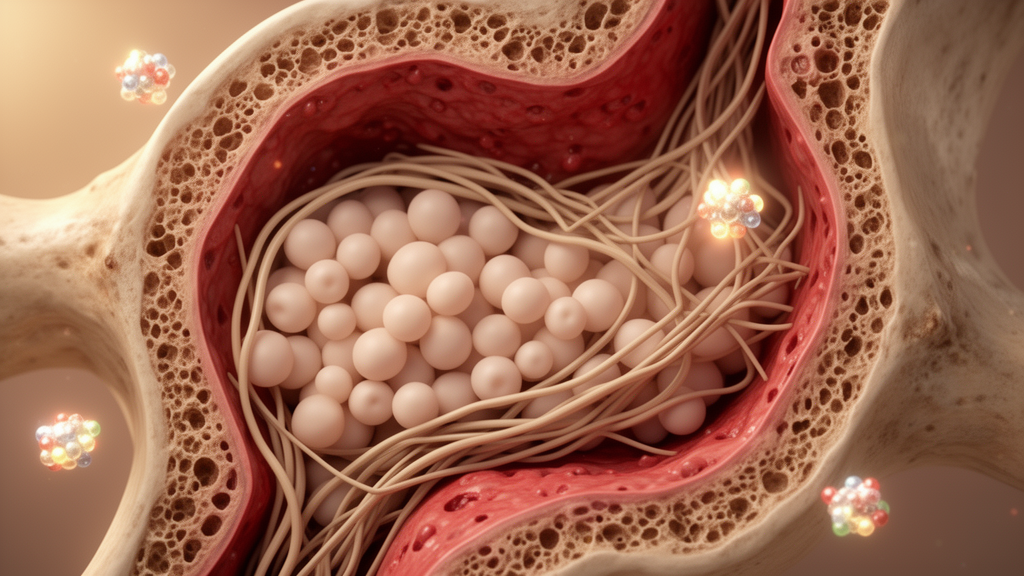
Acute myeloid leukemia, or AML, remains one of the most stubborn blood cancers in modern oncology. Even after patients achieve complete remission with intensive chemotherapy, roughly 40 to 60 percent relapse, and the five-year survival rate hovers around 25 to 30 percent. A new review published in Frontiers in Hematology by Arunim Shah, Arun Kumar Trivedi, and Chandra Prakash Chaturvedi argues that the missing piece of this puzzle lies not inside the leukemic cells themselves but in the bone marrow microenvironment that shelters them. The authors synthesize decades of evidence showing that leukemic cells actively hijack and remodel the bone marrow niche, converting a once-regulatory ecosystem into a sanctuary that promotes survival, immune evasion, and drug resistance.
Under normal physiological conditions, the bone marrow niche maintains hematopoietic stem and progenitor cells in a delicate balance of quiescence, self-renewal, and differentiation. This balance is orchestrated through tightly regulated interactions among cytokines, chemokines, adhesion molecules, and metabolic cues. In AML, however, leukemic cells disrupt this equilibrium by secreting their own signals and by directly reprogramming stromal, vascular, immune, and metabolic components of the niche. The result is a microenvironment that no longer supports healthy blood production but instead favors malignant persistence. The review emphasizes that this reprogramming is not a passive consequence of tumor growth but an active, bidirectional crosstalk driven by soluble factors, cell-to-cell contact, extracellular vesicles, and metabolic exchange.
At the heart of this crosstalk lies the CXCL12–CXCR4 chemokine signaling axis, described by the authors as the dominant regulatory pathway governing leukemic cell homing and retention. CXCL12, also known as stromal-derived factor-1, is continuously secreted by mesenchymal stromal cells, osteoblasts, and endothelial cells within the bone marrow. AML blasts frequently overexpress CXCR4, the receptor for CXCL12, allowing them to respond strongly to this gradient and anchor themselves within protective niches. Upon activation, CXCR4 triggers intracellular cascades including PI3K/AKT, ERK/MAPK, and NF-κB, which collectively promote survival, proliferation, and resistance to apoptosis. Clinically, high CXCR4 expression correlates with poor prognosis and increased relapse risk, underscoring the pathway’s central role in disease progression.
Beyond chemokines, the review details how cytokines and growth factors shape the leukemic niche. Transforming growth factor-beta (TGF-β), produced by stromal cells, immune cells, and sometimes by leukemic blasts themselves, activates SMAD-dependent transcriptional programs that suppress immune cell function and drive leukemic cells toward a quiescent state less vulnerable to cell cycle–dependent chemotherapy. Vascular endothelial growth factor (VEGF) promotes angiogenesis and vascular remodeling, creating specialized microenvironments rich in growth factors and oxygen gradients that sustain leukemic stem cells. Inflammatory cytokines such as TNF-α and interleukin-6 activate NF-κB and JAK/STAT signaling respectively, reinforcing anti-apoptotic gene expression and creating a feed-forward loop that sustains both niche remodeling and leukemic persistence.
The review also highlights the emerging role of extracellular vesicles, particularly exosomes ranging from 30 to 150 nanometers, as key mediators of intercellular communication in AML. Leukemic cells release large numbers of these membrane-bound vesicles, which are taken up by stromal, endothelial, and immune cells through endocytosis or membrane fusion. The cargo—proteins, lipids, and microRNAs such as miR-155 and miR-150—alters gene expression in recipient cells, converting healthy mesenchymal stromal cells into leukemia-supportive elements that secrete increased amounts of IL-6, IL-8, and CCL2. This bidirectional reprogramming establishes a self-reinforcing inflammatory loop that enhances leukemic retention, survival, and chemoresistance. Extracellular vesicles also suppress T-cell proliferation and natural killer cell cytotoxicity, extending the immunosuppressive reach of the leukemic niche beyond the bone marrow itself.
Adhesion-mediated signaling represents another critical layer of chemoprotection. Integrins such as VLA-4 on leukemic cells bind to VCAM-1 on stromal cells, triggering PI3K/AKT signaling that enhances anti-apoptotic responses and reduces chemotherapy sensitivity. β2-integrins activate a Syk–STAT signaling axis that further boosts leukemic survival and proliferation. This phenomenon, termed cell adhesion–mediated drug resistance (CAM-DR), allows AML cells to physically anchor themselves within niches that shield them from cytotoxic agents while simultaneously activating intracellular survival pathways. The review notes that stromal niches can also provide a physical barrier, allowing residual leukemic stem cells to survive treatment and eventually seed relapse.
Metabolic crosstalk between leukemic cells and the bone marrow microenvironment adds yet another dimension to niche-mediated chemoprotection. Bone marrow adipocytes supply fatty acids that leukemic cells utilize through fatty acid oxidation, enhancing mitochondrial function and providing an alternative energy source under nutrient stress. Stromal cells contribute amino acids and lipids that sustain biosynthetic activity. Hypoxic regions within the leukemic marrow stabilize hypoxia-inducible factors HIF-1α and HIF-2α, driving metabolic reprogramming toward glycolysis and upregulating angiogenic factors such as VEGF. Cells in these hypoxic niches often show reduced sensitivity to chemotherapy, partly due to slower growth and activation of HIF-dependent anti-apoptotic pathways. The authors emphasize that these metabolic adaptations are not isolated events but converge on shared intracellular hubs including PI3K/AKT and mTOR signaling.
The immune microenvironment within the AML bone marrow undergoes profound functional impairment. T cells exhibit signs of exhaustion marked by reduced proliferation and impaired cytokine production, driven in part by activation of the PD-1/PD-L1 immune checkpoint axis. Regulatory T cells are often expanded, further suppressing anti-leukemic responses through TGF-β–mediated mechanisms. Natural killer cells, which normally target and destroy malignant cells, are inhibited by TGF-β signaling that reduces expression of activating receptors and cytotoxic mediators. Macrophages within the leukemic niche acquire tumor-associated phenotypes, secreting IL-6, TNF-α, and IL-10 to reinforce survival signaling and immune suppression. Myeloid-derived suppressor cells further block T-cell activation through reactive oxygen species and immunosuppressive cytokines. Galectins, particularly galectin-1, galectin-3, and galectin-9, contribute additional layers of immune modulation and drug resistance.
A particularly important insight from the review concerns the spatial organization of leukemic stem cells within distinct bone marrow niches. The endosteal niche, composed of mesenchymal stromal cells, osteoblastic cells, and extracellular matrix components, maintains leukemic stem cells in a quiescent G0 state through signals that limit cell cycle entry. This
Subject of Research: Bone marrow niche-mediated chemoprotection and chemoresistance mechanisms in acute myeloid leukemia
Article Title: Crosstalk of factors underlying bone marrow niche-mediated chemoprotection in acute myeloid leukemia
Article References: Shah, A., Trivedi, A. K., & Chaturvedi, C. P. (2026). Crosstalk of factors underlying bone marrow niche-mediated chemoprotection in acute myeloid leukemia. Frontiers in Hematology, 5, Article 1850831. https://doi.org/10.3389/frhem.2026.1850831
Image Credits: AI Generated
DOI: 10.3389/frhem.2026.1850831
Keywords: acute myeloid leukemia, bone marrow niche, chemoresistance, CXCL12-CXCR4, leukemic stem cells, tumor microenvironment, extracellular vesicles, Frontiers in Hematology, Crosstalk, factors, underlying, bone
Cite Scienmag News
Nathaniel Bowman. (October 16, 2026). How the Bone Marrow Niche Shields Acute Myeloid Leukemia From Chemotherapy. Scienmag. https://scienmag.com/how-the-bone-marrow-niche-shields-acute-myeloid-leukemia-from-chemotherapy/
Nathaniel Bowman. "How the Bone Marrow Niche Shields Acute Myeloid Leukemia From Chemotherapy." Scienmag, 16 October 2026, https://scienmag.com/how-the-bone-marrow-niche-shields-acute-myeloid-leukemia-from-chemotherapy/. Accessed 16 October 2026.
Nathaniel Bowman. "How the Bone Marrow Niche Shields Acute Myeloid Leukemia From Chemotherapy." Scienmag. October 16, 2026. https://scienmag.com/how-the-bone-marrow-niche-shields-acute-myeloid-leukemia-from-chemotherapy/


